On this page
- Why K-Culture Travels: The Cultural Logic Behind the Phenomenon
- HiKR Ground 2.0: The Digital Heart of K-Pop Tourism
- K-Pop Music Shows: M Countdown, Inkigayo, and the Hallyu Pass
- The K-Dive Training Industry: Bootcamps, Vocal Studios, and Dance Classes
- HYBE Insight Museum and the Fan Economy
- CJ LiveCity Arena: The World’s Largest K-Pop Venue
- Birthday Cafes and Fan-Run Culture
- K-Drama Filming Locations: Classic, New Wave, and How to Find Them
- Fandom Etiquette: The Unwritten Rules That Actually Matter
- Sasaeng Culture and the 2026 Privacy Laws
- Official Merchandise: Where to Buy Genuine Goods
- Frequently Asked Questions
- K-Beauty and the Entertainment Industry Connection
- The Hanbok Experience: Traditional Dress and Its K-Culture Context
Korean pop culture’s global reach in 2026 is no longer a trend observation — it’s a baseline fact that shapes how Korea experiences tourism. The visitors arriving at Incheon with a K-drama filming location list saved on their phones, or queuing at 5am outside a music show studio for standby tickets, or spending their first afternoon in Seoul at HYBE Insight rather than Gyeongbokgung Palace — these travellers now represent a substantial and growing segment of inbound tourism, and Korea has responded by building infrastructure specifically for them.
K-Culture tourism in 2026 has moved beyond the static pilgrimage model — visiting a location because it appeared in a show — into something more participatory. You can train with choreographers who’ve worked with active idol groups. You can step into an XR music video set and record your own version. You can experience a K-Pop concert from inside a fanchant, with a lightstick and a cheer guide, in the world’s largest K-Pop dedicated arena. The gap between watching from home and being in it has narrowed substantially.
This guide covers the full K-Culture experience in 2026: where to go, how it works, what it costs, the cultural context that makes it make sense, and the etiquette that separates welcome fans from the ones Korean industry insiders quietly dread.
Why K-Culture Travels: The Cultural Logic Behind the Phenomenon

Understanding why Korean pop culture achieved the scale it did — and what that means on the ground in Korea — is worth more than a Wikipedia paragraph if you’re trying to engage with it seriously rather than as a tourist novelty.
K-Pop and K-Drama didn’t globalise by accident or purely through platform algorithms. They globalised because of a specific combination of factors: decades of deliberate Korean government investment in cultural exports (the hallyu wave, or Korean Wave, is literally state policy as well as cultural phenomenon), production quality that consistently exceeded what most markets were producing domestically, and an idol system that created a parasocial intimacy between artists and fans that Western celebrity culture rarely manages at the same intensity.
The idol system specifically — the trainee-to-debut pipeline where young performers spend years in intensive vocal, dance, language, and performance training before debuting — produces artists with a level of technical proficiency and professional stage discipline that is genuinely unusual. The tradeoff is well-documented: the system is demanding in ways that have generated significant criticism and mental health discourse within Korea. Understanding that this tension exists gives you a more complete picture of the culture you’re visiting than pure fan enthusiasm provides.
The result of hallyu in 2026 is a Korea that is simultaneously very good at receiving K-Culture tourism and occasionally ambivalent about it. Most Koreans are proud of their culture’s global reach. A smaller number are uncomfortable with the way hallyu tourism can reduce a complex country to an entertainment product. Both reactions are worth holding in mind.
HiKR Ground 2.0: The Digital Heart of K-Pop Tourism
HiKR Ground (Hi-Korea Ground — say it out loud) is the Korea Tourism Organization’s flagship K-Culture immersive experience, located in the central Seoul Jung-gu district near Cheonggyecheon Stream. The 2026 refresh substantially upgraded both the technology and the content, making it one of the better uses of a few hours for any K-Culture visitor to Seoul regardless of which specific group or genre they follow.
What’s Inside
- XR Music Video Studio: Extended reality booths where you step into the actual visual environment of a current music video set — the background, the lighting, the staging — and record a dance performance with AI-generated backup elements. The 4K file is sent directly to your phone. For visitors with any dance interest, this is genuinely impressive technology rather than a gimmick. The sets update regularly as new major releases come out.
- Idol Eye Gallery: An immersive floor experience using 2026 OLED display technology that walks you through a simulated “day in the life” of a K-Pop trainee — from 5am practice sessions through recording sessions, styling, rehearsal, and performance. The experience is designed to build genuine understanding of the training system rather than simply glamorise it, which gives it more substance than a pure promotional installation.
- K-Drama Set Experience: A separate section dedicated to drama production, with recreated set pieces from recent high-profile productions and an explanation of Korean drama production methods — why Korean dramas shoot on a live-shoot schedule (episodes often completed hours before broadcast), how product placement works, how casting decisions are made.
- Cultural context floors: Exhibits on hallyu history, the evolution of K-Pop from the first-generation groups through the current fourth-generation landscape, and the Korean beauty industry’s relationship with the entertainment sector.
Practical Information
Entry remains free for international passport holders in 2026 as part of the Visit Korea Year extension — one of the better uses of the Visit Korea Year benefit given the quality of the content. Queue times peak on weekends and during Korean school holiday periods; arriving on a weekday morning gives you a significantly less crowded experience and more time at the XR studio booths. Book time slots online in advance during high-season periods (cherry blossom season in April, summer school holidays in July-August); walk-up is usually fine mid-week.
K-Pop Music Shows: M Countdown, Inkigayo, and the Hallyu Pass

Weekly K-Pop music shows — live TV broadcasts where groups perform their current releases and compete for music show trophies — are one of the most accessible live K-Pop experiences in Seoul for visitors, and one of the most misunderstood in terms of how attendance actually works.
The Major Music Shows
- M Countdown (Mnet): Airs Thursdays, filmed at CJ ENM Studios in Sangam-dong (World Cup Stadium area). The most internationally recognisable music show — clips circulate widely online. Audience is a mix of fan club allocations and general admission applicants.
- Inkigayo (SBS): Airs Sundays, filmed at SBS Prism Tower in Mapo. Longest-running major music show. Sunday morning filming means early call times for audience members — arriving around 7am is standard for a show that airs at noon.
- Music Bank (KBS): Airs Fridays, filmed at KBS in Yeouido. The most formal of the major shows in terms of audience behaviour standards.
- Show! Music Core (MBC): Airs Saturdays, filmed at MBC in Sangam-dong. Often the most accessible for international visitors in terms of ticket availability.
The Hallyu Pass: The 2026 Solution for International Visitors
The longstanding frustration for international K-Pop fans trying to attend music shows was the Korean phone number requirement — most ticket systems, fan club registration processes, and standby applications required a Korean mobile number, locking out visitors who hadn’t gone through the friction of getting a local SIM and registering it.
The Hallyu Pass — launched in 2026 at ₩20,000 for foreign passport holders — addresses this directly. It functions as a digital identity credential for international K-Culture tourists: register with your passport number and your e-Arrival Card confirmation, and the pass gives you access to a dedicated international tourist allocation for music show audiences, bypassing the Korean phone number requirement. Weekly lottery draws for M Countdown and Inkigayo audience spots are accessible through the Hallyu Pass portal without needing a Korean fan club membership or local SIM.
The pass also grants priority access to the international visitor queues at partner venues and discounts at official merchandise stores. At ₩20,000 (~$14.80 USD) for a year, it’s one of the better value purchases for any visitor spending significant time in Korea’s K-Culture ecosystem. Apply through the official Visit Korea Year portal — the application requires your passport number and the confirmation number from your e-Arrival Card or K-ETA.
What Attending a Music Show Actually Involves
Music show audiences operate on a specific protocol that’s worth understanding before you queue up at 7am only to discover the full process. Successful applicants (lottery winners or standby queue holders) arrive several hours before filming begins. There’s a pre-show briefing period with conduct rules — no flash photography during certain segments, specific cheer and response instructions, audience area assignments. The filming itself is not a single live run-through: songs are performed multiple times for different camera angles, editing needs, and audience shot requirements. A three-hour filming session might see a group perform the same song four times. This is genuinely exciting rather than tedious if you understand that each performance is slightly different, but it’s a different experience from a concert where the set moves forward continuously.
The audience experience is also communal in a specific way — you’re surrounded by fans who know every fanchant, every position, every lyric. Being part of that collective response, even as an outsider learning in real time, is one of the most distinctive experiences K-Culture tourism offers.
The K-Dive Training Industry: Bootcamps, Vocal Studios, and Dance Classes

The most significant structural change in K-Culture tourism between 2023 and 2026 is the formalisation of the short-term trainee experience as a tourism product. Where previously the only way to experience professional K-Pop training was to be an actual trainee at an agency, a commercial industry of visitor-oriented training experiences has emerged in Gangnam, Hongdae, and Itaewon that offers genuine professional content in accessible formats.
One-Day Idol Bootcamps
The “Debut Ready” format — typically four hours covering dance, vocal, and styling — is now offered by multiple studios in Gangnam and Hongdae. The quality varies significantly: the better operations use working choreographers and vocal coaches with genuine industry credits, while budget versions are glorified dance classes with idol-adjacent branding. The distinguishing markers of a quality operation are transparency about their staff credentials, video evidence of the instructors’ actual industry work, and class sizes small enough for individual attention (under 10 students is the benchmark for meaningful coaching).
A typical four-hour session covers: a 90-minute choreography class learning a current K-Pop routine to a standard where it can be filmed; a 60-minute vocal session focused on Korean pop vocal techniques (breath control, runs, the specific harmonic style of K-Pop group vocal arrangements); a 30-minute K-Beauty transformation with professional makeup; and a final recording or filming session. Prices range from ₩80,000 to ₩200,000 depending on the operator and class size. The recording at the end — a professional phone-quality video of your choreography performance — is the takeaway that most participants value most.
K-Drama Acting Workshops
A parallel industry has developed for K-Drama fans: acting workshops where participants perform scenes from recent Netflix and Korean broadcast hits with professional acting coaches. The Namsan Drama Center hosts the most established version of this format — “Script-to-Screen” sessions where participants work with acting coaches who have Korean film and TV credits, performing scenes from 2025/2026 productions in a studio environment with basic lighting and camera setup. The experience is less about producing a polished performance and more about understanding the craft behind the performances you’ve watched on screen — the direction, the emotional specificity, the technical requirements of on-camera acting vs stage acting.
Dance Cover Studios
For visitors primarily interested in the dance component — K-Pop choreography has its own dedicated following separate from the music — multiple studios across Seoul offer drop-in classes for specific group choreographies, taught by Korean dance instructors who perform in cover groups and understand the original choreography in detail. These run from beginner (simplified versions of famous routines) to advanced (full original choreography at performance tempo). The Hongdae area has the highest concentration of these studios, many of which also host regular cover performance events open to visitors as audience or participants.
HYBE Insight Museum and the Fan Economy
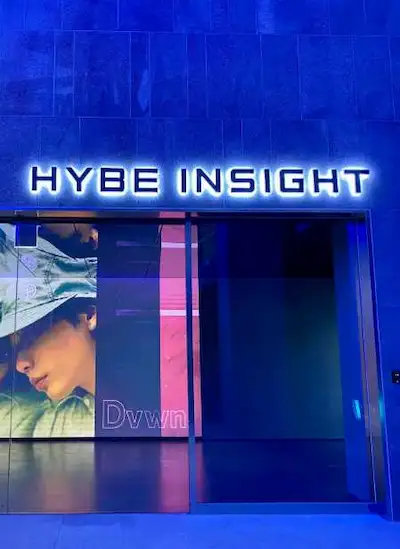
HYBE Insight — the public-facing museum experience within HYBE’s Yongsan headquarters — is the most polished K-Pop corporate tourism experience in Seoul and the one that best explains the scale of what the Korean music industry has become. HYBE is the company behind BTS, SEVENTEEN, NewJeans, and several other major acts; the museum uses the company’s artist catalogue as content for what is, functionally, a brand experience as well as a genuine exhibition.
What HYBE Insight Contains
The museum spans multiple floors with a mix of exhibition formats: archival displays of early BTS and current group career materials, immersive room installations that recreate concert environments and music video aesthetics, a listening room with professional audio equipment for experiencing albums as the audio engineers intended them, and a studio-accurate recreation of a HYBE recording booth. The most visited area is typically the exhibition dedicated to BTS’s career arc — from debut in 2013 through their military service period and the group’s ongoing trajectory — which functions as a genuinely interesting documentary in physical form for fans and as a cultural history of one of the most globally significant pop acts of the last decade for anyone else.
Practical Information for HYBE Insight
Entry requires advance reservation through the Weverse app or HYBE Insight website — walk-in is rarely possible on weekdays and essentially impossible on weekends. Tickets cost ₩22,000 (~$16.30 USD) for adults; the reservation system requires a Weverse account, which is free to create with an international email address and doesn’t require a Korean phone number. Time slots are 90 minutes; popular slots sell out 2–3 weeks in advance during peak season. The HYBE Insight gift shop is separate from the museum and accessible without a museum ticket; it carries official merchandise for all HYBE artists at standard retail pricing.
KWANGYA@SEOUL: SM Entertainment’s Flagship
KWANGYA@SEOUL in Seongsu-dong is SM Entertainment’s physical retail and fan engagement space — a multi-floor store carrying official merchandise for SM artists (aespa, EXO, SHINee, NCT, Red Velvet, and others) alongside a dedicated area for the SM Universe narrative universe that connects the company’s artist roster through an overarching fictional storyline. The Seongsu location gives it geographic adjacency to the neighbourhood’s creative and youth culture energy, which feels intentional — SM’s artist aesthetic has always skewed more conceptual and fashion-forward than the other major companies. Cashless payment only; digital queue reservations through the Kakao app on busy weekends.
CJ LiveCity Arena: The World’s Largest K-Pop Venue

The CJ LiveCity Arena in Goyang — the new GTX-A commuter town northwest of Seoul — reached full operational capacity in early 2026, becoming the world’s largest K-Pop dedicated performance space. The arena’s scale is specifically calibrated for the format: 50,000+ capacity, designed around the visual and acoustic requirements of K-Pop concert production rather than being a generic stadium adapted for music events.
The GTX-A connection makes the venue genuinely practical from Seoul: Seoul Station to KINTEX (the adjacent exhibition and entertainment complex) takes 16 minutes. For concerts at CJ LiveCity, this is a meaningful quality-of-life improvement over the previous logistics of getting to large suburban venues — the post-concert crowd dispersal via GTX-A is significantly faster than the old bus-and-subway combination.
Concert Culture: How Korean Concerts Work
Attending a K-Pop concert in Korea is categorically different from attending a pop concert in most Western markets, and the differences are worth understanding before you go.
Korean concert culture is organised around fancams, fanchants, and lightsticks — three elements that don’t exist in the same way elsewhere. Fancams are the practice of individual fans recording a specific member of a group continuously for the entire show — not the overall concert, but one person’s every moment. Fanchants are the synchronised crowd response to specific moments in songs — particular lines where the audience shouts the member’s names, specific call-and-response sections that the group expects and the audience delivers in unison. Lightsticks are the official branded light-up devices that each group sells — colour-coded and sometimes Bluetooth-synchronised to change colour in patterns programmed by the production team for specific concert moments.
Being in a Korean concert crowd where all of this is happening simultaneously — 50,000 lightsticks synchronising to a colour pattern during a ballad, the entire audience delivering a fanchant in perfect unison while the group on stage responds to it, the collective emotional intensity that comes from a room full of people who know every lyric, every beat, every transition — is an experience that has no real equivalent. You don’t need to be a fan of the specific group to find it remarkable.
The Lightstick Protocol
Each major K-Pop group has an official lightstick — specific to that group, with a specific colour and design (BTS’s Army Bomb, TWICE’s Candybong, aespa’s Wand, and so on). Bringing the wrong group’s lightstick to a concert is a social faux pas that fellow audience members notice; bringing an unofficial replica is noticeable at a shorter range than you’d expect. Official lightsticks are sold at the concert venue merchandise stalls and at official company stores. For Bluetooth-synchronised shows, official lightsticks receive the synchronisation signal from the venue system; unofficial ones remain static. The difference in the arena during a synchronised moment is visually significant.
Getting Concert Tickets
Major K-Pop concert tickets in Korea sell through Interpark, Melon Ticket, and the individual companies’ official systems. All of these have been difficult for international visitors in the past due to Korean phone number and payment verification requirements. The Hallyu Pass helps with international allocation access, but for major concert events — particularly reunion or comeback concerts for top-tier groups — ticket competition is fierce regardless of pass status. Fan club pre-sale (typically 24-48 hours before general sale) remains the highest probability route to tickets, which requires being an actual fan club member. The general sale opens to everyone simultaneously and sells out in minutes for top-tier acts. The secondary market (StubHub and Korean equivalents) operates for in-demand shows, at significant markup.
Birthday Cafes and Fan-Run Culture
One of the most distinctly Korean fan culture phenomena — and one that has spread internationally as a concept — is the birthday cafe: a temporary takeover of an existing cafe, typically for one to three days, run by fan clubs to celebrate a specific idol’s birthday. The cafe is decorated floor-to-ceiling with the idol’s image, serves drinks named after them or referencing their persona, and offers cup sleeves (the cardboard sleeve around a hot cup) and photo cards designed by fans as gifts for purchasing customers.
Birthday cafes concentrate heavily in the Mapo-gu area — Hongdae, Yeonnam-dong, and the surrounding streets — where the density of small cafes willing to participate in temporary takeover arrangements is highest. Finding specific birthday cafes requires social media monitoring: searching #[IdolName]_Birthday_Cafe on X (formerly Twitter) or Instagram in the weeks before a specific idol’s birthday will surface announcements, addresses, operating hours, and the specific goods being offered.
Birthday Cafe Etiquette
Birthday cafes are run by fan clubs using their own resources — design, printing, coordination — at personal expense and as expressions of fandom rather than commercial operations. The etiquette is specific: you buy a drink (the cup sleeve and photo card come with the purchase — they are not free souvenirs for people who just walk in and take them). You don’t photograph the interior without buying. If there’s a queue, you join it; these events frequently run through their limited stock quickly, and there’s no cutting. The fan club members running the event are typically present and are the people who can answer questions about what’s available.
The items produced for birthday cafes — the cup sleeves, photo cards, and sometimes printed materials — are fan-made and not official merchandise, but they’re often beautifully designed and represent genuine creative investment. The limited-edition quality and the connection to a specific cultural moment makes them valued differently from official goods by the fans who seek them out.
K-Drama Filming Locations: Classic, New Wave, and How to Find Them
K-Drama location tourism operates differently from film set tourism in other countries because Korean drama production is high-volume and fast — the live-shoot system means dramas are often completed only weeks before their final episodes air, and locations are chosen for practical accessibility rather than dramatic uniqueness. This means filming locations are frequently ordinary Seoul streets, familiar neighbourhoods, and real businesses — which makes visiting them genuinely accessible but requires different expectations from a purpose-built film set.
The Classic Locations: Squid Game, Crash Landing on You, and the Legacy Map

Squid Game (2021, Netflix) remains one of the most location-visited dramas internationally despite being partially shot on built sets rather than real locations. The Dobong-gu playground equipment similar to what appeared in the series became a pilgrimage site; the Ssangmun-dong neighbourhood alleyways used for exterior shots remain recognisable. For Crash Landing on You (2020), the Swiss filming locations attract international tourists, but within Korea the Cheolwon DMZ area in Gangwon-do — which stood in for North Korean countryside — and the Pyeongchang rural village settings have become established tourism stops for fans of the drama.
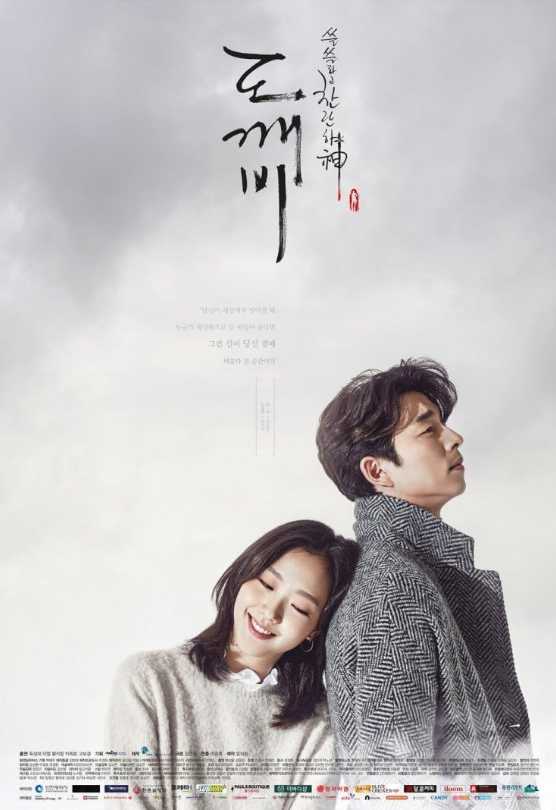
Goblin: The Lonely and Great God (2016–17, tvN) established the template for Korean drama location tourism — Namsangol Hanok Village, Deoksugung Palace, and the Québec sequence (filmed partially in Korea with CGI) became visiting priorities for fans across Asia. Reply 1988 (2015–16, tvN), set in Ssangmun-dong in Dobong-gu, generated a specific neighbourhood tourism effect that’s still active — the residential street used for the show’s exterior scenes has become so identified with the drama that the actual residents have adapted to a steady stream of fans photographing their street.
The 2026 New Wave: Where Current Dramas Film
The drama location landscape in 2026 has shifted in two directions: the futuristic and the rural.
Songdo International Business District in Incheon has become the default filming location for sci-fi and near-future Korean dramas — its genuinely unusual built environment (master-planned from scratch in the 2000s, designed around walkability and smart city infrastructure, with few of the organic urban accretions that make older Korean cities look lived-in) reads on camera as a version of the future that doesn’t require CGI. The Tri-Bowl (a triple shell-shaped cultural complex), G-Tower (a landmark skyscraper), and the waterfront promenade have become the most recognisable Songdo drama backdrops. The Korea Tourism Organization has installed AR markers at key Songdo filming sites — point your phone at the marker via the official Visit Korea app and see the drama scenes overlaid on the actual location.
The rural direction reflects the healing drama trend that peaked in 2025 and continues into 2026 — slow-paced dramas set in villages, coastal towns, and countryside settings, where the landscape and community life are as much the point as the romance or conflict. Gangwon-do (the northeastern province containing the Seoraksan mountains, the east coast ski resorts, and Gangneung’s seafront) and Chungcheongnam-do (the southwestern province containing Buyeo’s ancient Baekje kingdom sites and the coastal Taean National Park) have generated significant location tourism from healing drama fans. The Gunsan note in Gemini’s draft is worth expanding: Gunsan in North Jeolla Province has an extraordinary concentration of preserved 1930s Japanese colonial-era architecture — warehouses, bank buildings, administrative offices — that makes it uniquely valuable for period-piece dramas set in the occupation era. The architecture is genuine historical preservation rather than a film set, which gives Gunsan visits a documentary quality beyond drama tourism.
Fandom Etiquette: The Unwritten Rules That Actually Matter

Korean fandom culture is one of the most developed and codified fan ecosystems in the world — it has its own internal social norms, hierarchy, and ethics that most international visitors encounter without understanding. Getting these wrong doesn’t just create awkward moments; it can result in being excluded from fan events, creating negative social media exposure, and in extreme cases, legal consequences.
The Fan Club System
Most major Korean idol groups have an official fan club with a formal name — BTS’s ARMY, BLACKPINK’s Blink, aespa’s MY, and so on. Fan club membership isn’t just a label; it’s a structured relationship with registration requirements, membership fees (typically ₩30,000–₩50,000 per year), and specific benefits including priority ticket access, fan club-only content, and voting rights in fan-organised activities. Official fan club members are distinct from general fans in practical terms — they have access to pre-sale tickets and fan events that the general public doesn’t.
The fan club hierarchy below the official level — local fan clubs, international fan clubs, individual member-specific fan pages — has its own internal organisation. These are the operations that run birthday cafes, send coffee trucks to drama shoots (a public show of fan support), and organise streaming parties. Understanding that this infrastructure is organised and intentional, rather than spontaneous, helps you engage with it appropriately.
Fan Chant Protocol
Before attending any live K-Pop performance, learn the fanchant. Every group has a specific chant — the exact words, the exact timing, the specific member names called in the specific order at the specific moments in specific songs — that the audience performs collectively. The fanchant is available on the group’s official YouTube channel and is updated when songs change. Performing the wrong fanchant, calling the wrong names, or being conspicuously out of sync is noticeable to the fans around you and creates a small but real social friction. Five minutes of preparation before the show eliminates this entirely.
Sasaeng Culture and the 2026 Privacy Laws
Sasaeng (사생) — a contracted term meaning roughly “private life” — refers to the most extreme segment of Korean fandom: individuals who systematically invade celebrities’ privacy, follow them to private locations, and engage in behaviour that goes beyond any reasonable definition of fan activity into stalking. The term is used within Korean fandom as a category of clear disapproval — most Korean fans actively distance themselves from sasaeng behaviour and consider it harmful to both the celebrities it targets and to fandom reputation.
In 2026, Korea has significantly strengthened the legal framework around celebrity privacy protection following several high-profile incidents. Following an idol to their private residence, dormitory, or personal gym is now classified under enhanced stalking and privacy invasion statutes. The consequences for foreign nationals are serious: immediate detention, deportation, and a 10-year entry ban from Korea. This is not theoretical — cases have been prosecuted and publicised specifically to deter the behaviour, and Korean immigration authorities work with entertainment companies on reporting mechanisms.
The practical implication for visitors: the line between legitimate fan activity and sasaeng behaviour is the boundary of public versus private space. Attending concerts, music shows, and fan events is fan activity. Knowing an idol’s private address, attempting to access their accommodation, or tracking their private movements is sasaeng behaviour. Most visitors never approach the line. It’s worth stating clearly because the small minority who do create consequences for the fandom ecosystem as a whole.
Official Merchandise: Where to Buy Genuine Goods
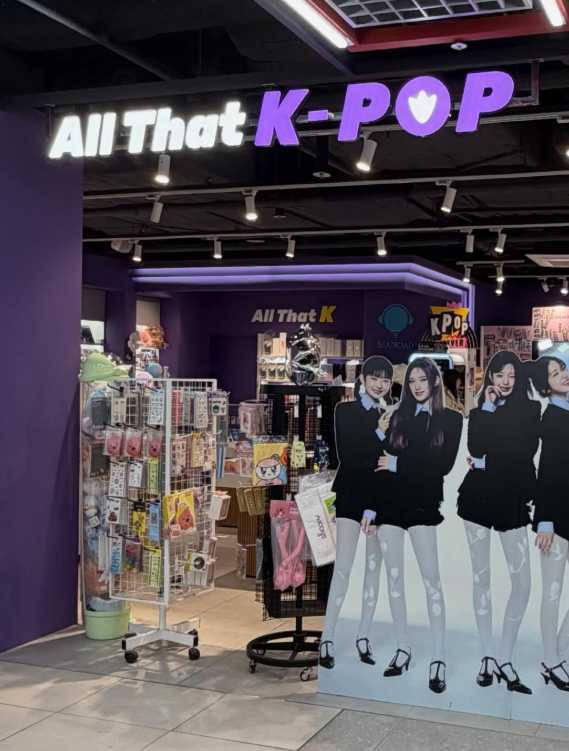
The Korean entertainment merchandise market in 2026 supports a large unofficial counterfeit sector alongside the official products. The distinction matters practically — unofficial merchandise at street stalls near major music venues is typically lower quality and carries no warranty or return policy, and purchasing it at concert venues may result in it being confiscated (some venues have policies against unofficial merchandise on the premises).
Where to Buy Official Merchandise
- HYBE Insight Gift Shop (Yongsan): Official merchandise for all HYBE artists — BTS, SEVENTEEN, NewJeans, LE SSERAFIM, and others. Full catalogue, often including exclusive items not available elsewhere. Accessible without museum ticket.
- KWANGYA@SEOUL (Seongsu-dong): SM Entertainment’s official retail — aespa, EXO, SHINee, NCT, Red Velvet, and others. Cashless only; digital queue reservation on weekends.
- YG Shop (Gangnam): Official YG Entertainment merchandise — BLACKPINK, BIGBANG back catalogue, Treasure. Physical store in Gangnam; online ordering through the YG SELECT website for anything not available in-store.
- JYP Shop (Mapo): Official JYP Entertainment merchandise — TWICE, Stray Kids, ITZY, DAY6. Located near the JYP Entertainment building in the Mapo-gu area.
- Concert venue merchandise stalls: The official merchandise queue at major concerts is typically the best source for tour-specific items — album versions, tour goods, lightsticks — that aren’t available elsewhere. Arrive at the venue 2–3 hours before doors open for major acts; merchandise queues at top-tier concerts can run 4+ hours during peak periods.
Frequently Asked Questions
How do I get tickets for K-Pop music shows as an international visitor?
The Hallyu Pass (₩20,000, available via the Visit Korea Year portal with your passport number and e-Arrival Card confirmation) gives you access to the international visitor allocation for major music shows including M Countdown and Inkigayo — a lottery system specifically for foreign fans that bypasses the Korean phone number requirement. Apply for the pass as early as possible after arrival. Additional options: the official music show websites (Mnet, SBS, KBS, MBC) run separate standby queue systems where you can join the day-of queue; the Hallyu Pass gives you priority in these queues. Planning around specific groups you want to see requires monitoring their official channels for comeback schedules, as music show appearances are tied to active promotion periods.
Is the CJ LiveCity Arena easy to reach from Seoul?
Yes, significantly more so than it was before the GTX-A launch. Seoul Station to KINTEX (the adjacent complex, with a covered walkway to LiveCity) takes 16 minutes on the GTX-A express. The previous logistics — bus or taxi from various Seoul stations — could take 45–70 minutes depending on traffic. The GTX-A fare is ₩3,000–₩4,000 (higher than the regular subway) and is not covered by the Climate Card, so load T-Money balance or use a K-Pass. Post-concert crowd dispersal via GTX-A is efficient; the platform fills quickly after major shows, but trains run at high frequency and the volume moves through faster than the old bus departure queue.
Can I visit the HYBE or SM Entertainment buildings?
The public-facing portions — HYBE Insight museum at the HYBE headquarters in Yongsan, and KWANGYA@SEOUL (SM’s retail space in Seongsu, separate from their main office building) — are open to the public with advance reservations. Office areas and recording facilities are not accessible to the public and have standard corporate security. Loitering outside the main HYBE building entrance or the SM Entertainment headquarters building in Seongsu is noticed and discouraged by residents, security, and other visitors; the company public spaces are specifically designed for visitor engagement, and the non-public areas are clearly demarcated. The experience inside HYBE Insight is considerably more interesting than standing outside the building.
What are birthday cafes and how do I find current ones?
Birthday cafes are temporary fan-run events at existing cafes — typically one to three days — celebrating a specific idol’s birthday, decorated and branded around that idol with fan-designed cup sleeves and photo cards offered with drink purchases. Finding current birthday cafes: search #[IdolName]_birthday_cafe on X (Twitter) or Instagram in the two to three weeks before the idol’s birthday. Most activity concentrates in Mapo-gu (Hongdae, Yeonnam-dong, Hapjeong area). Arrive, buy a drink, receive the fan goods — that’s the full protocol. Don’t take the goods without buying, don’t photograph without engaging, and treat the fan club members running the event with the respect owed to people doing significant voluntary work.
Is Songdo worth visiting if I’m a K-Drama fan but not into sci-fi?
Songdo is interesting beyond its drama location status — it’s one of the most unusual urban planning experiments in Asia, a city built from scratch on reclaimed land that looks and functions differently from any organically developed Korean city. The AR marker experience (overlaying drama scenes on real-world locations via the Visit Korea app) is genuinely interesting for any drama fan regardless of genre, because it illustrates the production decisions behind location selection. The Central Park canal area, the Tri-Bowl, and the waterfront are visually striking regardless of their drama associations. Songdo is about 40 minutes from central Seoul by subway (Incheon Line 1 from Bupyeong); the journey is worth it as a half-day excursion paired with Incheon’s Chinatown and Sinpo International Market.
K-Beauty and the Entertainment Industry Connection

K-Beauty — Korean skincare and cosmetics — is inseparable from K-Culture tourism in practice, even if it’s a distinct industry. The connection is structural: the idol training system includes skincare and appearance management as professional disciplines, the beauty standards demonstrated by K-Pop performers have driven global interest in Korean skincare methods, and the areas of Seoul most associated with K-Culture tourism (Myeongdong, Hongdae, Seongsu) are also the areas with the highest concentration of K-Beauty retail.
The Makeup Transformation Experience
Multiple studios in Hongdae and Gangnam offer professional K-Beauty makeup sessions — the “idol makeup” transformation that’s part of the one-day bootcamp experience but also available as a standalone service. These sessions typically run 45–90 minutes with a professional Korean makeup artist, covering the full range of Korean makeup techniques: glass skin base preparation, gradient lips, the specific eye looks associated with different K-Pop aesthetics. The result is photographable immediately in a purpose-built photo studio environment adjacent to the makeup chair. Prices range from ₩40,000–₩120,000 depending on duration and photography package.
Olive Young: The Physical K-Beauty Experience
Olive Young — Korea’s dominant health and beauty retail chain — is worth understanding as a K-Culture tourism touchpoint beyond pure shopping. The range of products available at Olive Young (which operates hundreds of stores across Korean cities) represents the actual state of Korean skincare and cosmetics consumption in 2026, which is distinct from the products that get export attention internationally. Visiting the flagship stores (the largest is in Myeongdong, open until late) gives you access to the full current product range including items not yet available through international retailers, and the staff are increasingly trained to assist international visitors in English and other languages. The K-Pop connection shows up in the licensed collaboration products — idol-endorsed lines, limited edition packaging with group imagery — that appear regularly through the year.
The Hanbok Experience: Traditional Dress and Its K-Culture Context

Hanbok (한복) — traditional Korean clothing — has experienced a significant cultural renaissance driven partly by K-Drama visibility. Period dramas set in the Joseon and Goryeo eras have reintroduced hanbok aesthetics to Korean audiences who grew up seeing them only at formal ceremonial occasions, and the contemporary hanbok movement — modern designers reinterpreting traditional forms with contemporary cuts, fabrics, and colour palettes — has made hanbok relevant to the same demographic that follows K-Pop and K-Drama.
Hanbok Rental and Palace Entry
Hanbok rental near Seoul’s major palaces — Gyeongbokgung, Changdeokgung, Deoksugung — is a well-established tourism industry. You rent a hanbok for a few hours (typically ₩15,000–₩30,000 including the full ensemble), walk through the palace grounds in traditional dress, and return the clothing afterward. The specific K-Drama connection: wearing hanbok at Gyeongbokgung or Changdeokgung while the palace buildings are backdrop is the visual experience that period drama fans are consciously or unconsciously recreating — and Korean palace grounds understand this, with photography spots optimised for hanbok portraits.
There’s a practical benefit beyond the cultural experience: visitors in hanbok get free entry to the five major Seoul palaces. This benefit is consistent in 2026 and worth factoring into the hanbok rental calculation — at ₩3,000 palace entry per person, a group of two people who would otherwise pay palace entry more than offsets the rental cost.
Contemporary Hanbok Designers
The contemporary hanbok movement — sometimes called saekdong hanbok (colour stripe hanbok) or simply modern hanbok — has produced designers whose work has appeared in K-Pop music videos and on K-Drama characters in contemporary settings, which has driven significant interest from international visitors. The Insadong and Bukchon areas of Seoul have the highest concentration of both traditional and contemporary hanbok retailers. Contemporary designs range from pieces that retain traditional silhouettes in modern fabrics to highly deconstructed interpretations that use hanbok design elements as inspiration rather than structure. The price range is significant — traditional silk hanbok starts at ₩200,000 and extends upward with quality; contemporary hanbok pieces from established designers range from ₩80,000 for simpler items to several hundred thousand for complex designs.
Explore more
The 2026 BTS Arirang Tour: Essential Dates and Gwanghwamun Concert Tips
HiKR Ground: Navigating the 5-Floor K-Content Complex in Central Seoul
The “K-Pop Demon Hunters” Effect: Why Public Baths are the Newest Tourist Hotspots
Filming Locations: Visiting the Real-Life Sites of Biggest Netflix Hits
Idol Birthday Cafes: How to Find Fan-Run Events for Your Favorite Stars
Ultimate K-Drama Filming Locations Guide for Your Seoul Trip
The Ultimate BTS Pilgrimage: Essential Sites for ARMYs in South Korea
Experience Hallyu: Top Korean Culture Experiences for International Travelers
From BTS MV Sets to Cafes: A Comprehensive Guide to Bangtan Sonyeondan’s Korea