On this page
- Learning Hangul: Why Two Hours Changes Everything
- The 2026 AI Translation Stack: Which App for What
- The Big Four: Respect Phrases That No App Replaces
- Greetings and Basic Social Phrases
- At Restaurants: Ordering, Asking, and Thanking
- Shopping and Market Phrases
- Getting Around: Transit, Taxis, and Directions
- Emergency and Health Phrases
- Numbers: The One Thing You Actually Need to Learn
- Korean Speech Levels: Why Formal vs Casual Matters
- 2026 Slang: What Young Koreans Actually Say
- Pronunciation: The Sounds That Trip Foreigners Up
- Language Learning Resources: Before Your Trip
- Frequently Asked Questions
- Hangul Reading Basics: A 10-Minute Start
- A Day of Korean Phrases: From Morning to Midnight
- Signs and Words You’ll See Everywhere: A Visual Vocabulary
- Korean Texting Basics: Communicating on KakaoTalk
- The Language Effort-to-Return Calculation
Here’s the honest 2026 language situation in Korea: you can visit for two weeks without speaking a word of Korean and navigate almost everything — transit, food ordering, shopping, emergencies — through AI translation and the increasingly international-friendly infrastructure that Korea has built. You won’t be helpless. You won’t be stuck.
Here’s also what’s true: the travellers who learn twenty Korean phrases before they leave have a qualitatively different experience than those who don’t. Not because communication fails otherwise, but because the moment a Korean person hears a foreigner attempt their language — even badly, even with laughable pronunciation — something shifts. You’re no longer a tourist passing through; you’re a person who respected the culture enough to try. That shift opens doors, extends invitations, and produces the kind of warmth that no translation app can generate.
This guide gives you both: the 2026 AI tools that handle the heavy lifting, and the phrases worth putting in your memory before you arrive. Every Korean phrase includes Hangul (the Korean alphabet), romanization (how it sounds to English ears), and the context for when to use it.
Learning Hangul: Why Two Hours Changes Everything

Hangul (한글) — the Korean writing system — is one of the great achievements of linguistic design. Created in 1443 by King Sejong the Great and a team of scholars, it was designed from the outset to be learnable by ordinary people rather than requiring years of study. Unlike Chinese characters (which Korean had borrowed before Hangul’s creation), each Hangul character represents a sound rather than a meaning — it’s a phonetic alphabet, and a relatively simple one. Most motivated learners can read Hangul at a basic level within two hours of focused practice.
Being able to read Hangul doesn’t mean understanding Korean — you’ll read sounds without knowing what they mean, like reading Greek letters you’ve memorised but don’t understand. But the practical value is significant: Korean menus, transit signs, shop names, and street markers all make more sense when you can sound them out. Many Korean words are borrowed from English (편의점 is pyeon-ui-jeom, “convenience store”; 택시 is taek-si, “taxi”; 커피 is keo-pi, “coffee”) and become recognisable the moment you can read the phonetic representation. Korean transit announcements become followable. Restaurant signs become parseable. The country gets physically smaller when you can read its signs.
Hangul Basics: The Building Blocks
Hangul is organised into syllable blocks rather than left-to-right letter strings. Each block contains a consonant, a vowel, and sometimes a final consonant — stacked or arranged within a square space. The word 한글 (Hangul) itself demonstrates this: 한 (han) is one block with the consonant ㅎ (h), vowel ㅏ (a), and final consonant ㄴ (n); 글 (guel) is another block with ㄱ (g), ㅡ (eu), ㄹ (l).
The consonants:
- ㄱ (g/k) — ㄴ (n) — ㄷ (d/t) — ㄹ (r/l) — ㅁ (m) — ㅂ (b/p) — ㅅ (s) — ㅇ (silent/ng) — ㅈ (j) — ㅊ (ch) — ㅋ (k) — ㅌ (t) — ㅍ (p) — ㅎ (h)
The basic vowels:
- ㅏ (a) — ㅑ (ya) — ㅓ (eo) — ㅕ (yeo) — ㅗ (o) — ㅛ (yo) — ㅜ (u) — ㅠ (yu) — ㅡ (eu) — ㅣ (i)
These 14 basic consonants and 10 basic vowels, plus their combinations, cover the core of the system. The recommended learning sequence: spend 30 minutes on consonants with their sounds (using a visual chart), 30 minutes on vowels, then 60 minutes practising reading simple words by sounding them out. Apps like Drops and Duolingo’s Hangul module structure this sequence effectively. By the end of a two-hour focused session, most people can read simple Hangul slowly; by the end of a week of regular practice, reading menus and signs becomes genuinely practical.
The 2026 AI Translation Stack: Which App for What
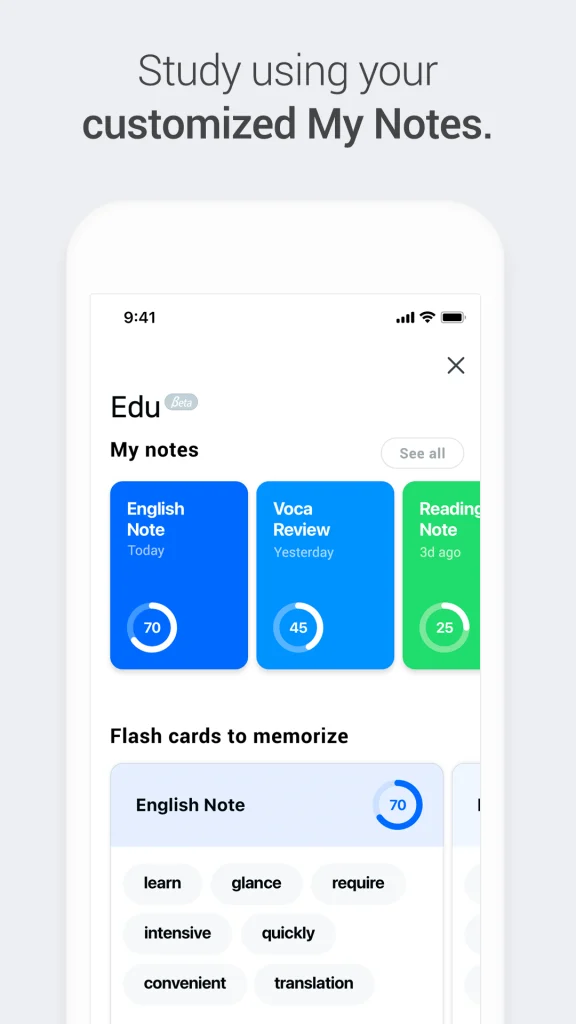
Three translation applications dominate Korean language assistance for international visitors in 2026, and they’re not interchangeable — each has a specific domain where it outperforms the others.
Naver Papago: The Precision King
Papago (파파고) — Naver’s translation app, named for the multilingual parrot from Jules Verne’s Around the World in 80 Days — remains the gold standard for Korean specifically. Where general-purpose translation apps handle Korean as one of many languages, Papago is built by a Korean company with Korean as a primary focus, which means it handles Korean linguistic complexity — the honorific speech levels, the context-dependent vocabulary, the colloquial contractions — more accurately than any other app in 2026.
The 2026 version’s standout feature is automatic honorific adjustment: when you’re composing something to say to an elderly person or in a formal context, Papago’s output defaults to the appropriate polite speech level rather than requiring you to specify. It also handles the konglish vocabulary (Korean English loan words with modified pronunciation) that confuses other apps — asking about an “아이스 아메리카노 (ice Americano)” or a “빵집 (bakery, literally ‘bread house’)” returns accurate results. Use Papago as your primary translation tool for Korean specifically.
Google Translate with Gemini Lens: The Camera Specialist
Google Translate’s camera mode — significantly enhanced by the 2026 Gemini-Lens update — is the best tool for menu translation and sign reading. Point the camera at any text and the translation overlays on-screen in real time. The 2026 update adds a food identification layer: when you point the lens at a Korean menu item, it identifies the dish, overlays the translation, and surfaces a reference photo and approximate calorie information alongside the translation. For navigating Korean menus — where the same dish can have regional variations or preparation methods not obvious from the name alone — this is genuinely useful rather than just a party trick.
Google Translate also handles handwritten Korean reasonably well in 2026 — useful for hand-written daily specials, notes from Korean hosts, or older menu boards that haven’t been digitally typeset. Use Google Translate primarily for visual/camera translation tasks; switch to Papago for spoken or typed conversation.
Microsoft Translator: The Conversation Hub
Microsoft Translator’s “Conversation” mode lets multiple people join a shared session — each person speaks in their own language, and the app provides real-time text (and optional text-to-speech) translation for the group. In a group social context — a shared meal with Korean hosts, a conversation with a Korean guesthouse owner who wants to communicate more than basic hospitality, a meeting with a local guide — Conversation mode handles multi-party cross-language communication that single-person translation apps don’t manage well. Each participant joins the session on their own phone via QR code; no account required. The Korean translation quality in conversation mode is good enough for social contexts even if not as nuanced as Papago for precise phrasing.
The Big Four: Respect Phrases That No App Replaces
These four phrases are worth committing to actual memory — not because AI can’t translate them, but because saying them yourself, without reaching for your phone, is the gesture that lands differently. Every one of them can be used in the first five seconds of any Korean interaction and signals immediately that you made an effort.
- 안녕하세요 (An-nyeong-ha-se-yo) — Hello / Good day
The universal greeting, formal and appropriate for any person of any age in any context. Use it when entering a shop, getting into a taxi, sitting down at a restaurant, meeting your guesthouse host, or any moment when you make eye contact with a Korean person you’re about to interact with. Pair it with a slight bow. The response from the Korean side is usually the same phrase back, sometimes shortened to “안녕하세요!” with a warm smile when they’re pleased by the attempt. - 감사합니다 (Gam-sa-ham-ni-da) — Thank you (formal)
The full formal thank you. Use it whenever someone does something for you — serves your food, hands you your change, holds a door, gives you directions. For a slightly warmer but equally respectful version: 고마워요 (Go-ma-wo-yo) — “thank you” in a polite but slightly less formal register, appropriate between people of similar age. The full gamsahamnida is always safe; it’s slightly more formal than necessary between peers but never wrong. - 죄송합니다 (Joe-song-ham-ni-da) — I’m sorry (formal apology)
The formal apology for genuine infractions — bumping into someone, accidentally cutting in front of someone, breaking something. More weight than a casual “sorry” — Koreans use this for actual apologies rather than casual social lubricant. For lighter situations (excuse me passing through a crowd, getting someone’s attention to ask a question), use 실례합니다 (Sil-lye-ham-ni-da) — “excuse me / pardon my interruption.” - 저기요 (Jeo-gi-yo) — Excuse me (to get attention)
The phrase for getting a waiter’s attention, flagging down someone who’s walking away, or politely interrupting a busy person. Literally translates as “over there” — it’s a spatial pointer used as a social attention-getter. The tone matters: rising intonation makes it a question/request; flat or falling intonation makes it more assertive. In most restaurant contexts, a moderate “Jeogiyo!” while making eye contact or raising a hand is exactly right. In 2026 restaurants with robot servers, saying this clearly often activates the robot’s human-escalation mode as well.
Greetings and Basic Social Phrases
Beyond the Big Four, these social phrases cover the majority of low-stakes Korean interactions and are worth spending 15 minutes memorising before your trip.
- 안녕히 가세요 (An-nyeong-hi ga-se-yo) — Goodbye (said to someone who is leaving). The person staying says this; the person leaving says 안녕히 계세요 (An-nyeong-hi gye-se-yo) — “goodbye” (said to someone who is staying). This distinction matters in Korean but in practice, either works and the attempt is what counts.
- 네 (Ne) — Yes. 아니요 (A-ni-yo) — No. The simplest possible responses, covering more situations than you’d expect.
- 괜찮아요 (Gwaen-chan-a-yo) — It’s okay / I’m fine / No problem. Useful for declining additional help, responding to “are you okay?”, or accepting a situation gracefully.
- 모르겠어요 (Mo-reu-ge-sseo-yo) — I don’t know / I’m not sure. Useful when asked something you can’t answer.
- 한국어를 못 해요 (Han-gu-geo-reul mot hae-yo) — I can’t speak Korean. Sets realistic expectations early in a conversation and typically triggers the Korean person to either speak more slowly, switch to basic English, or gesture toward their phone.
- 영어 할 수 있어요? (Yeong-eo hal su i-sseo-yo?) — Can you speak English? A polite inquiry rather than an assumption.
- 맛있어요 (Ma-si-sseo-yo) — It’s delicious. Said after eating something good, to restaurant staff or a Korean host who cooked for you. One of the highest-value phrases in terms of warmth generated per syllable.
At Restaurants: Ordering, Asking, and Thanking

Korean restaurants in 2026 increasingly use kiosk ordering — which removes the language barrier at the ordering stage since most kiosks have an English mode or visual menus. But non-kiosk restaurants, traditional market stalls, and pojangmacha require more direct communication. These phrases cover the essential restaurant interactions.
- 이거 주세요 (I-geo ju-se-yo) — Please give me this one. Point at the menu item. The most versatile ordering phrase — works with or without knowing the dish name.
- 이거 뭐예요? (I-geo mwo-ye-yo?) — What is this? Point at what you’re asking about.
- 얼마예요? (Eol-ma-ye-yo?) — How much is it? Works at any price context — market stall, restaurant bill, taxi meter.
- 하나 / 둘 / 셋 (Ha-na / Dul / Set) — One / Two / Three (native Korean counting, used for quantities of items). Point to the dish and hold up fingers alongside for maximum clarity.
- 물 주세요 (Mul ju-se-yo) — Water, please. In most Korean restaurants, water is free; this phrase gets it brought to your table or redirects you to the self-service water dispenser.
- 리필 주세요 (Ri-pil ju-se-yo) — Refill, please. For requesting banchan refills, which are free and expected at traditional Korean restaurants.
- 계산해 주세요 (Gye-san-hae ju-se-yo) — Please bring the bill / Can I pay?
- 포장해 주세요 (Po-jang-hae ju-se-yo) — Please wrap it to go / I’d like this to take away.
- 채식주의자예요 (Chae-sik-ju-ui-ja-ye-yo) — I’m vegetarian. Follow with: 고기 없이 해 주세요 (Go-gi eop-si hae ju-se-yo) — Please make it without meat.
- 알레르기 있어요 (Al-le-reu-gi i-sseo-yo) — I have an allergy. Then use the Google Translate camera to point at the allergen in writing for clarity.
Shopping and Market Phrases
- 얼마예요? (Eol-ma-ye-yo?) — How much?
- 깎아 주세요 (Kka-kka ju-se-yo) — Can you give me a discount? (Used at traditional markets where some negotiation is possible — not at fixed-price shops.)
- 이거 있어요? (I-geo i-sseo-yo?) — Do you have this? (Point at what you’re asking about.)
- 다른 색 있어요? (Da-reun saek i-sseo-yo?) — Do you have this in another colour?
- 큰 거 / 작은 거 있어요? (Keun geo / Ja-geun geo i-sseo-yo?) — Do you have a bigger / smaller one?
- 봉투 필요 없어요 (Bong-tu pil-yo eop-seo-yo) — I don’t need a bag. Korea’s 2026 zero-waste regulations mean most stores will ask; this preempts the question and signals environmental awareness.
- 카드 돼요? (Ka-deu dwae-yo?) — Is card payment okay? (At smaller stalls and traditional markets where cash-only is still common.)
- 영수증 주세요 (Yeong-su-jeung ju-se-yo) — Please give me a receipt.
Getting Around: Transit, Taxis, and Directions
- 여기서 [destination]까지 어떻게 가요? (Yeo-gi-seo [destination]-kka-ji eo-tteo-ke ga-yo?) — How do I get from here to [destination]? Swap in the destination name. In practice, showing a Naver Maps pin is faster — this phrase is for when you want to ask a person rather than check your phone.
- 지하철역 어디예요? (Ji-ha-cheol-yeok eo-di-ye-yo?) — Where is the subway station?
- 버스 정류장 어디예요? (Beo-seu jeong-nyu-jang eo-di-ye-yo?) — Where is the bus stop?
- 화장실 어디예요? (Hwa-jang-sil eo-di-ye-yo?) — Where is the bathroom? The single most universally necessary question in any country.
- 여기 세워 주세요 (Yeo-gi se-wo ju-se-yo) — Please stop here. For taxis when you want to get out at a specific spot before the marked destination.
- 직진 (Jik-jin) — Straight ahead. 왼쪽 (Oen-jjok) — Left. 오른쪽 (O-reun-jjok) — Right. The direction vocabulary for following or giving instructions.
- [destination]으로 가 주세요 ([destination]-eu-ro ga ju-se-yo) — Please take me to [destination]. For taxis where you’re giving a verbal destination. In practice, showing the Kakao T app’s confirmed destination to the driver covers this more reliably.
Emergency and Health Phrases

These are worth knowing cold — not practised, memorised — because emergencies are when phone translation is least reliable (dead battery, no signal, shaking hands).
- 도와주세요! (Do-wa-ju-se-yo!) — Help me! / Please help!
- 119 불러 주세요 (Il-il-gu bul-leo ju-se-yo) — Please call 119. Korea’s emergency number (ambulance and fire) is 119; police is 112. Both numbers work from any phone without SIM card.
- 병원 어디예요? (Byeong-won eo-di-ye-yo?) — Where is the hospital?
- 약국 어디예요? (Yak-guk eo-di-ye-yo?) — Where is the pharmacy? Korean pharmacies (약국, yak-guk) are widespread and pharmacists can recommend over-the-counter treatments for minor ailments. Many pharmacists near tourist areas speak basic English.
- 아파요 (A-pa-yo) — I’m in pain / I feel sick. Point to the affected area.
- 알레르기 있어요 (Al-le-reu-gi i-sseo-yo) — I have an allergy. Have the specific allergen written in Korean on your phone (use Papago to translate “I am allergic to [peanuts / shellfish / gluten / dairy]” and screenshot it before your trip).
- 여권을 잃어버렸어요 (Yeo-gwon-eul il-leo-beo-ryeo-sseo-yo) — I’ve lost my passport. To use at a police station or your country’s embassy.
Numbers: The One Thing You Actually Need to Learn
Korean has two number systems — native Korean numbers and Sino-Korean numbers (derived from Chinese) — used in different contexts. This sounds complicated but in practice, knowing which to use when is straightforward.
Sino-Korean Numbers (Used for Prices, Floors, Dates)
- 1 — 일 (il) 2 — 이 (i) 3 — 삼 (sam) 4 — 사 (sa) 5 — 오 (o)
- 6 — 육 (yuk) 7 — 칠 (chil) 8 — 팔 (pal) 9 — 구 (gu) 10 — 십 (sip)
- 100 — 백 (baek) 1,000 — 천 (cheon) 10,000 — 만 (man)
Prices work on the 만 (man, 10,000) unit: ₩15,000 is “만 오천 원” (man o-cheon won). Once you understand the 만 unit, Korean prices become parseable by ear. ₩3,000 = “sam-cheon won”; ₩50,000 = “o-man won”; ₩100,000 = “baek-man won” (literally “one hundred ten-thousands”).
Native Korean Numbers (Used for Counting Items, Age, Hours)
- 1 — 하나 (ha-na) 2 — 둘 (dul) 3 — 셋 (set) 4 — 넷 (net) 5 — 다섯 (da-seot)
- 6 — 여섯 (yeo-seot) 7 — 일곱 (il-gop) 8 — 여덟 (yeo-deol) 9 — 아홉 (a-hop) 10 — 열 (yeol)
Use native numbers when ordering multiple items (“two of these” = 두 개 주세요, du gae ju-se-yo), stating your age, or referring to hours of the day (“at three o’clock” = 세 시에, se si-e). In practice, holding up fingers alongside the number word removes ambiguity entirely — Koreans are very comfortable with this communication hybrid.
Korean Speech Levels: Why Formal vs Casual Matters

Korean has seven grammatical speech levels — different verb endings and vocabulary that signal the speaker’s relationship to the listener. You don’t need to know all seven. You need to know two: formal polite and informal casual.
Formal polite (합쇼체 / 해요체, hapsyo-che / haeyo-che): The speech level used with elders, strangers, in service contexts, and in any situation where you’re not sure of the relationship. All the phrases in this guide are in formal polite register — you can use every phrase here with any adult and it will be appropriate. Formal polite sentences typically end in -요 (yo) or -ㅂ니다 (mnida).
Informal casual (해체, hae-che): Used with close friends, peers of the same age, and in contexts of genuine familiarity. Using casual speech with a stranger or someone older is considered rude — it implies they’re below you socially or that you don’t respect the relationship. As a foreigner, sticking to formal polite for all interactions is always safe. The slang section below is casual register — appropriate only with people your age or younger who you have an existing friendly relationship with.
The honorific layer sits above both of these: 존댓말 (jon-daet-mal) is the umbrella term for polite speech directed at elders or social superiors, and it involves not just verb endings but specific vocabulary choices (different words for “eat,” “sleep,” “give,” “name,” etc. depending on whether you’re referring to yourself or to the respected person). You don’t need to master this — Papago handles it automatically when you’re composing something directed at an elder. What’s worth knowing is that the concept exists, because it explains why Korean requires so much more social context than English to communicate accurately.
2026 Slang: What Young Koreans Actually Say
Korean slang evolves fast — faster than most languages because it’s heavily driven by internet and social media culture, which in Korea is extremely high-velocity. These are the terms circulating widely in 2026 among the 20–35 demographic. Use them only with people your age or younger, in casual social contexts — dropping slang in formal or semi-formal situations reads as disrespectful the same way it would in any language.
- 대박 (Dae-bak) — Amazing / Incredible / Jackpot. The Korean equivalent of “no way!” used for positive surprises, great food, beautiful views, unexpected good luck. One of the most enduring Korean slang terms — it’s been circulating for decades and shows no sign of fading. Completely safe to use with any Korean peer.
- 인정 (In-jeong) — I acknowledge it / That’s legit / Fair enough. Originally the formal word for “recognition” or “acknowledgement,” repurposed as casual agreement. If someone makes a good point or describes something accurately, “인정” as a one-word response is the 2026 equivalent of “valid.”
- 킹받다 (King-bat-da) — Intensely annoying in a funny or exasperated way. A 2024–2026 coinage combining the English “king” (as in extreme) with 열받다 (yeol-bat-da, to get riled up). Used when something is aggravating but not seriously so — the subway being one minute late, a friend making a terrible joke, a kiosk that won’t accept your card. The tone is more exasperated comedy than genuine anger.
- 찐텐 (Jjin-ten) — Genuine / Real (as in, not fake or forced). Derived from 찐 (jjin, meaning real/genuine) and 텐션 (ten-syeon, the Korean pronunciation of “tension” used to mean energy or vibe). “찐텐이다” means “the vibe is real right now” — you’re genuinely having a great time, not performing it.
- 핵인싸 (Haek-in-ssa) — The ultimate insider / extremely popular. 핵 (haek) means “nuclear” used as an intensifier; 인싸 (in-ssa) is the insider (from English “insider”), the person who is socially connected, trendy, and at the centre of things. The opposite is 아싸 (a-ssa), an outsider.
- 갓생 (Gat-saeng) — A “God life” — the Korean 2024–2026 trend of living productively, improving yourself, waking up early, being disciplined. Derived from “God” + 인생 (in-saeng, life). Saying you’re “갓생 살고 있어” means you’re living your best productive life. Used both sincerely (for people who are genuinely disciplined) and ironically (for when you woke up before noon and went to the gym once).
- TMI (티엠아이) — Too Much Information. Directly borrowed from English as an acronym, pronounced in Korean as “ti-em-a-i” and used identically to the English original. One of many English-origin expressions that have been fully absorbed into Korean casual speech.
Pronunciation: The Sounds That Trip Foreigners Up

Korean pronunciation is not as difficult as it looks from Hangul, but several sounds don’t have equivalents in English and require some attention before the phrases above will land correctly.
The ㅡ (eu) Vowel
The ㅡ vowel has no English equivalent. It’s made by positioning your mouth as if to say “oo” (like in “book”) but without rounding your lips — a flat, central vowel produced in the back of the mouth. It appears in common words like 으 (eu), 는 (neun), 그 (geu), and 크다 (keu-da). Practice: say “oo” in “book,” then relax your lips without closing them. That approximate sound is ㅡ.
The Aspirated vs Non-Aspirated Consonant Distinction
Korean distinguishes between plain, aspirated, and tense consonants in ways English doesn’t. ㄱ (g/k), ㅋ (kh), and ㄲ (kk) are three different sounds — the plain version, the strongly aspirated version (with a puff of air), and the tense version (with no air, produced with muscle tension). The distinction matters for meaning: 가다 (ga-da, to go) vs 까다 (kka-da, to be picky) are different words. For survival purposes, getting the basic consonant right and working on the distinctions over time is the practical approach. Koreans generally understand the intention even with imperfect consonant distinction.
Romanization Limitations
The romanizations in this guide use the Revised Romanization of Korean (the official system) with some modifications for English speaker intuition. No romanization system perfectly captures Korean sounds for English speakers — “eo” (ㅓ) in Korean romanization sounds more like the “u” in “but” than any typical English “eo” combination. “eu” (ㅡ) has no English equivalent. The best supplement to reading romanization is listening: search any Korean phrase on Papago and use the audio playback feature to hear it pronounced by a native speaker. Matching the sound you hear to the romanization on the page is faster and more accurate than reading romanization alone.
Language Learning Resources: Before Your Trip
If you want to go deeper than the survival phrases in this guide, these are the resources that work specifically well for Korean learners in 2026.
- Duolingo Korean: Best for absolute beginners — the gamified structure builds Hangul reading and basic vocabulary at a pace that keeps engagement high. The first two weeks of Duolingo Korean is enough to get basic reading skill and a foundation of core vocabulary. Not sufficient on its own for survival Korean but a good confidence-building starting point.
- Drops: A vocabulary-focused app with excellent Hangul introduction modules. Better than Duolingo specifically for learning to read Hangul quickly; the visual association system is effective for character memorisation.
- Talk To Me In Korean (TTMIK): A Korean language learning platform that goes considerably deeper than apps — structured grammar lessons, podcast episodes, and textbooks designed specifically for English speakers. The Level 1 and Level 2 lessons cover everything in this guide plus the grammar structures that explain why phrases work. Free audio lessons; paid for textbooks. The best resource if you’re planning more than a single trip to Korea or want to continue learning post-trip.
- Naver Papago “Shadowing” Mode (2026): Papago’s pronunciation feedback feature records your attempt at a phrase, compares it against native speaker pronunciation, and scores your intonation accuracy. Genuinely useful for getting phrase pronunciation close enough to be understood — use it specifically for the phrases you’re committing to memory from this guide.
- K-Drama Viewing with Korean Subtitles: Watching Korean content with Korean subtitles (rather than English) is the immersion approach that every polyglot recommends for any language — you’re simultaneously hearing the sound and reading the Hangul representation of it. Even 30 minutes a day in the weeks before your trip produces measurable comprehension improvement, particularly for the rhythm and pacing of everyday Korean speech.
Frequently Asked Questions

Can I rely entirely on AI translation apps in Korea in 2026?
For the vast majority of practical daily tasks — ordering food at kiosk restaurants, navigating transit, shopping, booking trains — yes. Korean infrastructure has become significantly more internationally accessible, and the AI translation tools have improved enough that you won’t be stranded without Korean language ability. What AI doesn’t replace is the social warmth generated by genuine language effort. The traveller who opens Papago for everything and never attempts a Korean word has a functionally adequate experience. The traveller who says “안녕하세요” when walking into a shop and “맛있어요” after eating something good has a different experience — not better in practical terms, but richer in human terms.
Is it rude to use a translation app in a conversation with a Korean person?
Not at all — in 2026, using a translation app is understood as a sincere effort to communicate accurately rather than laziness. Most Koreans, particularly younger people and those in tourist-adjacent contexts, are comfortable with phone-mediated translation and often prefer it to misunderstandings from imperfect verbal attempts. The social grace to observe: when you use a translation app in a conversation, show the Korean person the screen (or turn the phone to face them) rather than reading the output yourself and relaying it — making the communication direct and transparent is more respectful than having the app as an invisible intermediary.
What’s the best way to practice Korean pronunciation?
Papago’s 2026 Shadowing mode is the most technically efficient — you record your pronunciation, the app scores it against a native speaker baseline, and gives feedback on specific problem areas. Beyond that, YouTube channels dedicated to Korean pronunciation (specifically “How to Study Korean” and TTMIK’s pronunciation series) provide visual and audio explanation of the consonant and vowel sounds that don’t exist in English. The honest advice is that perfect pronunciation isn’t necessary for survival Korean — Koreans are very good at understanding foreigner-accented Korean because they encounter it regularly. Intelligibility matters more than accent, and intelligibility for the phrases in this guide comes from getting the syllable emphasis and basic vowel sounds approximately right.
What if the kiosk at a restaurant is only in Korean?
Open Google Lens (built into the Google app camera, or via Google Translate’s camera mode) and point it at the kiosk screen — the 2026 Gemini-Lens update translates overlaid text in real time, including Korean kiosk interfaces. The translation appears over the original text on your camera screen, making the menu navigable without being able to read Korean. In 2026, most kiosks in tourist-heavy areas have a “글로벌 (Global)” button on the main screen that switches to English — look for it in the corner of the main menu screen before defaulting to Lens. For neighbourhood restaurants without an international option, Lens is the fastest solution.
How do I read Korean prices?
Korean prices are written with 원 (won, ₩) and use commas as thousand separators like English — ₩15,000 is fifteen thousand won. The key unit to understand is 만 (man) = 10,000 won. Once you internalise that ₩10,000 is “one man” and ₩50,000 is “five man,” mental arithmetic in Korea becomes much faster. Menus and price tags always display the numeral, so you don’t need to understand spoken prices in most contexts — but if a market vendor quotes you verbally, counting the syllables helps: “sam-cheon” = three thousand (₩3,000); “il-man” = one man = ten thousand (₩10,000); “sam-man-o-cheon” = three man five thousand = thirty-five thousand (₩35,000).
Hangul Reading Basics: A 10-Minute Start

If the earlier Hangul section felt abstract, this is the applied version — a fast-track reading exercise using words you’ll encounter on your first day in Korea. The goal is recognition, not mastery.
Words You Can Read Immediately
Korean is full of borrowed English words written in Hangul. Once you can sound out the letters, these become instantly readable:
- 커피 (keo-pi) — coffee. ㅋ = k, ㅓ = eo, ㅍ = p, ㅣ = i. Put together: keo-pi. ✓
- 버스 (beo-seu) — bus. ㅂ = b, ㅓ = eo, ㅅ = s, ㅡ = eu. Beo-seu. ✓
- 택시 (taek-si) — taxi. ㅌ = t, ㅐ = ae, ㄱ = k, ㅅ = s, ㅣ = i. Taek-si. ✓
- 호텔 (ho-tel) — hotel. ㅎ = h, ㅗ = o, ㅌ = t, ㅔ = e, ㄹ = l. Ho-tel. ✓
- 마트 (ma-teu) — mart (supermarket). ㅁ = m, ㅏ = a, ㅌ = t, ㅡ = eu. Ma-teu. ✓
- 지하철 (ji-ha-cheol) — subway (literally “underground iron”). ㅈ = j, ㅣ = i, ㅎ = h, ㅏ = a, ㅊ = ch, ㅓ = eo, ㄹ = l. Ji-ha-cheol. ✓
- 편의점 (pyeo-ni-jeom) — convenience store. Takes a moment but once recognisable, you’ll see it on every CU, GS25, and 7-Eleven sign. ✓
- 화장실 (hwa-jang-sil) — bathroom. The word you need to read on every door. ✓
Spend ten minutes with these eight words and the Hangul characters behind them. Then look at a Korean street sign, menu, or transit map and try to sound out what you see. The recognition that follows — the moment you successfully read a Korean word in context — is the hook that makes people want to keep learning. It’s also genuinely useful from day one.
A Day of Korean Phrases: From Morning to Midnight
Rather than a disconnected list, here’s how the phrases in this guide flow through an actual Korean day — so you can see the context they live in rather than just the words themselves.
Morning
You walk into a convenience store for breakfast. The staff looks up. You: “안녕하세요” (An-nyeong-ha-se-yo) — small bow. They smile. You pick up a triangle kimbap and a canned coffee, bring them to the counter. Staff asks something (probably your points card or bag). You: “괜찮아요 (Gwaen-chan-a-yo)” — no need, it’s fine. You pay with WOWPASS tap. They hand you the bag. You: “감사합니다 (Gam-sa-ham-ni-da)”. You’re done. Four words; you’ve had a complete human interaction.
Lunchtime
You’re at a local restaurant without a kiosk. You sit down. The server comes over. You point at an item on the menu: “이거 주세요 (I-geo ju-se-yo)”. Server asks how many. You hold up one finger: “하나 (Ha-na)”. Food arrives. You eat. It’s excellent. Server passes: you catch their eye: “맛있어요! (Ma-si-sseo-yo!)” — big smile. They beam. You want the bill: “저기요 — 계산해 주세요 (Jeo-gi-yo — Gye-san-hae ju-se-yo)”. Complete.
Afternoon
You’re at a traditional market. A vendor has something you want to look at. You approach: “얼마예요? (Eol-ma-ye-yo?)”. They show you a calculator with the price. You check: “카드 돼요? (Ka-deu dwae-yo?)” — yes or no, you’ll understand. At the pharmacy for some blister pads: “약국 있어요? (Yak-guk i-sseo-yo?)” to anyone nearby if you can’t find it. Point at your heel: “아파요 (A-pa-yo)”. The pharmacist will understand.
Evening
You’re meeting a Korean person you’ve been introduced to. They’re your age. Your first conversation hybrid: you open Papago for anything complex; you use “인정 (In-jeong)” when they say something accurate; you say “대박 (Dae-bak)” when they recommend a place and it’s genuinely surprising. They find it funny and excellent simultaneously. The evening goes well. Leaving: “안녕히 계세요 (An-nyeong-hi gye-se-yo)” — goodbye, you who are staying. They: “안녕히 가세요 (An-nyeong-hi ga-se-yo)” — goodbye, you who are going.
That’s one Korean day. About twenty phrases, half of them used multiple times. All of them in this guide. All of them learnable in a focused two-hour session before you land.
Signs and Words You’ll See Everywhere: A Visual Vocabulary

Even without fluency, recognising high-frequency Korean words and signs dramatically reduces the cognitive load of navigating Korea. These are the words that appear on every block in every Korean city — learn to recognise them and your daily navigation gets significantly easier.
Transit and Navigation
- 출구 (chul-gu) — Exit. The word you’re looking for at subway stations. Also written with a green running figure.
- 입구 (ip-gu) — Entrance.
- 화장실 (hwa-jang-sil) — Bathroom / Toilet. On every public building sign.
- 남 (nam) — Men’s (bathroom). 여 (yeo) — Women’s (bathroom).
- 정류장 (jeong-nyu-jang) — Bus stop. On blue bus stop poles throughout Korea.
- 역 (yeok) — Station. Every subway station ends in 역: 강남역 (Gangnam Station), 홍대입구역 (Hongik University Station).
- 방향 (bang-hyang) — Direction. Appears on platform signs with the end station name to show which way the train goes.
Food and Restaurants
- 식당 (sik-dang) — Restaurant / Eating place. Appears on signs for casual Korean restaurants.
- 음식점 (eum-sik-jeom) — Restaurant (more formal word).
- 카페 (ka-pe) — Cafe (from English).
- 빵집 (ppang-jip) — Bakery (literally “bread house”).
- 포장 (po-jang) — Takeout / To go. This word on a sign or menu indicates takeout options are available.
- 주문 (ju-mun) — Order. Appears on kiosk buttons and POS screens.
- 계산 (gye-san) — Payment / Bill. The button on self-checkout systems and the word to say when you want to pay.
Shopping
- 세일 / 할인 (se-il / hal-in) — Sale / Discount. Both appear on promotional signs; 세일 is the English borrowing, 할인 the native Korean word.
- 영업 중 (yeong-eop jung) — Open (literally “in operation”). 영업 종료 (yeong-eop jong-nyo) — Closed.
- 준비 중 (jun-bi jung) — Preparing / Not yet open. Common on restaurant signs during break-between-meals periods.
- 현금 (hyeon-geum) — Cash. 카드 (ka-deu) — Card. Both appear on payment method signs.
Emergency and Safety
- 비상구 (bi-sang-gu) — Emergency exit. Green sign with the running figure, identical to international standard.
- 119 — Ambulance and fire emergency number.
- 112 — Police emergency number.
- 병원 (byeong-won) — Hospital. On blue hospital direction signs throughout cities.
- 약국 (yak-guk) — Pharmacy. Look for the green cross sign and this word combination.
Korean Texting Basics: Communicating on KakaoTalk
Once you’ve downloaded KakaoTalk (which you should before you arrive — it’s how Korean hosts, guides, and guesthouses communicate), basic Korean texting ability opens up a range of interactions that are otherwise phone-call dependent. A few KakaoTalk-specific communication patterns:
- ㅎㅎ or ㅋㅋ — The Korean text equivalents of “haha” — ㅎㅎ is gentle laughter, ㅋㅋ is louder/more amused. ㅋㅋㅋ is very funny. Using these in casual KakaoTalk messages reads as relaxed and friendly rather than overly formal.
- ㅇㅇ — Short for 응응 (eung-eung), a casual “yeah yeah” / “I see” / affirmative acknowledgement.
- ㄴㄴ — Short for 노노 (no-no, from English), a casual negative acknowledgement.
- 잠깐만요 (jam-kkan-man-yo) — Just a moment / Wait a second. Useful when you need time to translate something before responding.
- Papago translation + paste: The standard workflow for KakaoTalk communication with Korean contacts who don’t speak English — translate your message in Papago, copy the Korean text, paste it into KakaoTalk. The response comes back in Korean; paste it into Papago to translate. Slightly cumbersome but entirely functional, and Korean contacts are comfortable with the slight delay it creates.
The KakaoTalk emoji set — Kakao Friends, the branded characters including Ryan the lion, Apeach, Muzi, and Con — are used extensively in Korean casual texting in the same way Western users use standard emoji. Sending a Kakao Friends sticker in a casual conversation reads as warm and engaged rather than frivolous; it’s the Korean digital equivalent of a smile. The stickers are available in the KakaoTalk sticker store; many basic packs are free.
The Language Effort-to-Return Calculation

Let’s be direct about the investment required here. Learning survival Korean before a trip takes approximately four to six hours of focused effort: two hours on Hangul, two to three hours on the phrases in this guide, one hour on pronunciation practice via Papago’s shadowing mode. That’s roughly one long evening, or three 90-minute sessions spread across the week before departure.
What does that investment return? Not fluency — nobody is claiming that. Not the ability to have complex conversations. What it returns is: the capacity to initiate any basic interaction in Korean without reaching for your phone; the ability to read Korean signs, menus, and transit information at a functional level; a significant upgrade in how Korean people respond to you in daily interactions; and the specific satisfaction of being in a place and feeling the gap between you and the culture narrow rather than hold steady at tourist distance.
Korean people are, as a generalisation, particularly responsive to language effort from foreigners. The language is genuinely difficult for English speakers — there’s no shared root, the grammar works backwards from English, the writing system requires learning from scratch. Koreans know this. When a foreigner makes the attempt anyway, the gesture lands with disproportionate warmth relative to the actual linguistic achievement. A traveller who says “안녕하세요” and “감사합니다” imperfectly but consistently throughout their trip has a meaningfully different relationship with Korea than one who doesn’t.
The AI tools in this guide handle everything the human vocabulary can’t. Between the two — a small arsenal of committed phrases plus the translation stack — you have coverage for every situation Korea presents. The phrases create connection; the apps create comprehension. That combination is genuinely sufficient for a full, deep, independent Korean travel experience in 2026.
Explore more
The 1-Hour Hangul Challenge: How to Read Menus and Signs Before You Land
“Juseyo” Mastery: 10 Essential Phrases for Ordering Anything in Korea
Polite vs. Casual: When to Use the “-Yo” Ending to Avoid Being Rude
The “Excuse Me” Strategy: Using “Chogiyo” vs. “Sillyehamnida” Correctly
Taxi Language: 5 Phrases to Get You Exactly Where You Need to Go
Shopping Math: How to Ask for Discounts and Understand Korean Numbers
Restaurant Slang: Learning “Oppa” and “Eonni” (And When Not to Use Them)
Emergency Korean: Crucial Words for Hospitals, Police, and Lost Passports
The Power of “Ney”: Understanding the 5 Different Meanings of the Word Yes
Survival Korean Phrases for Tourists: Your Ultimate Seoul Survival Guide
📷 Featured image by ibmoon Kim on Unsplash