On this page
- Bulguksa Temple: Korea’s Most Celebrated Buddhist Architecture
- Seokguram Grotto: The Stone Cave Buddha
- Tumuli Park: Royal Tombs in the Heart of the City
- Cheomseongdae Observatory: Ancient Astronomy
- Anapji Pond: Silla Palace Ruins by Night
- Yangdong Folk Village: Living Heritage
- National Museum: Silla Treasures Under One Roof
- Gyeongju Historic Areas: Walking Through Time
- Where to Eat: Gyeongju’s Culinary Specialties
- Frequently Asked Questions
💰 Click here to see Korea Budget Breakdown
💰 Prices updated: 2026-10-01. Budget figures are estimates — always verify before travel.
Exchange Rate: $1 USD = 1,356 KRW
Daily Budget (per person) • Pricing updated as of 2026-10-01
Daily Budget
Shoestring: 60,000 KRW - 95,000 KRW ($44.25 – $70.06)
Mid-range: 130,000 KRW - 250,000 KRW ($95.87 – $184.37)
Comfortable: 350,000 KRW - 550,000 KRW ($258.11 – $405.60)
Accommodation (per night)
Hostel/guesthouse: 25,000 KRW - 65,000 KRW ($18.44 – $47.94)
Mid-range hotel: 90,000 KRW - 165,000 KRW ($66.37 – $121.68)
Food (per meal)
Budget meal (street food): 9,000 KRW ($6.64)
Mid-range meal (restaurant): 22,000 KRW ($16.22)
Upscale meal: 65,000 KRW ($47.94)
Transport
Single subway/bus trip: 1,600 KRW ($1.18)
Climate Card (30-day unlimited): 67,000 KRW ($49.41)
Gyeongju feels overwhelming at first glance. With over 2,000 years of history packed into a relatively small area, deciding where to start exploring Korea‘s ancient capital can paralyze even seasoned travelers. The good news? The city’s compact layout and excellent signage make navigating between UNESCO World Heritage sites surprisingly straightforward, especially with the updated tourist shuttle system launched in 2026.
Bulguksa Temple: Korea’s Most Celebrated Buddhist Architecture
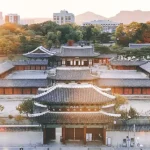
Bulguksa Temple stands as Korea’s most architecturally significant Buddhist site, and walking through its main gate immediately demonstrates why. The temple’s wooden structures seem to float above their stone foundations, a design principle that has kept these 8th-century buildings standing through earthquakes and invasions.
The temple’s two stone pagodas tell different stories through their contrasting styles. Dabotap Pagoda’s ornate decoration represents the complexity of enlightenment, while Seokgatap Pagoda’s clean lines embody simplicity. Standing between them on a quiet morning, you can hear the rhythmic chanting from the main hall mixing with the rustle of pine needles overhead.
The temple operates on a strict schedule that visitors often miss. Morning prayers begin at 4:30 AM, and witnessing this ceremony provides insight into living Buddhist practice that most tourists never experience. The afternoon closure between 12:00 and 1:00 PM catches many off-guard, so plan accordingly.
Seokguram Grotto: The Stone Cave Buddha
Seokguram Grotto requires a separate journey 4 kilometres up the mountain from Bulguksa, but the 8th-century stone Buddha housed inside represents one of Asia’s finest examples of religious sculpture. The artificial cave’s precise engineering creates perfect acoustics and lighting conditions that still function exactly as designed over 1,200 years later.
Access remains strictly controlled. Visitors view the Buddha through protective glass, and photography is prohibited inside the grotto itself. The restriction frustrates some tourists, but it preserves the meditative atmosphere that makes this site special. The viewing experience lasts only about 10 minutes, but the serene expression on the Buddha’s face tends to linger in memory long afterward.

The hiking trail connecting Bulguksa to Seokguram offers an alternative to the shuttle bus. This 2.8-kilometre path through pine forest takes about 45 minutes and provides mountain views impossible to see from the road. Sturdy walking shoes are essential, as the trail includes some steep sections.
Tumuli Park: Royal Tombs in the Heart of the City
Twenty-three royal tombs from the Silla Dynasty create an otherworldly landscape right in central Gyeongju. These grass-covered mounds look like gentle hills until you realize they contain 1,500-year-old burial chambers filled with golden crowns and jade ornaments.
Only Cheonmachong Tomb opens to public exploration. Descending into the burial chamber reveals the sophisticated engineering that protected these graves from looters for centuries. The replica artifacts displayed inside help visualize the opulence of Silla court culture, though the originals now reside safely in climate-controlled museum environments.
The park transforms completely between seasons. Cherry blossoms in April create a pink canopy over the ancient mounds, while autumn maples in November provide fiery contrast to the green burial hills. Winter snow emphasizes the tombs’ geometric shapes against bare tree branches.
Cheomseongdae Observatory: Ancient Astronomy
Korea’s oldest surviving astronomical observatory looks deceptively simple—just a bottle-shaped stone tower standing 9.17 metres tall. Built in 647 AD during Queen Seondeok’s reign, Cheomseongdae demonstrates the Silla Kingdom’s advanced understanding of astronomy and mathematics.
The tower’s design incorporates sophisticated astronomical calculations. Its 27 stone layers represent Queen Seondeok’s 27-year reign, while the total number of stones (365) matches the days in a year. The square opening near the top aligns with specific constellations, allowing ancient astronomers to track celestial movements with remarkable precision.

Modern light pollution unfortunately obscures most stars that Silla astronomers would have observed, but the observatory’s mathematical perfection remains clearly visible. The surrounding Wolseong Park provides context, with excavated palace foundations showing where royal astronomers would have worked alongside the tower.
Anapji Pond: Silla Palace Ruins by Night
Artificial ponds and pavilions once entertained Silla royalty at this lavish palace complex, and evening illumination reveals why this site captivated ancient visitors. Underwater archaeology in the 1970s recovered over 30,000 artifacts from the pond bottom, suggesting the extravagant lifestyle of Korea’s ancient rulers.
The reconstructed wooden pavilions reflect perfectly in the still water after sunset, creating mirror images that blur the line between past and present. Strategic lighting installed in 2025 enhances this effect without overwhelming the site’s historical atmosphere.
Three distinct areas each served different royal functions. The main pond hosted formal ceremonies, smaller pools provided intimate gathering spaces, and the surrounding gardens offered private walking areas. Stone channels still direct water flow exactly as engineers designed 1,300 years ago.
Yangdong Folk Village: Living Heritage
Unlike museum reconstructions, Yangdong Folk Village remains a functioning community where families have lived continuously for over 500 years. Traditional hanok houses cluster around hillside terraces, demonstrating how Joseon-era social hierarchy shaped village layout through architecture.
The village operates according to traditional rhythms that commercial tourist sites cannot replicate. Roosters crow at dawn, elderly residents tend vegetable gardens between houses, and wood smoke rises from kitchen chimneys during meal preparation. This authentic atmosphere requires respectful behavior from visitors, as you’re essentially walking through people’s neighborhood.
Several hanok offer overnight stays, providing immersion into traditional Korean living impossible to experience elsewhere. Ondol underfloor heating systems, paper window screens, and communal washing facilities demonstrate daily life before modern conveniences. Booking requires advance planning, especially during peak seasons.

National Museum: Silla Treasures Under One Roof
Gyeongju National Museum houses the world’s most comprehensive collection of Silla Dynasty artifacts, including golden crowns so intricate they seem impossible to create with ancient tools. The museum’s organization follows chronological progression, allowing visitors to trace 1,000 years of cultural evolution through objects excavated from local archaeological sites.
The Emille Bell, cast in 771 AD, dominates the museum’s outdoor section. This 3.75-metre bronze masterpiece produces haunting tones that reportedly carry for miles. The bell’s tragic legend—involving a child sacrifice during casting—adds emotional weight to its impressive technical achievement.
Interactive displays installed in 2026 let visitors digitally reconstruct damaged artifacts and explore 3D models of excavation sites. These technological additions enhance understanding without diminishing the power of seeing actual 1,500-year-old objects that once adorned Silla royalty.
Gyeongju Historic Areas: Walking Through Time
Five separate UNESCO World Heritage areas encompass different aspects of ancient Silla civilization, and connecting them on foot reveals how this capital city once functioned as a unified whole. The historic areas stretch across 8 kilometres, making bicycle rental a practical choice for covering multiple sites efficiently.
Namsan Mountain contains over 100 Buddhist sites scattered through forest trails, ranging from carved rock reliefs to temple foundations. These remote locations require hiking ability but reward effort with solitude impossible to find at major tourist sites. Many visitors underestimate the mountain’s size and end up rushing through areas that deserve contemplative exploration.
The downtown historic area integrates ancient sites with modern city life in ways that feel natural rather than forced. Traditional markets operate beside excavated palace foundations, and office workers eat lunch in parks containing 1,000-year-old pagodas.

Where to Eat: Gyeongju’s Culinary Specialties
Hwangnam bread represents Gyeongju’s signature food contribution—sweet red bean pastries shaped like chrysanthemums that have satisfied visitors since 1939. The original Hwangnam Bakery still operates from its historic location, and watching bakers hand-shape each pastry maintains connection to local craftsmanship traditions.
Ssambap restaurants serve elaborate spreads of leafy vegetables, seasoned side dishes, and grilled meat that create interactive dining experiences. Local versions incorporate mountain vegetables unavailable in other regions, reflecting Gyeongju’s position between mountains and agricultural plains.
Traditional markets near Tumuli Park offer street food that changes with seasons. Autumn brings roasted chestnuts and sweet potatoes, while spring features wild mountain vegetables. These markets close earlier than urban counterparts, typically winding down by 7:00 PM.
Frequently Asked Questions
How many days do I need to see Gyeongju properly?
Two full days allow unhurried exploration of major UNESCO sites plus time for hiking or traditional village experiences. Day trips work for highlights only, while three days enable deep exploration including lesser-known mountain sites.
Can I visit Bulguksa and Seokguram in the same trip?
Yes, shuttle buses connect the two sites every 20 minutes during operating hours. The journey takes 15 minutes by bus or 45 minutes hiking through mountain forest trails between the temple and grotto.
What’s the best time of year to visit Gyeongju?
April brings cherry blossoms and mild weather, while November offers spectacular autumn colors. Summer can be hot and humid, winter sometimes closes mountain trails, but both seasons offer fewer crowds and lower accommodation prices.
Do I need advance reservations for major sites?
Most sites accept walk-in visitors, but Yangdong Folk Village homestays require advance booking. Weekend visits to popular sites like Bulguksa benefit from early arrival to avoid tour group crowds, especially during spring and autumn.
Is Gyeongju suitable for travelers with mobility limitations?
Major sites like Tumuli Park and the National Museum offer wheelchair access and flat pathways. However, Bulguksa Temple involves stairs, and Seokguram Grotto requires uphill travel. The Heritage Circuit buses accommodate wheelchairs since 2026.
Explore more
Pohang Fireworks & Space Walk: The Guide to Korea’s “Steel City” Wonders
Gyeongju Travel Guide: Explore Korea’s Ancient Silla Capital
Damyang Bamboo Forest: Peace, Quiet, and Traditional Tea