On this page
- 2026 What’s New in Seoul
- Seoul’s Neighbourhoods — Where You Actually Want to Stay
- How to Move Around Seoul Without Getting Lost
- Where to Eat in Seoul
- The Experiences Worth Building Your Itinerary Around
- 2026 Budget Reality — What Seoul Actually Costs
- Practical Stuff Nobody Tells First-Timers
- Day Trips Worth the Effort
- Frequently Asked Questions
💰 Click here to see Korea Budget Breakdown
💰 Prices updated: 2026-10-01. Budget figures are estimates — always verify before travel.
Exchange Rate: $1 USD = 1,356 KRW
Daily Budget (per person) • Pricing updated as of 2026-10-01
Daily Budget
Shoestring: 60,000 KRW - 95,000 KRW ($44.25 – $70.06)
Mid-range: 130,000 KRW - 250,000 KRW ($95.87 – $184.37)
Comfortable: 350,000 KRW - 550,000 KRW ($258.11 – $405.60)
Accommodation (per night)
Hostel/guesthouse: 25,000 KRW - 65,000 KRW ($18.44 – $47.94)
Mid-range hotel: 90,000 KRW - 165,000 KRW ($66.37 – $121.68)
Food (per meal)
Budget meal (street food): 9,000 KRW ($6.64)
Mid-range meal (restaurant): 22,000 KRW ($16.22)
Upscale meal: 65,000 KRW ($47.94)
Transport
Single subway/bus trip: 1,600 KRW ($1.18)
Climate Card (30-day unlimited): 67,000 KRW ($49.41)
Seoul has more travel content written about it than almost any city in Asia — and that’s exactly the problem. Half the advice circulating in 2026 is recycled from 2019, pointing you toward cafés that closed, apps that no longer work, and visa rules that changed twice since then. If this is your first time in Seoul, you don’t need more lists. You need a clear picture of what the city actually looks like right now, what it costs, and how to move through it without wasting your first two days figuring out the basics.
2026 What’s New in Seoul
A few changes in 2026 matter enough to affect your planning before you even book a flight.
K-ETA is back — with conditions. The Korea Electronic Travel Authorization was temporarily suspended in 2023 for many nationalities and partially reinstated. As of 2026, citizens from most Western countries, Australia, and Canada need to apply for K-ETA again if entering visa-free. The application costs around 10,000 KRW (~$7.40 USD), takes 72 hours to process, and is valid for two years. Apply at the official K-ETA website before you fly — do not leave this for the airport.
GTX-A is now fully operational. The Great Train Express Line A connects Suseo in southeastern Seoul to Dongtan in Gyeonggi Province in under 20 minutes, and the Suseo–Pajeong corridor opened fully in early 2026. For most tourists, the more relevant news is that GTX-A gives you a genuinely fast connection between Suseo station and central Seoul, useful if you’re staying in that corridor. The trains feel different from the subway — wider, quieter, noticeably faster.
Google Maps is finally reliable in Korea. After years of restrictions on Korean map data, a revised agreement in 2025 means Google Maps now shows accurate walking directions, public transit routes, and real-time bus information in Seoul. This is a meaningful change. You no longer need to rely exclusively on Naver Map or Kakao Map, though both remain excellent backups.
Myeongdong got a makeover. The area completed a streetscape renovation in late 2025, with wider pedestrian paths and reorganised vendor zones. It’s less chaotic than it was in 2023–2024, though still very busy on weekend evenings.
Seoul’s Neighbourhoods — Where You Actually Want to Stay
Seoul is a city of 9.7 million people spread across 25 administrative districts. Picking the wrong base doesn’t ruin a trip, but it wastes time and money on unnecessary transit. Here’s how the main tourist-friendly neighbourhoods actually break down.
Myeongdong / Jung-gu
Central, loud, and packed with hotels at every price point. Good subway access. The shopping and street food are walkable. The trade-off is that it feels like a tourist district because it is one — you won’t bump into much everyday Seoul life here. Good choice if you’re only staying a few nights and want everything immediately accessible.

Hongdae
The university neighbourhood in Mapo-gu. Younger energy, cheap eats, independent boutiques, and a live music scene that actually runs past midnight. Accommodation tends to be more affordable than Myeongdong. The neighbourhood connects directly to Incheon Airport via the AREX express train, which matters if you arrive late or leave early.
Itaewon / Hannam-dong
Itaewon proper is still recovering its reputation after the 2022 tragedy, but the broader area — particularly Hannam-dong heading toward the Bluestar Hannam and the gallery district — is one of Seoul’s most interesting places to actually spend time in 2026. International restaurants, high-end Korean design stores, and a noticeably calmer pace than central Seoul.
Insadong / Bukchon
If you want to stay near traditional architecture, tea houses, and the palace district, this area suits first-timers who prioritise cultural sightseeing. It’s quieter at night, which is either a feature or a drawback depending on what you want from an evening.
Gangnam-gu
Polished, expensive, and efficient. Gangnam makes sense if you’re combining business with travel or if you want to be near COEX and the southern express terminal. It’s not where most first-timers feel most connected to Seoul, but the infrastructure is impeccable.
How to Move Around Seoul Without Getting Lost
Seoul’s public transit system is legitimately world-class. The subway covers 9 main lines plus several regional and express lines, runs from around 5:30am to midnight, and costs between 1,400–2,150 KRW (~$1.05–$1.60 USD) per ride depending on distance.
Get a T-Money card the moment you arrive. You can buy one at any convenience store inside Incheon Airport — GS25, CU, and 7-Eleven all stock them. Load it with cash, tap it on every subway gate and bus reader, and top it up at any subway station machine or convenience store. The satisfying beep when you tap through the gate becomes the rhythm of your day in Seoul. The card also works on taxis, which is worth knowing.

AREX from Incheon Airport. The Airport Railroad Express runs two services: the All-Stop train (takes about 66 minutes to Seoul Station, 900–4,150 KRW depending on destination) and the Direct Express (43 minutes to Seoul Station, 11,000 KRW / ~$8.15 USD). For most first-timers arriving without mountains of luggage, the All-Stop train is the smarter choice — cheaper, and you can transfer to the subway at several points along the route.
Taxis are cheap by global standards and easy to book through Kakao T, the dominant ride-hailing app. Base fare in 2026 runs around 4,800 KRW (~$3.55 USD). For late-night travel when the subway has closed, taxis are the obvious answer. International credit cards work in most licensed taxis.
Walking is underrated. Central Seoul — the area covering Gyeongbokgung, Insadong, Myeongdong, and Namsan — is more walkable than most first-timers expect. The city has invested heavily in pedestrian paths along the Cheonggyecheon Stream and near the major palace areas. Google Maps walking directions are now accurate, which removes the biggest barrier to exploring on foot.
Where to Eat in Seoul
Seoul’s eating scene doesn’t need context or historical framing — it needs addresses. Here’s where to actually go.
Markets
Gwangjang Market in Jongno-gu is the most famous traditional market in Seoul and deserves the reputation. The indoor hall runs with vendors selling bindaetteok (mung bean pancakes), mayak gimbap, and raw fish. Go for lunch on a weekday to avoid the worst of the weekend crowds. Mangwon Market near Hongdae is smaller, less photographed, and where people who actually live nearby shop and eat — more honest in atmosphere, equally good for grazing.
Streets and Areas
Euljiro has transformed since 2020 into one of Seoul’s best eating and drinking strips. The area around Euljiro 3-ga and 4-ga stations mixes old pojangmacha (street food tents) with newer natural wine bars and contemporary Korean restaurants in converted print shops. Seongsu-dong’s café and brunch corridor along Seongsuil-ro is worth a morning — small-batch roasters, toast shops, and a density of well-designed spaces that makes it feel less like a neighbourhood and more like a curated food district. Noryangjin Fish Market, open 24 hours, lets you buy fresh seafood from the wholesale floor and take it upstairs to a restaurant where they’ll prepare it for a cooking fee.
Specific Spots Worth Seeking Out

Tosokchon Samgyetang near Gyeongbokgung has served ginseng chicken soup for decades and the queue moves faster than it looks. Hanilkwan in Insadong is one of Seoul’s oldest Korean restaurant institutions — the galbi (short rib) lunch set is a practical introduction to a proper sit-down Korean meal. For late-night, the area around Mapo-gu’s Mangwon Station has a stretch of grilled meat restaurants that stay open past 1am and cater mostly to locals finishing long work days.
The Experiences Worth Building Your Itinerary Around
Seoul has a long list of things you could do. These are the ones that justify arranging your schedule around them rather than treating them as optional stops.
Gyeongbokgung Palace at opening time (9am). By 10:30am, the main courtyard fills with tour groups and photo lines for the royal guard ceremony. Arrive at 9am and you’ll have the stone courtyards largely to yourself — the scale of the palace becomes clear in the morning light, and the mountains visible behind the rear walls are the reason the site was chosen 600 years ago.
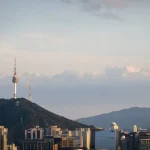
Namsan Seoul Tower on a clear evening. Take the cable car up, or walk the 20-minute path from Myeongdong. The view of Seoul’s basin geography — ringed by mountains, cut through by the Han River — explains the city’s layout better than any map. On a clear winter night, the city grid of lights spreading across the valley floor is something you’ll actually remember.
A morning at Cheonggyecheon Stream. The 5.8-kilometre urban stream runs below street level through central Seoul. Walking its length from City Hall end to the art district at the eastern end takes about 90 minutes at a relaxed pace. In summer the water keeps the air cool; in winter, the sound of running water and the visual break from traffic above make it one of the most quietly restorative stretches in the city.
Han River Park. Seoul’s residents use the Han River parks — particularly Yeouido Hangang Park and Banpo Hangang Park — the way other cities use central parks. On weekends, the rental bicycle stations get busy, and the convenience store culture along the riverbank (people buying beer and fried chicken and sitting on the grass) is a genuine slice of how people actually relax here. The Banpo Bridge Rainbow Fountain runs seasonal evening shows that are popular for a reason.
A day in Bukchon Hanok Village. The narrow alleys between the restored traditional houses (hanok) feel removed from the city below. The best part is the incidental detail — wooden window frames, grey tile rooftops, the faint smell of pine from a courtyard — rather than any single attraction. Come early in the morning; the residents who actually live here have asked, repeatedly, for visitors to keep noise down.

2026 Budget Reality — What Seoul Actually Costs
Seoul became noticeably more expensive between 2022 and 2025, driven by inflation and increased tourist demand. It’s still cheaper than Tokyo, London, or Sydney, but the “ultra-budget” framing of older articles doesn’t fully apply anymore.
Accommodation (per night, solo room)
- Budget: Guesthouse or hostel private room — 35,000–65,000 KRW (~$26–$48 USD)
- Mid-range: 3-star hotel or design guesthouse — 90,000–160,000 KRW (~$67–$119 USD)
- Comfortable: 4-star hotel — 180,000–320,000 KRW (~$133–$237 USD)
Food
- Budget: Convenience store meal or market stall — 3,000–7,000 KRW (~$2.20–$5.20 USD)
- Mid-range: Sit-down restaurant lunch — 10,000–18,000 KRW (~$7.40–$13.30 USD)
- Comfortable: Dinner at a well-regarded Korean restaurant — 25,000–60,000 KRW (~$18.50–$44.40 USD)
Transport
- Single subway ride: 1,400–2,150 KRW (~$1.05–$1.60 USD)
- Short taxi ride (under 5 km): 5,000–8,000 KRW (~$3.70–$5.90 USD)
- AREX Direct Express airport train: 11,000 KRW (~$8.15 USD)
Attractions
- Gyeongbokgung Palace entry: 3,000 KRW (~$2.20 USD)
- N Seoul Tower observation deck: 21,000 KRW (~$15.60 USD)
- Most palaces, royal tombs, and national museums: free or under 5,000 KRW (~$3.70 USD)
A realistic daily budget for a first-timer spending thoughtfully — not splurging, not suffering — sits around 100,000–150,000 KRW (~$74–$111 USD) excluding accommodation.
Practical Stuff Nobody Tells First-Timers
Carry some cash. Korea is heavily card-friendly, and most restaurants and shops in tourist areas accept international Visa and Mastercard. But traditional markets, smaller pojangmacha, and some temple entry points are still cash-only in 2026. Withdraw from 7-Eleven or GS25 ATMs — they reliably accept foreign cards. Woori Bank and KEB Hana Bank ATMs also work well for international cards.
SIM cards vs. pocket WiFi. Buy a local SIM at the airport (SK Telecom, KT, or LG U+ all have counters in the arrivals hall at Incheon). A 10-day unlimited data SIM runs around 30,000–45,000 KRW (~$22–$33 USD). eSIM options from international providers like Airalo also work well if you set them up before flying. Pocket WiFi rental is available but in 2026 is largely unnecessary given how affordable SIMs have become.
Download Kakao Map as a backup to Google Maps. Google Maps is now reliable for Seoul, but Kakao Map still has more granular detail on building entrances, subway exit numbers, and bus schedules. Subway exit numbers matter more than you’d think — some Seoul stations have 15+ exits and choosing the wrong one can leave you a 10-minute walk from where you intended to surface.

Tipping is not a thing. Do not tip at restaurants, cafés, or taxis. It’s not expected and can create an awkward moment. The price you see is the price you pay.
Recycling rules are strict. Seoul enforces waste separation. Your accommodation will have separate bins for food waste, recyclables, and general trash. If you’re unsure, ask at the front desk — it’s a normal question and staff are used to explaining it to visitors.
Day Trips Worth the Effort
Suwon Hwaseong Fortress is 30 kilometres south of Seoul and reachable in about 45 minutes on the subway (Line 1 to Suwon Station). The 18th-century fortress wall circles a large portion of the city and takes about 2–3 hours to walk at a relaxed pace. The surrounding neighbourhood has a traditional market worth stopping at for lunch.
Nami Island requires about 90 minutes of combined transit (ITX-Cheongchun train from Yongsan to Gapyeong, then a short taxi or ferry), but the tree-lined paths and slower pace make it a genuine contrast to Seoul’s density. It’s popular on weekends; a weekday visit in autumn or early spring is noticeably more comfortable.
Incheon Chinatown and Songdo. Incheon, 30 minutes from Seoul by subway (Line 1), has a compact but worthwhile Chinatown, a waterfront park, and the futuristic planned district of Songdo nearby. A combined Incheon day works well if you want urban variety without leaving the metropolitan area.
Demilitarized Zone (DMZ) tours operate from Seoul daily through licensed tour operators. The most accessible sites — the Third Infiltration Tunnel, Dora Observatory, Dorasan Station — require going with a registered tour due to military zone access rules. Half-day and full-day tours typically run 50,000–100,000 KRW (~$37–$74 USD) per person. Book at least 2–3 days in advance in 2026 as demand remains high.
Frequently Asked Questions
Do I need a visa to visit Seoul in 2026?
Citizens of most Western countries, Australia, Canada, Japan, and many others can enter South Korea visa-free for up to 90 days. However, K-ETA (Korea Electronic Travel Authorization) is required again as of 2026 for most of these nationalities. Apply online at least 72 hours before departure. It costs around 10,000 KRW (~$7.40 USD) and is valid for two years.
What is the best time of year to visit Seoul?
Spring (late March to early May) and autumn (September to November) give you the most comfortable temperatures — 12–22°C — and the most visually dramatic scenery, with cherry blossoms or autumn foliage. Summer is hot and humid with a monsoon season in July. Winter is cold and dry but manageable, and accommodation prices are lower.

How many days do I need in Seoul for a first visit?
Five to seven days is the practical minimum to cover the main neighbourhoods, experience the food scene properly, and take at least one day trip. Three days is possible but rushed. Ten days lets you move at a comfortable pace and explore areas like Seongsu-dong and Euljiro that reward slower exploration beyond the headline attractions.
Is Seoul safe for solo travellers?
Seoul consistently ranks among the safest major cities in the world for solo travellers, including solo female travellers. Violent crime against tourists is extremely rare. The main practical concerns are standard urban ones: watch your belongings in crowded markets, don’t leave drinks unattended in bars. The subway is safe at all hours and well-monitored.
Can I get around Seoul without speaking Korean?
Yes, comfortably. Subway signs are in English and Chinese alongside Korean. Most tourist-area restaurants have picture menus or English menus available on request. Google Translate’s camera function handles menus, signs, and packaging quickly. Hotel and hostel staff in Seoul’s tourist areas speak functional to fluent English. Learning a few basic Korean phrases is appreciated but genuinely not required to navigate the city.
Explore more
Nami Island Day Trip: Your Complete Guide to a Magical Escape
📷 Featured image by Minku Kang on Unsplash.