On this page
- 2026 What’s New in Busan’s Food Scene
- Jagalchi & the Waterfront — Where Seafood Is Non-Negotiable
- Gukje Market and the Streets Around It — Busan’s Original Fast Food
- Seomyeon and Gwangalli — Where Locals Actually Eat Dinner
- Milmyeon, Dwaeji Gukbap, and the Dishes That Define the City
- 2026 Budget Reality — What Meals Actually Cost in Busan
- Craft Coffee, Rooftop Cafés, and the Haeundae Café Strip
- Practical Tips for Eating Well in Busan
- Frequently Asked Questions
💰 Click here to see Korea Budget Breakdown
💰 Prices updated: 2026-10-01. Budget figures are estimates — always verify before travel.
Exchange Rate: $1 USD = 1,356 KRW
Daily Budget (per person) • Pricing updated as of 2026-10-01
Daily Budget
Shoestring: 60,000 KRW - 95,000 KRW ($44.25 – $70.06)
Mid-range: 130,000 KRW - 250,000 KRW ($95.87 – $184.37)
Comfortable: 350,000 KRW - 550,000 KRW ($258.11 – $405.60)
Accommodation (per night)
Hostel/guesthouse: 25,000 KRW - 65,000 KRW ($18.44 – $47.94)
Mid-range hotel: 90,000 KRW - 165,000 KRW ($66.37 – $121.68)
Food (per meal)
Budget meal (street food): 9,000 KRW ($6.64)
Mid-range meal (restaurant): 22,000 KRW ($16.22)
Upscale meal: 65,000 KRW ($47.94)
Transport
Single subway/bus trip: 1,600 KRW ($1.18)
Climate Card (30-day unlimited): 67,000 KRW ($49.41)
2026 What’s New in Busan’s Food Scene
If you last visited Busan before 2025, the food landscape has shifted more than you might expect. The Haeundae Blueline Park area now has a permanent night market running Thursday through Sunday, replacing the informal weekend pop-ups that used to appear near Mipo station. Jagalchi Market completed its long-delayed renovation in late 2025 — the indoor halls are cleaner and better ventilated, but the real action is still outside on the dock-side tables where grandmothers in yellow aprons shuck sea squirts to order.
K-ETA requirements changed again in early 2026 for visitors from several countries, so check the official Hi Korea portal before your trip rather than relying on third-party travel sites. Kakao Maps now outperforms Google Maps for finding small alley restaurants in Busan, especially in the Nampo-dong and Bupyeong-dong areas where address pins were frequently wrong on older platforms. Most restaurants in Seomyeon now accept foreign credit cards and many have QR menus with English and Japanese translations.
Jagalchi & the Waterfront — Where Seafood Is Non-Negotiable
Jagalchi is Busan’s most famous fish market, and the 2025 renovation has made it easier to navigate without making it feel sterile. The ground floor of the main building is where vendors sell live and fresh seafood by weight. The second floor is where you bring what you’ve bought — or simply pay the floor fee — and have it prepared at the restaurant counters running along the windows overlooking the harbour.
What to order here specifically: hoe (raw sliced fish, typically flatfish or sea bass), haemul pajeon (seafood pancake, best ordered from the stalls outside the main building rather than inside), and ganjang gejang — raw crab marinated in soy sauce that some vendors sell pre-packed for a few thousand won. The smell of the outdoor section hits you before you see it: brine, dried fish, and the faint diesel of the trawlers moored twenty metres away.
The vendors outside on Jagalchi-daero are generally cheaper than the second-floor restaurants. A plate of mixed raw fish for two people runs about 30,000–50,000 KRW ($22–$37 USD) depending on what’s in season. Abalone and sea cucumber push that number up fast. If a vendor quotes you a price that feels high, you can ask to see the per-100g price — it’s usually posted on the tank.

A short walk north along the waterfront brings you to Choryang Galbi-guksu alley, a cluster of restaurants near Busan Station that serve a dish unique to the port area — beef short-rib soup with noodles, a lunch staple for dock workers that has never really been packaged for tourists. The restaurants here open early, most by 7am, and the broth is clear, beefy, and slightly sweet from the ribs.
Gukje Market and the Streets Around It — Busan’s Original Fast Food
Gukje (International) Market itself is mostly household goods, textiles, and clothing — but the streets immediately surrounding it are where you want to be for a quick, cheap, standing meal. Bupyeong Kkangtong Market, which runs parallel to Gukje on its northern side, has a covered food alley that gets going around 10am and runs until mid-afternoon.
The speciality here is ssiat hotteok — a sweet pancake stuffed with seeds, brown sugar, and cinnamon that’s crispier and denser than the hotteok you’ll find at tourist spots. There’s usually a line at the most popular stall (look for the one with the hand-written sign and the yellow awning near the entrance from Gukje-ro). One piece costs 1,000 KRW (under $1 USD). Eat it while walking because the inside stays molten for about three minutes.
Further into Bupyeong, the evening pojangmacha tents set up around 5pm selling eomuk (fish cake on skewers in hot broth), tteokbokki cooked in a shallow flat pan rather than a pot, and sundae — blood sausage stuffed with glass noodles and vegetables. This style of sundae is denser and more savoury than the Seoul version. A skewer of eomuk is free to taste at most stalls; you pay based on how many you ate, tracked by the number of skewers left in your cup.
Seomyeon and Gwangalli — Where Locals Actually Eat Dinner
Haeundae gets the tourist attention, but Seomyeon is where Busan residents go for dinner. The subway exit 7 and 8 area (Seomyeon station, Line 1 and Line 2 interchange) puts you in the middle of a grid of restaurant streets covering everything from grilled pork belly to Japanese-style ramen to raw fish delivered from Jagalchi at 6am that morning.
Seomyeon Rodeo Street is best for samgyeopsal restaurants where a full dinner with sides, soju, and beer lands between 15,000–25,000 KRW per person ($11–$18 USD). The side streets off Rodeo are where you find the better value — smaller places with laminated menus, plastic stools, and owners who’ve been cooking the same three dishes since the 1990s.

For a proper sit-down dinner focused on seafood, Gwangalli Beach has a row of restaurants along Gwanganbeon-ro facing the Gwangan Bridge. The bridge lights up at night and the view from an outdoor table with a cold OB beer and a plate of grilled octopus is about as good as Busan gets. Prices here are higher than Seomyeon — budget 30,000–50,000 KRW per person for a full meal with drinks — but you’re partly paying for the view and that’s not unreasonable.
The neighbourhood of Mangmi-dong, one stop east of Seomyeon on Line 2, has become a serious food destination since 2024. It has a concentration of independently run restaurants — Korean barbecue with dry-aged beef, natural wine bars serving Korean snack food, and at least three highly rated cold noodle specialists. It’s less polished than Gwangalli but more interesting.
Milmyeon, Dwaeji Gukbap, and the Dishes That Define the City
Two dishes belong to Busan in a way that no amount of replication elsewhere quite captures.
Dwaeji gukbap is pork and rice soup — a bowl of milky, long-simmered pork bone broth served with sliced boiled pork, rice on the side or mixed in, and a plate of kimchi and salted shrimp to season it yourself. The best places for this are not in tourist areas. Songjeong Dwaeji Gukbap near Songjeong Station (Line 2) is one of the most respected in the city, open from early morning. Hadonggwan in Seomyeon is another reliable address that locals have been going to for decades. A bowl costs 9,000–11,000 KRW ($6.50–$8 USD).
Milmyeon is wheat noodles served in a cold, lightly sweet beef broth with a dollop of gochujang paste, cucumber strips, and half a boiled egg. It’s lighter than naengmyeon (buckwheat cold noodles) and more delicate. The noodles are slightly chewy and the broth has a clean, almost neutral flavour that lets the condiments do the work. Gaya Milmyeon near Seomyeon is the most consistently recommended spot, and the line at lunch moves faster than it looks. A bowl is around 8,000–10,000 KRW ($5.90–$7.40 USD).
Both dishes are breakfast and lunch foods in Busan — you’ll have trouble finding dwaeji gukbap after 2pm at the best spots, and milmyeon restaurants often run out of broth by early afternoon. Plan accordingly.

2026 Budget Reality — What Meals Actually Cost in Busan
Busan is noticeably cheaper than Seoul for food, particularly at the market and street level. Here’s a realistic breakdown for 2026:
- Budget (under 12,000 KRW / ~$9 USD per meal): Street food at Bupyeong Market, a bowl of dwaeji gukbap or milmyeon, eomuk skewers and tteokbokki at a pojangmacha, convenience store kimbap and ramyeon. You can eat well in Busan on 25,000–30,000 KRW ($18–$22 USD) per day at this tier.
- Mid-range (12,000–30,000 KRW / ~$9–$22 USD per meal): A sit-down samgyeopsal dinner with sides and one round of drinks, a set lunch at a seafood restaurant near Jagalchi, sashimi for two at a reputable Seomyeon restaurant. Most visitors will spend 50,000–80,000 KRW ($37–$59 USD) per person per day including coffee and snacks.
- Comfortable (30,000–70,000+ KRW / ~$22–$52+ USD per meal): Gwangalli beachfront seafood dinners, premium hoe restaurants at Jagalchi’s second floor, dry-aged Korean beef barbecue in Mangmi-dong, or the growing number of tasting-menu restaurants in Haeundae that have opened since 2024. Budget 100,000–150,000 KRW ($74–$111 USD) per person per day at this level.
One practical note: most street vendors and small pojangmacha tents still prefer cash in 2026. Carry at least 20,000–30,000 KRW ($15–$22 USD) in cash at all times when eating at markets. Larger restaurants, particularly in Seomyeon and Haeundae, take foreign cards without issue.
Craft Coffee, Rooftop Cafés, and the Haeundae Café Strip
Busan’s café scene has developed its own identity, partly shaped by the fact that many of the best spots are built into or on top of the city’s dramatic hillside geography. This is not the same as Seoul’s café culture — it’s louder, more beach-adjacent, and less precious about latte art.
The Haeundae café strip runs from Haeundae Beach station toward Dalmaji Hill, with a concentration of rooftop cafés that face the sea. The best of these open around 11am, close around 10pm, and charge 7,000–9,000 KRW ($5.20–$6.70 USD) for an Americano — about 1,500–2,000 KRW more than you’d pay in Seomyeon. The markup is for the view, which on a clear winter morning when the East Sea is flat and the air smells of cold salt, is genuinely worth it.
For specialty coffee without the tourist pricing, Oncheonjang neighbourhood (one stop from Seomyeon on Line 1) has become a serious coffee district. Several small independent roasters have opened here since 2024, some with rotating single-origin offerings. Prices are 4,500–6,500 KRW ($3.30–$4.80 USD) for a filter coffee.

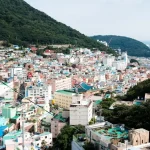
Gamcheon Culture Village has cafés built into the steep staircases of the hillside neighbourhood — the coffee is average but the setting is not. If you’re visiting Gamcheon anyway, the café with the blue tile exterior near the top of the main walking path usually has a shorter queue than the others and a better view.
Busan also has a strong sikhye (sweet fermented rice drink) and bingsu (shaved ice dessert) culture in summer. Along Gwangalli Beach from June through September, bingsu shops with outdoor seating do brisk business from mid-afternoon onward. Patbingsu (red bean shaved ice) is 10,000–14,000 KRW ($7.40–$10.40 USD) and large enough to share.
Practical Tips for Eating Well in Busan
Timing matters more here than in Seoul. The best dwaeji gukbap and milmyeon spots have closing times that are driven by when they run out of broth, not a clock. If you want the benchmark versions of these dishes, go before noon.
The subway is your best friend for food-seeking. Busan’s metro is clean, reliable, and cheap — a single journey is 1,500 KRW ($1.10 USD) with a T-Money card. The satisfying tap of the card on the turnstile gate becomes a rhythm you’ll associate with moving between Seomyeon, Nampo-dong, and Haeundae over the course of a food-focused day. Eating across three or four neighbourhoods in one day is completely practical because of how well the lines connect.
Allergy communication: The standard Korean food allergen system covers the main 22 allergens and is now printed on QR menus in most mid-range restaurants. If you have a severe shellfish allergy, Jagalchi and its surrounding streets carry significant airborne risk — particles from live seafood tanks and grilling are unavoidable.
Avoid peak lunch hours at famous spots. Gaya Milmyeon and popular dwaeji gukbap restaurants fill up between 12pm–1:30pm. Arrive before 11:30am or after 2pm for a shorter wait and a better chance of getting the broth while it’s fresh.
What to do with a food-focused evening in Busan: Start with eomuk and tteokbokki at Bupyeong Market around 5:30pm. Take Line 2 to Gwangalli for a seafood dinner with a view around 7pm. Walk the beach after dinner and stop at one of the bingsu or dessert cafés near the beach road. Total cost for this evening: 40,000–60,000 KRW ($30–$44 USD) per person including drinks.
Frequently Asked Questions
What is the most famous food in Busan?
Dwaeji gukbap (pork and rice soup) and milmyeon (cold wheat noodles) are the two dishes most closely identified with Busan. Both originated here and are eaten as everyday meals rather than special occasion food. Jagalchi seafood is also closely associated with the city, particularly raw sliced fish and live seafood prepared at the market.

Where is the best place to eat seafood in Busan?
Jagalchi Market is the most famous option, and the renovated facility in 2026 makes it a more comfortable experience. For a more local feel, the seafood alley near Choryang and the restaurants along Gwangalli Beach offer fresh fish in settings that feel less packaged for tourists. Prices vary significantly — always check per-gram pricing before ordering live seafood.
Is food in Busan expensive?
Busan is cheaper for food than Seoul, especially at street and market level. A bowl of milmyeon or dwaeji gukbap costs 8,000–11,000 KRW (under $9 USD). A full sit-down dinner with seafood and drinks in Gwangalli runs 30,000–50,000 KRW ($22–$37 USD) per person. Street food at Bupyeong Market can fill you up for under 5,000 KRW ($3.70 USD).
Do Busan restaurants accept credit cards?
Most restaurants in Seomyeon, Haeundae, and Gwangalli accept foreign Visa and Mastercard without issue in 2026. Small pojangmacha tents, street stalls, and older market vendors still prefer cash. Carry 20,000–30,000 KRW ($15–$22 USD) in cash for market eating. T-Money cards work at convenience stores and can be loaded at subway station machines.
When is the best time to visit Busan for food?
Autumn (September–November) gives you cooler weather for eating hot soup dishes and the best variety of seasonal seafood. Winter is ideal for dwaeji gukbap and milmyeon eaten at an indoor counter while it’s cold outside. Summer brings the bingsu and outdoor market culture but heat makes heavy seafood meals less comfortable. There is no bad season for food in Busan.
Explore more
Nampo-dong Travel Guide: Shopping, Street Food & Culture in Busan
📷 Featured image by Jimmy Moon on Unsplash.