Every year, Jeju accommodation gets harder to price and harder to pick. Many first-time visitors book near the airport, then spend half their trip in a rental car heading south. Jungmun Tourist Complex, on the southern coast in Seogwipo, solves part of that problem. It puts beaches, cliffs, waterfalls and the island’s best-known resorts in one compact area. Here is what it is actually like in 2026, and whether it suits your trip.
What Jungmun Feels Like
Jungmun is a planned resort zone, not a traditional town. Wide, quiet roads curve past big hotels, gardens and parking lots, and everything is spaced out. The mood is calm and a little polished, with families, honeymooners and tour groups making up most of the crowd. Nobody is rushing.
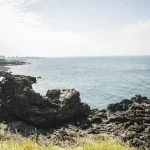
The ocean defines the area. On a windy day you hear waves dragging across the beach sand long before you see the water. In winter the air smells of citrus peel from tangerine stands along the roadside. If you want nightlife, look elsewhere. Evenings here mean a hotel bar, a beach walk or an early night.
Getting to Jungmun and Moving Around
Jungmun is roughly 40 km from Jeju International Airport. By car or taxi, allow about 50 to 60 minutes. A taxi costs roughly 50,000–60,000 KRW (~$37–44). Kakao T works on Jeju and saves you from haggling.
The cheaper option is the airport limousine bus, Route 600. It stops at the main resort hotels and costs about 7,000–8,000 KRW (~$5–6). Check the current timetable on Naver Map or Kakao Map. Google Maps still gives weaker transit and walking data in Korea. Tap your T-Money card as you board. The short beep confirms it, and it works on Jeju buses like it does in Seoul.
Once you are here, the main sights are spread out. Some are walkable from each other, others are not. Many visitors rent a car, and electric rental cars are now common on Jeju, with charging points at most big resorts. If you skip the car, local buses and taxis cover the key spots, but plan your day around their schedules.

The Coast: Jungmun Beach, Jusangjeolli and Daepo
Jungmun Saekdal Beach is the headline. Its sand is a mix of black, white, grey and reddish grains, which gives it a speckled look in the sun. It is a known surf spot, and on bigger swell days you will see wetsuits bobbing past the break. Swimming is usually allowed only in the summer season, mainly July and August, when lifeguards are on duty. Outside those months, red flags and strong currents are common, so treat it as a beach for walking.
Jusangjeolli Cliff sits a short drive away along the shore. Here, lava cooled into tall, hexagonal basalt columns that stack like giant pencils. Waves crash against them with a deep boom, and spray hangs in the air on windy days. The walkway is short and easy, so 30 to 45 minutes is enough. Go early in the morning if you want fewer tour groups in your photos.
Daepo Coast is the quieter option nearby. Part of the Jeju Olle trail passes this stretch, with rocky shoreline and fishing boats. It works well if you want an easy coastal stroll without crowds.
Waterfalls, Gardens and Museums
When the weather turns, Jungmun has plenty of indoor and shaded options.
- Cheonjeyeon Waterfalls: A three-tier waterfall reached by a short forest walk and a bridge. The path is mostly flat with some stairs. Expect damp air and the sound of falling water, especially after rain.
- Yeomiji Botanical Garden: A large garden with greenhouses and outdoor paths. It is a good pick for a rainy afternoon because much of it is covered.
- Jeju Teddy Bear Museum: Popular with families and photo lovers. Plan about an hour.
Cheonjeyeon and Jusangjeolli are cheap to enter, so adding them costs very little. The garden and museums cost more, so pick one or two rather than all of them.
Where to Stay
This is where Jungmun stands out. The area holds some of Jeju’s best-known luxury properties, including Hotel Shilla Jeju, Lotte Hotel Jeju and Hyatt Regency Jeju. Haevichi Hotel & Resort is also in the area. Many offer ocean views, large pools, spas and garden grounds.
Pick based on what you want:
- Ocean view and big pools: The major resort hotels, best for families and long stays.
- Quiet and spa focus: Look for resorts with garden grounds and on-site wellness facilities.
- Lower cost: Smaller hotels and pensions just outside the main complex, or in Seogwipo city about 20 minutes away.

Resort rates swing a lot by season, so check dates carefully. Weekday stays outside school holidays are often much cheaper than weekends.
Where to Eat in and Around Jungmun
Hotel restaurants are the easy, expensive choice. For better value, head out. Small restaurants and cafes cluster along the roads near the beach and around Saekdal-dong, serving Jeju staples like grilled black pork, grilled fish and seafood stews. Menus are often posted in English or with photos.
For the most variety, take a 20-minute taxi or drive into Seogwipo and visit Seogwipo Maeil Olle Market. Vendors sell tangerine products, fried snacks, fresh fish and street food. Carry a little cash for small stalls, although most places take cards. At dinner time, restaurant tables fill early, so arrive by 6:00 p.m. on weekends.
2026 Budget Reality
Using about 1,350 KRW per USD, here is what to expect per person or per room.
- Budget: A guesthouse or basic hotel in Seogwipo costs about 60,000–100,000 KRW (~$44–74) per night. Meals run 8,000–12,000 KRW (~$6–9). Free sights like the beach walk keep daily costs low.
- Mid-range: A good hotel or smaller resort costs about 150,000–250,000 KRW (~$111–185) per night. Meals at local restaurants cost 15,000–25,000 KRW (~$11–19). Black pork dinners are on the higher end of that.
- Comfortable: The big resorts often cost 350,000–700,000 KRW or more (~$260–520+) per night in busy seasons. Hotel dining and spa treatments add up quickly.
Attractions are modest. Cheonjeyeon and Jusangjeolli cost only a few thousand won each (~$2 or so). Gardens and museums usually run about 10,000–15,000 KRW (~$7–11). A rental car typically costs 50,000–100,000 KRW (~$37–74) per day, depending on season and car type. Prices on Jeju have risen since 2024, so book early and compare. All figures are estimates and change by season.
Best Time to Visit and a Sample Day
Spring (April–May) brings mild weather and flowers. Summer (July–August) is the only reliable beach season, but it is crowded and pricey. Autumn is comfortable and clear. Winter is quieter and cheaper, with cold sea wind, though Jungmun is milder than the north coast.
A simple one-day plan:
- Morning: Walk Jusangjeolli Cliff before tour buses arrive.
- Late morning: Visit Cheonjeyeon Waterfalls.
- Lunch: Eat at a local restaurant near Saekdal-dong.
- Afternoon: Spend time at Jungmun Beach or Yeomiji Botanical Garden.
- Evening: Watch sunset on the coast and have dinner at your hotel or in Seogwipo.

Frequently Asked Questions
Is Jungmun Tourist Complex worth visiting?
Yes, if you want beaches, coastal sights and resort comfort in one place. It suits families and couples who like a relaxed pace. If you prefer cafes, nightlife and street life, Seogwipo city or Jeju City will suit you better.
How far is Jungmun from Jeju Airport?
It is about 40 km, roughly 50 to 60 minutes by car or taxi. The Route 600 limousine bus also runs to the main resort hotels. Travel time varies with traffic and weather, so leave extra time before an outbound flight.
Can you swim at Jungmun Beach?
Swimming is usually allowed only during the summer season, mainly July and August, when lifeguards are on duty. Outside those months, strong waves and currents are common. Always check the flags and follow lifeguard instructions before entering the water.
Do I need a car in Jungmun?
A car makes things much easier, since sights are spread out. You can manage without one using the limousine bus, local buses and taxis. Just plan around bus schedules and expect to spend more on taxis for farther attractions.
How many days should I spend in Jungmun?
Two days is enough to see the beach, Jusangjeolli, Cheonjeyeon and a garden or museum. Stay three days if you want resort time, a spa visit and an easy trip into Seogwipo. One day works as a stop on a larger island route.
Explore more
Is Jeju Island Expensive? A Realistic Budget Breakdown for Your Trip
Unmissable Jeju Island Attractions: Your Ultimate Guide to South Korea’s Paradise
10 Must-Try Jeju Foods Beyond Black Pork
📷 Featured image by JinHui CHEN on Unsplash.