On this page
- Why Hangul Is Easier Than It Looks
- Minutes 0–15: Learn the Six Core Vowels
- Minutes 15–30: Learn the Ten Core Consonants
- Minutes 30–45: Stack Letters Into Syllable Blocks
- Minutes 45–60: Add the Extra Letters and Final Consonants
- Read Real Travel Words on Your First Day
- Why Romanization Lies to You
- 2026 Budget Reality: What Learning Hangul Costs
- Frequently Asked Questions
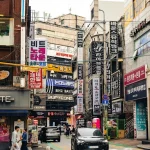
You land in Seoul in 2026 with a translation app and a plan. Then the app freezes on a crowded subway platform, or the restaurant tablet shows only Korean text. English signs are more common than they were in 2024, but they still disappear in neighborhood restaurants, side streets, and Local buses. The fix is not learning Korean. It is learning to read it, and that really can take about an hour.
Why Hangul Is Easier Than It Looks
Hangul (한글, hangeul) was designed on purpose. King Sejong’s scholars created it in the 1440s so ordinary people could learn to read quickly. Most writing systems grew slowly over centuries. This one was built like a tool.
The shapes follow logic. Consonant letters copy the position of your mouth and tongue. Vowels are made from three simple parts: a vertical line, a horizontal line, and a dot that later became a short stroke. Once you see the pattern, you stop memorizing and start recognizing.
There are 24 basic letters: 14 consonants and 10 vowels. You do not need all of them in the first hour. Learn about 16 and you can read a large share of the signs, menus, and station names you will meet as a traveler.
Minutes 0–15: Learn the Six Core Vowels
Start with vowels because they decide the sound of every syllable. Say each one out loud as you read.
- ㅏ (a), like “ah” in “father”
- ㅓ (eo), like “uh” in “sun”
- ㅗ (o), like “oh”
- ㅜ (u), like “oo” in “moon”
- ㅡ (eu), like “oo” in “book” with your lips flat, not rounded
- ㅣ (i), like “ee” in “see”
Here is the trick. Vertical vowels (ㅏ, ㅓ, ㅣ) attach to the right of a consonant. Horizontal vowels (ㅗ, ㅜ, ㅡ) sit underneath. Also, the short stroke on ㅏ and ㅗ points up or right, which are the “bright” sounds. On ㅓ and ㅜ it points left or down, the “darker” sounds. Say them a few times with your mouth in a relaxed shape and the difference becomes clear.
Minutes 15–30: Learn the Ten Core Consonants
Now add the consonants you will see most often.
- ㄱ (g/k), like a soft “g,” shaped like the back of your tongue rising
- ㄴ (n), like “n,” showing the tongue touching the roof of your mouth
- ㄷ (d/t), like a soft “d”
- ㄹ (r/l), a quick tap between “r” and “l”
- ㅁ (m), like “m,” shaped like closed lips
- ㅂ (b/p), like a soft “b”
- ㅅ (s), like “s”
- ㅇ (silent or ng), silent at the start of a syllable, “ng” at the end
- ㅈ (j), like “j”
- ㅎ (h), like “h”
The circle ㅇ confuses beginners most. At the start of a block it is a placeholder that means “no consonant here.” So 아 is just “a.” At the bottom of a block it makes the “ng” sound, as in 강 (gang).
Minutes 30–45: Stack Letters Into Syllable Blocks
Korean does not run letters in a line like English. It packs them into square blocks, one per syllable. Each block follows the same recipe: consonant, then vowel, with an optional final consonant at the bottom.
Try these:
- 가 (ga) = ㄱ + ㅏ
- 나 (na) = ㄴ + ㅏ
- 모 (mo) = ㅁ + ㅗ
- 수 (su) = ㅅ + ㅜ
- 시 (si) = ㅅ + ㅣ
- 한 (han) = ㅎ + ㅏ + ㄴ
Now read a word: 나무 (namu), meaning “tree.” Then 모자 (moja), “hat,” and 아이 (ai), “child.” You are reading Korean. Slow, yes, but reading.
Minutes 45–60: Add the Extra Letters and Final Consonants
Four more consonants add a puff of air. They look like the letters you already know with an extra stroke.
- ㅊ (ch), a strong “ch,” like ㅈ with a stroke
- ㅋ (k), a strong “k,” like ㄱ with a stroke
- ㅌ (t), a strong “t,” like ㄷ with a stroke
- ㅍ (p), a strong “p”
Then there are the doubled “tense” consonants: ㄲ, ㄸ, ㅃ, ㅆ, ㅉ. You say them with a tight throat and no puff of air. You will see them in words like 오빠 (oppa) and 쌈 (ssam). Do not memorize them yet. Just know that a doubled letter means a sharper sound.
Last, final consonants, called batchim (받침). The bottom letter in a block is pronounced differently from when it starts a syllable. Both ㄱ and ㅋ at the bottom sound like a short “k.” Both ㅂ and ㅍ sound like a short “p.” Treat this as a pattern you will absorb with practice, not a rule to memorize today.
Read Real Travel Words on Your First Day
Practice on words you will actually see. Sound each one out before checking the answer.
- 지하철 (jihacheol), subway
- 출구 (chulgu), exit
- 화장실 (hwajangsil), restroom
- 편의점 (pyeonuijeom), convenience store
- 버스 (beoseu), bus
- 택시 (taeksi), taxi
- 커피 (keopi), coffee
- 김치 (gimchi), kimchi
- 비빔밥 (bibimbap), mixed rice bowl
Then try station names: 강남 (Gangnam), 명동 (Myeongdong), 이태원 (Itaewon), and 홍대입구 (Hongdae-ipgu). The next time the doors open with that soft chime, and the announcement rolls through in Korean and English, you will notice you can read the sign on the platform wall before the voice finishes. That moment is when it clicks. The same goes for the tap of a T-Money card on the gate, which is always followed by a signs-and-arrows maze that now makes sense.
Why Romanization Lies to You
Korea’s official romanization system is useful, but it is not how Koreans think about sound. The same letter can appear as “g” or “k,” “d” or “t,” “r” or “l,” depending on where it sits. That is why you will see 대구 written as “Daegu,” while the first sound is somewhere between “d” and “t.”
Signs can also be inconsistent. A restaurant might write 김밥 as “gimbap,” “kimbap,” or “kimbob.” Older signs and private businesses often use their own spelling. Hangul does not change. Once you can read 김밥, you stop depending on whatever spelling the owner picked.
Sound shifts can surprise you too. 신라 is written sinra but pronounced Silla. Do not worry about this on day one. Hangul still gives you a close-enough reading to be understood, and listening will fix the rest.
2026 Budget Reality: What Learning Hangul Costs
Learning to read costs very little. Roughly 1,350 KRW equals 1 USD in 2026, and these are typical ranges.
- Budget (0–10,000 KRW / $0–7.50): Free alphabet lessons on YouTube, free apps, and printable charts. A practice meal of kimchi jjigae (김치찌개) at a basic local restaurant runs about 9,000–10,000 KRW ($6.70–7.40), and the menu board is your reading test.
- Mid-range (15,000–60,000 KRW / $11–45): A paid app subscription for a month or a beginner phrasebook with Hangul charts. Many bookstores also sell workbooks for 12,000–18,000 KRW ($9–13).
- Comfortable (25,000–70,000 KRW / $18.50–52 per session): A private online or in-person tutor for one or two lessons. A single session is plenty to fix your pronunciation, and cuts the learning curve.
Short group courses at university language centers cost far more, often over 150,000 KRW ($110) per term, but they make more sense for longer stays than a single trip.
Frequently Asked Questions
Can I really learn Hangul in one hour?
Yes, for basic reading. In an hour you can learn the core vowels and consonants, build syllable blocks, and sound out simple words. You will read slowly and miss some sound rules. That is normal. Speed and accuracy improve quickly after a few days of practice with real signs.
Do I need Hangul if I use a translation app in Korea?
It helps a lot. Apps need a signal, a charged phone, and good camera light. Reading Hangul lets you confirm station names, check exits, and recognize menu items at a glance. It also helps you spot translation mistakes, which still happen with handwritten or stylized signs in 2026.
What is the hardest part of reading Hangul for beginners?
Most beginners struggle with three things: telling similar vowels apart, such as ㅓ and ㅗ, handling the silent ㅇ, and learning that pronunciation changes in final consonants. Focus on shapes first and sounds second. Practice with station names and food words until the patterns feel natural.
Is Korean romanization good enough for travelers?
It works as a rough guide but not as a reliable one. Spellings vary between signs, maps, and menus, and the same sound can be written several ways. Hangul stays consistent. Matching characters is the safest method when you need to find a specific place or order the right dish.
What should I practice first after the one-hour lesson?
Start with words you will see daily: subway stations, exit, restroom, and basic food names. Photograph signs and read them aloud later. Daily practice for 10 minutes beats one long session. After a week, read menus aloud at the table, and you will improve fast.
Explore more
Your Guide to K-Pop Shopping: Best Stores for Merchandise in Myeongdong & Hongdae
Living Like a Local: A Day in the Life of a Korean Traveler
Chopstick Etiquette in Korea: What Every Traveler Needs to Know