On this page
- Before You Need Help, Know This
- Why “Excuse Me” Alone Won’t Save You
- The Essential “Help Me” Phrases
- Asking for Directions Without Getting Lost in the Conversation
- Medical, Safety, and Emergency Language
- Getting Help at Convenience Stores, Stations, and Public Spaces
- Reading the Response: What Koreans Say When They’re Helping You
- 2026 Budget Reality: Language Apps and Translation Tools Worth Paying For
- Frequently Asked Questions
Before You Need Help, Know This
In 2026, Seoul’s signage is better than ever — subway lines now display four languages, and Google Maps finally updated its Korean transit data to reflect the GTX-A expansion. But signs only get you so far. The moment something goes wrong — a missed stop, a medical question, a lost bag — you need to speak. Most Travelers freeze because their phrasebook Korean sounds nothing like what real Koreans say, and they can’t process the answer. This guide fixes that. Every phrase here is short, learnable in minutes, and designed for the specific situations where travelers actually need help.
Why “Excuse Me” Alone Won’t Save You
The word 저기요 (jeo-gi-yo) — roughly “excuse me” or “hey there” — is the standard way to get someone’s attention in Korea. You’ll use it constantly. But it’s an opener, not a request. The problem most travelers run into is that they nail the opener, then stumble completely when they have to explain what they need.
Korean is a verb-final language, which means the most important word in any sentence comes last. When a Korean person hears you start talking, they’re waiting for the end of your sentence before they fully understand you. This is the opposite of English. So if you trail off or give up halfway through, they genuinely don’t know what you wanted.
The good news: Koreans are extraordinarily patient with foreign speakers. A half-pronounced phrase combined with a confused face and a phone screen goes a long way. But knowing even five or six targeted phrases — not random vocabulary — makes the difference between getting real help and getting a polite smile and a shrug.
The Essential “Help Me” Phrases
Start with the word that covers everything:
- 도와주세요 — Do-wa-ju-se-yo — “Please help me.” This is your all-purpose distress phrase. Say it clearly and someone will stop.
- 모르겠어요 — Mo-reu-ge-sseo-yo — “I don’t know / I’m not sure.” Use this to signal you’re lost or confused without panicking anyone.
- 이해 못 했어요 — I-hae mot hae-sseo-yo — “I didn’t understand.” Say this after someone answers you too fast.
- 천천히 말씀해 주세요 — Cheon-cheon-hi mal-sseum-hae ju-se-yo — “Please speak slowly.” Koreans will genuinely try.
- 영어 할 수 있어요? — Yeong-eo hal su i-sseo-yo? — “Can you speak English?” Younger Koreans in cities often can. Older Koreans in rural areas usually cannot, and that’s fine — use gestures and translation apps together.

Asking for Directions Without Getting Lost in the Conversation
Directions are where most travelers give up on speaking Korean entirely. They hand over their phone with Google Maps open and hope for the best. That works — but it’s worth having the language to guide the exchange, because sometimes the person helping you wants to explain something the map doesn’t show.
- 여기가 어디예요? — Yeo-gi-ga eo-di-ye-yo? — “Where is this place?” Show your phone screen as you ask.
- 어떻게 가요? — Eo-tteo-ke ga-yo? — “How do I get there?” The most useful three-syllable question you’ll learn.
- 걸어서 얼마나 걸려요? — Geo-reo-seo eol-ma-na geol-lyeo-yo? — “How long does it take to walk?” Koreans will answer with a number of minutes — listen for the number and the word 분 (bun), which means “minutes.”
- 지하철역이 어디예요? — Ji-ha-cheol-yeok-i eo-di-ye-yo? — “Where is the subway station?” Swap in 버스 정류장 (beo-seu jeong-nyu-jang) for “bus stop.”
- 이 버스 [목적지] 가요? — I beo-seu [destination] ga-yo? — “Does this bus go to [destination]?” Say the place name from your phone screen if you can’t pronounce it.
When someone gives you directions, the key words to listen for are: 왼쪽 (oen-jjok) = left, 오른쪽 (o-reun-jjok) = right, 직진 (jik-jin) = straight ahead, and 건너편 (geon-neo-pyeon) = across the street. You don’t need to understand the whole sentence — catching these words gives you the shape of the route.
Medical, Safety, and Emergency Language
Korea’s emergency number is 119 for fire and ambulance, 112 for police. Operators have English support in 2026, but it’s limited and sometimes slow to connect. Knowing what to say in Korean gets faster results.
- 살려주세요! — Sal-lyeo-ju-se-yo! — “Save me! / Help!” This is an urgent cry for help — use it in genuine emergencies.
- 병원이 어디예요? — Byeong-wo-ni eo-di-ye-yo? — “Where is the hospital?”
- 약국이 어디예요? — Yak-gu-gi eo-di-ye-yo? — “Where is the pharmacy?” Pharmacies in Korea are well-stocked and pharmacists often speak basic English in cities. The green cross sign marks them everywhere.
- 아파요 — A-pa-yo — “I’m sick / it hurts.” Point to the part of your body that hurts while saying this.
- 알레르기가 있어요 — Al-le-reu-gi-ga i-sseo-yo — “I have an allergy.” Follow with the allergen word from your translation app.
- 도둑이야! — Do-du-gi-ya! — “Thief!” Shout this if someone takes your belongings. Koreans will react immediately.
If you’re filling out a form at a clinic or police station and can’t communicate, ask: 통역사가 있어요? (Tong-yeok-sa-ga i-sseo-yo?) — “Is there an interpreter?” Major hospitals in Seoul, Busan, and Jeju have medical interpreter services in 2026, often bookable through the hospital app or front desk.

Getting Help at Convenience Stores, Stations, and Public Spaces
The majority of your “I need help” moments won’t be emergencies. They’ll be small friction points — a malfunctioning ticket machine, a package you need to send, a card that won’t tap. Convenience stores (GS25, CU, 7-Eleven) are staffed around the clock and are genuinely useful help points for travelers.
- 이거 어떻게 써요? — I-geo eo-tteo-ke sseo-yo? — “How do I use this?” Point at whatever is confusing you — a machine, a product, a form.
- 영수증 주세요 — Yeong-su-jeung ju-se-yo — “Please give me a receipt.” Useful for expense reporting or refund situations.
- 환불할 수 있어요? — Hwan-bul-hal su i-sseo-yo? — “Can I get a refund?”
- 충전해 주세요 — Chung-jeon-hae ju-se-yo — “Please top up / charge.” Use this at a convenience store counter to reload your T-Money card. Hand them the card and the cash amount you want added.
- 짐 맡길 수 있어요? — Jim mat-gil su i-sseo-yo? — “Can I leave my luggage here?” Some convenience stores near tourist areas have luggage storage partnerships in 2026.
The satisfying click and beep of a T-Money card tapping cleanly on the subway gate is one of those small Seoul pleasures — but when the gate flashes red and beeps differently, it means your balance is too low. That’s when 충전해 주세요 becomes essential. Most subway stations have staffed booths near the gates specifically for this.
Reading the Response: What Koreans Say When They’re Helping You
Asking the right question is half the job. Understanding the answer is the other half — and this is where most travelers hit a wall. Here are the most common responses you’ll hear when someone is helping you, so the conversation doesn’t die after your first phrase.
- 잠깐만요 — Jam-kkan-man-yo — “Just a moment.” They’re looking something up or getting someone else. Stay put.
- 모르겠어요 — Mo-reu-ge-sseo-yo — “I’m not sure.” If a stranger says this, they’re being honest. Nod and try someone else.
- 저기 있어요 — Jeo-gi i-sseo-yo — “It’s over there.” Usually said while pointing. Look where they point.
- 이쪽으로 오세요 — I-jjo-geu-ro o-se-yo — “Come this way.” This means they’re going to physically show you. Follow them — this is a genuinely common Korean response to someone who looks lost.
- 직진하세요 — Jik-jin-ha-se-yo — “Go straight.” Combined with a hand gesture forward.
- 잘 모르는데요… — Jal mo-reu-neun-de-yo — “I don’t really know…” The trailing tone means they’re uncertain. Politely thank them (감사합니다 — gam-sa-ham-ni-da) and ask someone else.
Something that surprises many first-time visitors: a Korean person who wants to help you but speaks no English may still walk you to your destination rather than try to explain it verbally. This isn’t unusual — it’s a genuine expression of hospitality. The warmth in that gesture, the slightly hurried footsteps of someone going out of their way for a stranger, is something travelers remember long after the trip.
2026 Budget Reality: Language Apps and Translation Tools Worth Paying For
Free tools have improved significantly, but there are situations where paid options genuinely earn their cost.
- Naver Papago (Free) — Still the best free tool for Korean in 2026. Voice, text, image, and conversation modes. Offline packs now available for Korea. No cost.
- Kakao Translate (Free) — Built into KakaoTalk, which you likely already have. Good for quick typed phrases. No cost.
- Google Translate with Korean Offline Pack (Free) — Reliable for reading signs and menus via camera. Download the pack before you land.
- Flitto On-Demand Human Translation (Paid) — For complex situations like medical forms, legal documents, or extended conversations. Approximately 5,000–15,000 KRW (~$3.70–$11 USD) per session depending on complexity. Available via app in 2026 with sub-10-minute response times in major cities.
- Intensive Korean Lesson Apps (Budget) — Apps like Pimsleur Korean or Glossika Korean: 30,000–60,000 KRW/month (~$22–$44 USD). Worth it if you’re spending more than two weeks in Korea or returning regularly.
The honest advice: for a one- to two-week trip, free tools plus the twenty phrases in this article cover 90% of situations. The remaining 10% — genuine emergencies, complex medical needs — is where having a hotel concierge or a Korean contact you can call makes more difference than any app.
Frequently Asked Questions
Do I need to learn Korean before visiting South Korea in 2026?
No — but learning ten to fifteen practical phrases makes a real difference. English signage in major cities is solid, and translation apps handle most reading tasks. Where spoken Korean pays off is in emergency situations, getting directions, and smaller interactions where your phone screen isn’t immediately helpful. A little effort earns significant goodwill.
Will Koreans be patient if my pronunciation is bad?
Generally yes, especially if your attempt is genuine and you’re not rushing. Koreans tend to appreciate any effort to speak the language. If they don’t understand, they’ll often repeat the correct version quietly — not to embarrass you, but to help. Smile, stay calm, and try again. Tone matters more than perfect pronunciation in most help-seeking situations.
What’s the single most useful Korean phrase for travelers?
도와주세요 (Do-wa-ju-se-yo) — “Please help me” — is the one phrase worth memorizing before anything else. It’s clear, universally understood, and signals immediately that you need assistance. Pair it with pointing, a phone screen, or a confused expression and someone will engage with you within seconds in any Korean public space.
Is it rude to use a translation app instead of trying to speak Korean?
Not at all. Using an app shows effort and consideration — you’re trying to communicate accurately rather than just speaking slowly in English. Most Koreans under 40 in cities are familiar with translation app exchanges and respond naturally. Holding your phone screen toward someone while looking apologetic and grateful is a completely accepted social move in 2026 Korea.
What should I do if no one around me speaks any English in an emergency?
Call 119 (ambulance/fire) or 112 (police) — both have multilingual support lines in 2026, though connection times vary. Say 살려주세요 (Sal-lyeo-ju-se-yo) loudly to attract bystanders. Show your phone translation screen. Korea’s emergency response infrastructure is fast and well-organized — even a partial communication attempt will get you help quickly.
Explore more
Can You Visit K-Pop Training Centers in Seoul? A Fan’s Guide
The Unwritten Rules of Korean Karaoke: Norebang Etiquette for Travelers
Korean Public Transport Etiquette: Riding the Subway & Bus Like a Local
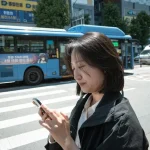
📷 Featured image by Damaris Isenschmid on Unsplash.