On this page
- Gyeongju — Korea’s Open-Air Museum
- Jeonju — The Food Capital That Actually Earns the Title
- Andong — Slow Travel Before Slow Travel Was Cool
- Sokcho — The Gateway to the Mountains and Sea
- Daejeon — The Underrated City That Works as a Base
- Chuncheon — Lakes, Dak-galbi, and Seoul’s Backyard
- Day Trip or Overnight? An Honest Breakdown
- Getting to These Cities from Seoul or Busan
- 2026 Budget Reality — What Regional Korea Actually Costs
- Frequently Asked Questions
💰 Click here to see Korea Budget Breakdown
💰 Prices updated: 2026-10-01. Budget figures are estimates — always verify before travel.
Exchange Rate: $1 USD = 1,356 KRW
Daily Budget (per person) • Pricing updated as of 2026-10-01
Daily Budget
Shoestring: 60,000 KRW - 95,000 KRW ($44.25 – $70.06)
Mid-range: 130,000 KRW - 250,000 KRW ($95.87 – $184.37)
Comfortable: 350,000 KRW - 550,000 KRW ($258.11 – $405.60)
Accommodation (per night)
Hostel/guesthouse: 25,000 KRW - 65,000 KRW ($18.44 – $47.94)
Mid-range hotel: 90,000 KRW - 165,000 KRW ($66.37 – $121.68)
Food (per meal)
Budget meal (street food): 9,000 KRW ($6.64)
Mid-range meal (restaurant): 22,000 KRW ($16.22)
Upscale meal: 65,000 KRW ($47.94)
Transport
Single subway/bus trip: 1,600 KRW ($1.18)
Climate Card (30-day unlimited): 67,000 KRW ($49.41)
Most first-time visitors to Korea build their itinerary around Seoul, add Busan at the end, and maybe squeeze in Jeju if they have a spare few days. That formula works, but it also means missing the Korea that most Koreans themselves would recommend. In 2026, with K-ETA now processed digitally in under 24 hours for most nationalities and KTX routes expanding, getting to regional cities has never been easier — yet these places still feel genuinely unhurried compared to Seoul’s pace. If your last trip felt like you spent most of it inside a subway station, this guide is for you.
Gyeongju — Korea’s Open-Air Museum
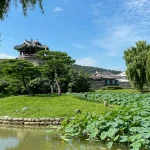
Gyeongju doesn’t look like a historic capital at first glance. There are no towering city walls or grand palace gates announcing themselves on the skyline. Instead, you find grass-covered burial mounds rising quietly between apartment blocks, a lotus pond that’s been reflecting moonlight for over a thousand years, and temple sites buried so thoroughly into the landscape that the whole city feels like it grew around them rather than beside them. This was the capital of the Silla Kingdom for nearly a millennium, and UNESCO recognised the entire city as a historic site in 2000.
The core of any Gyeongju visit is Bulguksa Temple, about 16 kilometres outside the city centre. The stone staircases leading up to the main hall — Cheongun-gyo and Baegungyo bridges — have been photographed endlessly, but standing in front of them in the early morning, before the tour groups arrive, you understand why. The proportions are exact in a way that feels almost uncomfortable. Seokguram Grotto, a further 4 kilometres up the mountain, houses a granite Buddha that has been sitting in the same position since the 8th century. The air inside is cool and faintly damp.
Back in the city, the Daereungwon Tomb Complex lets you wander between the royal burial mounds freely. One tomb — Cheonmachong — is open from inside. Walk in and you’re looking at the actual burial chamber of a Silla king, lit with quiet museum lighting. The famous Cheomseongdae observatory, the oldest surviving astronomical tower in Asia, sits in an open field nearby and looks almost too modest for its reputation.
Gyeongju rewards slow movement. Rent a bicycle from one of the shops near Gyeongju Station (around 10,000–15,000 KRW / ~$7–$11 per day) and connect all of this on two wheels. The city is flat enough to make it easy, and the cycling paths along the Hyeongsan River are genuinely pleasant in spring and autumn.
Jeonju — The Food Capital That Actually Earns the Title
Every Korean city claims to have good food. Jeonju is the only one where that claim holds up under serious scrutiny. This city in North Jeolla Province is considered the birthplace of bibimbap, but reducing Jeonju to that one dish is like describing Paris as the city with the Eiffel Tower. The culinary identity here runs much deeper — Jeonju is a designated UNESCO Creative City of Gastronomy, and locals treat food with the kind of seriousness that makes every meal feel considered.
The Jeonju Hanok Village (Hanokmaul) is the visual centrepiece — around 700 traditional Korean houses packed into a single neighbourhood, most of them still in use as guesthouses, restaurants, and craft workshops. The village has become more tourist-oriented in recent years, and on weekends the main street gets crowded with people eating hotteok (sweet filled pancakes) and wearing rented hanbok. That’s fine. Walk two streets back from the main drag and the atmosphere shifts. You’ll find women grinding sesame by hand in front of their homes and restaurants with handwritten menus that haven’t changed since the 1980s.

For bibimbap done properly, head to Gajok Hoegwan or Hanguk Jip, both long-running institutions in the hanok village area. The dish arrives in a hot stone bowl with around twelve separate vegetable toppings, a spoonful of fermented chilli paste, and a fried egg. The sound of the rice crisping against the stone is its own kind of signal. Jeonju’s makgeolli (rice wine) tradition is equally serious — the city has its own style, slightly milkier and sweeter than Seoul versions, often served free with side dishes at traditional bars.
Beyond food, Jeonju has a strong craft scene. Hanji (traditional Korean paper made from mulberry bark) is produced here and you can take workshops at the Jeonju Hanji Museum. The city also has an active indie cinema culture — the Jeonju International Film Festival each May draws a genuinely cinephile crowd rather than a red-carpet one.
Andong — Slow Travel Before Slow Travel Was Cool
Andong sits in the mountainous interior of North Gyeongsang Province and has never particularly cared about being fashionable. It’s the spiritual home of Korean Confucianism and the base of the Andong Hahoe Folk Village, a lived-in settlement of thatched-roof and clay-walled homes that curves around a bend in the Nakdong River. The key word is lived-in — actual families still reside in Hahoe, farming the surrounding land and maintaining the buildings in the traditional style. Queen Elizabeth II visited here in 1999 and is still commemorated with a modest plaque near the entrance.
The village is best visited in the late afternoon when the tourist day-trippers clear out. The river bends dramatically around the village, and from the bluffs across the water at Buyongdae Cliff, the view looks like a landscape painting with the kind of composition that seems too good to be accidental. Getting to the cliff requires a small ferry crossing (2,000 KRW / ~$1.50) and a short uphill walk.
Andong is also the home of Andong jjimdak — a braised chicken dish with glass noodles, vegetables, and a soy-based sauce that has a faint sweetness before the chilli heat arrives. The best place to eat it is the Andong Jjimdak Alley (찜닭골목) in the city centre, where a cluster of restaurants have been serving variations of the same dish for decades. A full pot for two people costs around 25,000–30,000 KRW (~$18–$22).
Andong soju deserves a separate mention. It’s a traditional distilled soju at around 45% ABV — nothing like the flavoured, low-alcohol soju sold everywhere in Seoul. Bottles are available at local markets for 15,000–20,000 KRW (~$11–$15). Drink it carefully.
Sokcho — The Gateway to the Mountains and Sea
Sokcho is a small coastal city in Gangwon Province that manages to be two completely different places at once. Face east and you’re looking at the East Sea, with a working fishing port where trawlers unload squid and snow crab before sunrise. Face west and Seoraksan National Park’s granite peaks are filling the entire horizon, close enough that you can drive to the park entrance in under twenty minutes from the city centre.
Seoraksan is genuinely spectacular — one of Korea’s most dramatic national parks, with peaks, suspension bridges, Buddhist temples, and autumn foliage that draws visitors from across the country every October. The cable car up to Gwongeumseong Fortress offers views that justify the wait (and there will be a wait on weekends). If you have the legs for it, the trail to Ulsanbawi Rock — a six-peak granite ridge that rises abruptly from the forest — is around 3.5 kilometres one way and takes about two hours at a comfortable pace.
The Sokcho seafood market is a different experience entirely. The Abai Village area near the lagoon is known for squid sundae (a stuffed squid dish, not ice cream), grilled shellfish, and raw sea cucumber eaten with a sharp vinegar sauce. The hand-pulled ferry that crosses the narrow channel to Abai Village costs 500 KRW (~$0.37) and is operated by a single rope pulled by the ferryman. It takes about ninety seconds and feels entirely at odds with the 21st century in the best possible way.
Daejeon — The Underrated City That Works as a Base
Daejeon rarely appears on tourist shortlists, which is genuinely puzzling given how well it functions as a travel destination. It’s Korea’s fifth-largest city, positioned almost exactly in the geographic centre of the country, with KTX connections that put Seoul 50 minutes north and Daegu 30 minutes south. In 2026, with the expansion of express rail infrastructure, Daejeon has become an even more logical base for exploring the central and southern regions without paying Seoul accommodation prices.
The city has a science and technology identity — KAIST (Korea Advanced Institute of Science and Technology) and the government research clusters in the Daedeok Science Town give Daejeon an educated, relatively international population. This translates into a strong café culture, a good range of international restaurants, and a nightlife district around Dunsan-dong that feels livelier than most cities its size.
Daejeon’s own food identity centres on kalguksu (knife-cut noodle soup) and sikhye — a fermented rice punch that’s a local specialty. The Jungang Market area is the best place to eat both. Yuseong Spa District, in the western part of the city, has a cluster of hot spring bathhouses fed by natural mineral water — a low-key way to spend a few hours that most visitors completely overlook.
For day trips, Daejeon connects easily to Gongju and Buyeo — two former Baekje Kingdom capitals with excellent museums and far fewer visitors than Gyeongju. The Baekje History Area is a UNESCO World Heritage Site that most international visitors have never heard of.
Chuncheon — Lakes, Dak-galbi, and Seoul’s Backyard
Chuncheon is only about 80 kilometres northeast of Seoul, which means it absorbs a large weekend crowd from the capital — particularly young couples who arrive by the Gyeongchun Line (the commuter rail that connects Seoul’s Sangbong Station directly to Chuncheon in about 80 minutes). The city has made a kind of peace with this identity. It doesn’t try to be something it isn’t. It’s a lake city with good food, gentle boat rides, and enough cycling infrastructure to fill a full day without rushing.
The city sits between Soyang Lake and Uiam Lake. The scenery is quieter than Sokcho’s drama but deeply pleasant in the way that northern Korean landscapes often are — pine trees, clear water, and a general sense that the pace of everything has been adjusted downward. The Iteoul Trail along the lakeside is a popular cycling and walking path with city bike stations at regular intervals.
The signature dish is dak-galbi — spicy stir-fried chicken cooked on a large iron griddle at the table, mixed with rice cakes, cabbage, and sweet potato. Myeongdong Dak-galbi Street in central Chuncheon is the established address for this, with dozens of restaurants competing within a short stretch. The smell of gochujang hitting a hot iron pan carries down the whole block. At the end of the meal, most places will fry rice in the remaining sauce — do not skip this.
Day Trip or Overnight? An Honest Breakdown
This question matters because regional Korean cities vary hugely in how much time they actually warrant. Here’s a direct assessment:
- Gyeongju: Overnight, ideally two nights. The main sites are spread across the city and surroundings. A day trip from Busan (under an hour by KTX) is feasible but rushed.
- Jeonju: One overnight minimum. The hanok village atmosphere is completely different after the day visitors leave. Morning in the village with a traditional breakfast is one of the better experiences in regional Korea.
- Andong: Overnight recommended. Hahoe Village deserves a proper late-afternoon visit, and jjimdak with traditional soju at night rounds out the experience in a way a day trip can’t.
- Sokcho: Two nights. Seoraksan and the seafood market are both half-day commitments on their own. Don’t try to combine them in one rushed day.
- Daejeon: Day trip from Seoul is perfectly reasonable given the 50-minute KTX connection. As an overnight base for exploring the central region, it earns its keep.
- Chuncheon: Day trip from Seoul is the standard visit and works well. An overnight adds the quieter morning atmosphere and the option of a Soyang Lake boat cruise.
Getting to These Cities from Seoul or Busan
Korea’s intercity transport network is one of the most efficient in the world, and 2026 has brought a few meaningful updates worth knowing:
By KTX (high-speed rail): Gyeongju is served by KTX Singyeongju Station (about 2 hours from Seoul, 20 minutes from Busan). Daejeon is a major KTX hub — 50 minutes from Seoul Yongsan, 1 hour from Busan. Jeonju is served by KTX at Jeonju Station (approximately 1 hour 40 minutes from Seoul). Andong does not have KTX service — the fastest option is KTX to Dongdaegu then a bus (total around 3 hours from Seoul).
By express bus: The nationwide express bus network (고속버스) remains the most economical option and reaches places KTX doesn’t. Sokcho is most commonly reached by express bus from Seoul’s Dong Seoul Bus Terminal — about 2.5 to 3 hours depending on traffic. Chuncheon is quickest by the Gyeongchun commuter rail line from Seoul (no KTX required).
GTX-A context for 2026: The GTX-A line, fully operational since late 2024, has reduced travel time between northern Seoul and Suseo to under 20 minutes, which marginally benefits connections to the Gyeongchun Line for Chuncheon. For most regional destinations, however, the existing KTX and express bus network remains the relevant infrastructure.
Booking tickets: KTX tickets are bookable through the Korail website or the Korail Talk app, which now supports English payment without a Korean phone number — this was updated in 2025 and removes a major frustration for international visitors. Express bus tickets are available via the Kobus app (English interface improved in 2025).
2026 Budget Reality — What Regional Korea Actually Costs
Regional cities are meaningfully cheaper than Seoul across almost every category. Here’s what to expect:
Accommodation
- Budget: Guesthouses and basic yeogwan (Korean inns) — 30,000–50,000 KRW per night (~$22–$37)
- Mid-range: Business hotels and hanok guesthouses — 70,000–120,000 KRW per night (~$52–$89)
- Comfortable: Boutique hotels and upscale hanok stays — 150,000–250,000 KRW per night (~$111–$185)
Food
- Budget: Local restaurant lunch or market food — 6,000–10,000 KRW (~$4.50–$7.50)
- Mid-range: Full sit-down meal with drinks — 15,000–30,000 KRW per person (~$11–$22)
- Comfortable: Proper restaurant dinner with makgeolli or craft beer — 40,000–60,000 KRW per person (~$30–$44)
Transport within cities
- Local buses: 1,200–1,500 KRW per ride (~$0.90–$1.10)
- Taxi base fare: 4,000–5,000 KRW (~$3–$3.70), with most city centre trips under 10,000 KRW (~$7.50)
- Bicycle rental: 5,000–15,000 KRW per day (~$3.70–$11)
A realistic daily budget for regional Korea in 2026, covering accommodation, three meals, local transport, and one or two paid attractions, sits at around 80,000–130,000 KRW (~$59–$96) per person at the budget-to-mid level. Compared to Seoul, you’re typically saving 20–30% on accommodation alone.
Frequently Asked Questions
Which Korean city outside Seoul is best for a first-time visitor?
Gyeongju and Jeonju are the most commonly recommended starting points, and for good reason. Gyeongju offers historical depth unmatched anywhere else in Korea, while Jeonju delivers a more cultural and culinary experience in a compact, walkable setting. Both are well-connected by KTX and easy to navigate without speaking Korean.
How many regional cities can I realistically visit in one week?
Two cities comfortably, three if you’re efficient with transport and willing to keep accommodation stays to one night. Trying to cover more than three regional destinations in a week results in spending most of your time on trains and buses rather than actually experiencing the places you’re visiting.
Do I need to speak Korean to travel in smaller Korean cities?
Not fluently, but some basic phrases help significantly. English signage in regional cities is less consistent than in Seoul, though major tourist sites and most accommodations can communicate in basic English. Papago (Naver’s translation app) and Google Translate with camera mode handle menus and street signs effectively in 2026.
Is it safe to travel solo in regional Korean cities?
Korea consistently ranks among the safest countries in the world for solo travel, and regional cities are no exception. Solo female travellers report feeling comfortable in all the cities listed here. The main practical consideration is that some rural restaurants and guesthouses are set up primarily for groups, so single-person bookings occasionally require calling ahead.
Are regional Korean cities accessible for visitors with limited mobility?
Urban centres in Daejeon, Jeonju, and Chuncheon are reasonably accessible, with newer transport infrastructure meeting modern standards. Gyeongju’s historical sites and Sokcho’s mountain areas present more challenges — Seoraksan’s main trails involve uneven terrain and steps. The Bulguksa approach path in Gyeongju has been partially upgraded, but the main stone staircases remain inaccessible for wheelchair users.
Explore more
Lesser-Known Korea Destinations: Discovering South Korea’s Hidden Gems
Korea Beyond Seoul: 10 Incredible Cities You Need to Visit Now
From Seoul to Suwon: Your Easy Guide to a Historic Korean Escape
📷 Featured image by Mark Saxby on Unsplash.