On this page
- What Kind of Traveler Are You? Matching Neighborhoods to Travel Style
- Jungmun Resort Belt — Polished, Convenient, and Worth the Price
- Old Seogwipo City Center — Character, Cafes, and the Best Walking Access
- Coastal Villages: Daepo, Hwasun, and Namwon for Slower Stays
- 2026 Budget Reality — What Accommodation Actually Costs in Seogwipo
- Practical Logistics — Getting In, Getting Around, and What’s Changed in 2026
- Frequently Asked Questions
Seogwipo sounds simple on a map — it’s just “southern Jeju.” But when you start searching for accommodation, you’ll quickly realize it covers a massive stretch of coastline with no single obvious base. A hotel in Jungmun and a guesthouse in old Seogwipo city are technically both “Seogwipo,” yet they offer completely different experiences and sit 15 kilometers apart. In 2026, with Jeju’s tourism recovering strongly and peak-season bookings filling up faster than pre-pandemic years, picking the right pocket of Seogwipo matters more than ever.
What Kind of Traveler Are You? Matching Neighborhoods to Travel Style
Before comparing prices or star ratings, ask what your day actually looks like in Jeju. Seogwipo’s southern coast breaks into distinct zones, and each one suits a different rhythm.
- You rent a car — almost any area works. A pension in a quiet coastal village becomes viable when you’re not depending on buses.
- You’re relying on buses — old Seogwipo city center is your best anchor. Routes 600 and 620 run through here and connect reliably to major sights.
- You want resort amenities without planning — Jungmun gives you pools, spas, and restaurants within walking distance. You pay for that convenience.
- You’re after slow mornings and fewer tourists — the villages east of Seogwipo, particularly Namwon, offer a pace that central areas simply can’t match in summer.
- You’re here for Hallasan access — staying on the eastern side of the city, near the 1100 Road intersection, cuts your morning drive to the trailhead significantly.
Most first-time visitors default to Jungmun or book whatever appears first on the major platforms. Neither is a bad choice, but understanding the tradeoffs upfront prevents that mid-trip frustration of being stuck somewhere that doesn’t fit how you travel.
Jungmun Resort Belt — Polished, Convenient, and Worth the Price
Jungmun is Jeju’s purpose-built resort district, and it shows. The Lotte Hotel, Hyatt Regency, and Marriott cluster here alongside Teddy Bear Museum, Jusangjeolli Cliff, and a decent stretch of swimmable beach. Everything is manicured, signage is bilingual, and the roads are wide enough that taxis find you easily.
What makes Jungmun genuinely useful in 2026 is the Jeju World Cup Stadium bus hub nearby, which now connects more frequently to Jeju City after the intercity express route expansion completed in late 2025. You can get to the airport in under an hour by limousine bus without a car — a real improvement over what the route offered two years ago.
The beach itself, Jungmun Saekdal, faces southwest, which means afternoon light is excellent and the waves are rideable for beginner surfers in late summer. The water smells clean and slightly mineral, the kind that reminds you you’re on volcanic rock, not sand-dune coastline.
The honest downside: Jungmun feels detached from actual Jeju life. Restaurants inside the resort zone are expensive and generic. Local haenyeo seafood markets, good black-pork barbecue streets, and the chaotic charm of the Seogwipo Maeil Olle Market are all a taxi ride away. If your goal is immersion rather than comfort, Jungmun satisfies only half the brief.
Old Seogwipo City Center — Character, Cafes, and the Best Walking Access
The original Seogwipo downtown — centered around Cheonjiyeon Waterfall, Lee Jungseop Street, and Seogwipo Maeil Olle Market — is the most walkable base on the entire southern coast. Within 20 minutes on foot you can reach three waterfalls, the harbor, the market, and a dozen cafes that actually deserve the word “local.”
Lee Jungseop Street is named after Korea’s most celebrated modern painter, who lived here briefly, and the alley that runs off it has quietly become one of Jeju’s most interesting small gallery and coffee strips. The murals are good, the espresso at the independents is better than anything in Jungmun, and the lane is narrow enough that you brush walls if a delivery scooter passes — which keeps the tour buses away.
Accommodation in old Seogwipo ranges from small guesthouses and pension-style rooms above cafes to a handful of mid-sized business hotels near the bus terminal. The Seogwipo KAL Hotel sits on the cliff above the harbor and offers views that overdeliver for the price. Rooms smell faintly of the ocean even with the windows closed.
Bus travelers should note that the intercity terminal is walkable from most city-center accommodations, and the Jeju Olle Trail Route 6 and Route 7 both begin nearby — important if hiking the coastal trail is part of your plan. The trailhead signs are clear, the paths are well-maintained, and early morning on these routes you might share the path with more fishing cats than other tourists.

Coastal Villages: Daepo, Hwasun, and Namwon for Slower Stays
West of Jungmun, Daepo Port is where the haenyeo boats come in, where raw seafood is priced for locals, and where the cliff formations called Jusangjeolli are actually more accessible than the tourist entrance charges suggest when viewed from the port side. A small number of pensions and guesthouses have opened here in the last two years, largely driven by surfers and Olle trail hikers who wanted something quieter than Jungmun without being far from the coast road.
Hwasun, a short drive further west, has a black sand beach that doesn’t appear in most English-language guides. It’s scenic, swimmable in summer, and surrounded by mid-range pensions aimed at Korean domestic travelers. English signage is minimal, but accommodation owners in this area have increasingly registered on international booking platforms following Jeju’s push to grow non-Korean visitor numbers in 2025 and 2026.
Namwon, east of Seogwipo city, sits on a quieter stretch of coast and is genuinely underused by international visitors. The Namwon Traditional Market runs on days ending in 2 and 7 (2nd, 7th, 12th, and so on), and the surrounding agricultural land means the produce is as fresh as it gets on the island. Accommodation is mostly pension-style and priced well below the Jungmun average. The bus connections are less frequent, so this area works best if you have a car or don’t mind planning your timing around Route 701.
2026 Budget Reality — What Accommodation Actually Costs in Seogwipo
Jeju accommodation prices climbed roughly 12–15% between 2024 and 2026 across most categories, driven by increased demand and a reduction in low-quality guesthouses that failed post-pandemic inspections. Here’s what you’re realistically looking at:
Budget (Guesthouses, Dorms, Small Pensions)
- Dormitory bed in Seogwipo city center: 20,000–35,000 KRW (~$15–$26 USD) per night
- Private room in a basic guesthouse: 55,000–80,000 KRW (~$41–$59 USD) per night
- Best areas: old Seogwipo city center, Namwon
Mid-Range (Business Hotels, Boutique Pensions, Well-Reviewed Guesthouses)
- Business hotel near the bus terminal: 90,000–140,000 KRW (~$67–$104 USD) per night
- Oceanview pension with private bathroom: 120,000–180,000 KRW (~$89–$133 USD) per night
- Best areas: Seogwipo city center, Daepo, Hwasun
Comfortable (Larger Hotels, Resort-Adjacent Properties)
- Seogwipo KAL Hotel: 180,000–260,000 KRW (~$133–$193 USD) per night depending on season
- Jungmun 4-star hotels (Lotte, Hyatt): 250,000–420,000 KRW (~$185–$311 USD) per night
- Peak season surcharge (July–August, Lunar New Year): add 30–50% to all tiers
Breakfast is rarely included in Korean guesthouses and pensions unless explicitly stated. Budget for 8,000–15,000 KRW (~$6–$11 USD) for a solid local breakfast nearby.

Practical Logistics — Getting In, Getting Around, and What’s Changed in 2026
Jeju International Airport is in the north, which means every arrival starts with a transfer south. Limousine bus 600 runs directly from the airport to Seogwipo city center and takes 60–75 minutes depending on traffic. Bus 800 serves the Jungmun area. Both cost 5,500 KRW (~$4 USD) and accept T-Money cards.
For 2026, the most significant change is the updated Kakao Maps integration with real-time Jeju intercity bus data. Google Maps has improved but still lags on rural Jeju routes. Download Kakao Maps before you arrive if you plan to rely on public transport — it handles Seogwipo’s bus network far better than any other app currently available.
Car rental remains the dominant way international visitors get around, and Seogwipo has several rental desks near the city center bus terminal and at Jungmun. In 2026, electric vehicle rentals are now widely available and include charging infrastructure at most major hotels and parking lots. International driving licenses from most countries are accepted, though visitors from non-IDP countries should confirm eligibility before booking.
The K-ETA (Korea Electronic Travel Authorization) requirement remains in effect for most visa-free nationalities. Apply at least 72 hours before arrival. It costs 10,000 KRW (~$7.40 USD) and is processed online. A small number of nationalities gained K-ETA exemptions under 2025’s revised tourism policy — check the official HiKorea portal for the current list before you book flights.
Frequently Asked Questions
Is it better to stay in Jungmun or Seogwipo city center?
Jungmun is better if you want resort facilities and don’t mind paying for convenience. Seogwipo city center suits travelers who want walkable access to markets, waterfalls, and local restaurants. Without a car, city center wins easily. With a car, it depends entirely on whether resort polish matters to you more than local atmosphere.
Can I get around Seogwipo without renting a car?
Yes, but it requires planning. The intercity bus network covers major sights, and Seogwipo city center is genuinely walkable. Villages like Namwon and Hwasun are harder to reach on buses, particularly in the evening. Kakao Maps in 2026 gives you accurate real-time data for Jeju routes, which makes car-free travel significantly more manageable than it was two years ago.
When is the best time to visit Seogwipo to avoid crowds?
April to early June and September to October offer the best balance of good weather and manageable crowds. July and August are peak domestic tourism months — prices surge and Jungmun beach gets busy. Late autumn is excellent for hiking Hallasan and walking the Olle Trail, with cool temperatures and clear visibility that summer humidity kills.
Are there good budget accommodation options in Seogwipo?
Yes, particularly in the old city center and Namwon area. Guesthouses and small pensions offer private rooms from around 55,000 KRW (~$41 USD) per night. Quality varies, so check recent reviews on international platforms. Dormitory beds exist but are less common than in Seoul or Busan — Jeju’s budget accommodation scene skews toward private pension rooms.
Is Seogwipo or Jeju City better as a base for exploring the whole island?
Jeju City is more central for island-wide exploration and has better transport connections. Seogwipo makes sense if the southern coast, Hallasan south face, and Olle Trail routes are your main priorities. Many visitors split their stay — two or three nights in each — which works well if you book early enough to secure accommodation at both ends.
Explore more
Jeju Island 5-Day Itinerary: The Ultimate First-Timer’s Guide
Unmissable Jeju Island Attractions: Your Ultimate Guide to South Korea’s Paradise
The Perfect 3-Day Jeju Island Itinerary: Must-See Attractions & Experiences
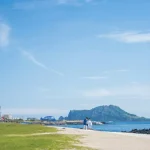
📷 Featured image by Hengfei Yang on Unsplash.