Busan‘s beaches get crowded fast in 2026, especially on weekends, and many visitors feel they have seen the city’s green side after one trip to Taejongdae. They haven’t. Within two hours of the city, you can walk through bamboo forests, ride a cable car above islands, and stand on terraced hillsides above the sea. The hard part is knowing which buses to take and when to leave. This guide covers four nature day trips, with the logistics worked out.
How Day Trips from Busan Work in 2026
Busan has two main intercity bus terminals, and picking the right one saves you an hour. Seobu (West) Bus Terminal at Sasang Station serves Geoje, Tongyeong, and Namhae. Nopo Bus Terminal, at the end of Subway Line 1, serves Ulsan and Gyeongju. Trains are an option for Ulsan, since the Donghae Line and KTX both stop there.
Buy tickets on the Kobus or Bus Tago apps, or at the terminal kiosks, which now work in English. Buses to these destinations run every 20 to 40 minutes in the morning. You’ll hear the low hum of the platform announcements and the hiss of air brakes as the bus pulls in. Seats are wide and reclining, and the ride feels more comfortable than most city buses.
Once you arrive, local buses in Ulsan, Geoje, and Tongyeong generally accept your T-Money card. Tap in when you board and tap out when you leave. For navigation, use Naver Map or KakaoMap. Google Maps is still unreliable for walking routes and local bus timing in smaller Korean towns. Kakao T works for taxis in all four destinations, though drivers in rural areas sometimes prefer a phone call.
Ulsan: Bamboo Groves and a Sunrise Coast
Ulsan is the easiest nature escape from Busan. It takes about 1 hour by bus from Nopo, or 30 to 40 minutes by KTX to Ulsan Station. The city is known for factories, but its river and coast are surprisingly green.
Taehwagang Bamboo Grove
This is the main reason to come. The grove runs along the Taehwa River, and the bamboo is thick enough to turn the afternoon light green. After rain, the air smells clean and slightly sweet, and the stalks creak when the wind picks up. The main path is flat and takes about 40 minutes at a slow pace. Entry is free. You can reach it by local bus from Ulsan Station or by taxi, which takes roughly 15 minutes.

Daewangam Park and Ganjeolgot
Daewangam Park, on the east coast, has pine forests, a suspension bridge, and rocky shoreline views. Ganjeolgot, further north, is famous as one of the first places on the mainland to see sunrise. If you want sunrise, you will need to stay overnight in Ulsan. For a normal day trip, do the bamboo grove in the morning and Daewangam in the afternoon, then return to Busan by early evening.
Geoje: Island Gardens and Sea Cliffs
Geoje is Korea’s second-largest island, but a bridge and tunnel connect it to the mainland, so you never need a ferry. Buses from Seobu take around 1 hour 15 minutes to Gohyeon, the main town. From there, local buses are slow, so renting a car or hiring a taxi for part of the day makes sense if you have a group.
- Oedo Botania: A private island garden reached by a short ferry from Jangseungpo or Gujora. The ferry ride takes about 15 minutes, with gulls following the boat. The island has terraced flowerbeds and sea-view paths. Allow 2 to 3 hours on the island.
- Haegeumgang: A cluster of sea cliffs and rock islands in the south. Most visitors take a boat tour around the formations, which are sometimes called Korea’s mini Ha Long Bay.
- Windy Hill (Baram-ui Eondeok): A grassy headland with a windmill, near Dojang-po. It is a short stop, but the wind and the sound of waves are worth it.
The Geoje trip works best if you combine two sites rather than three. Ferry schedules and tour boat departures drop off in the afternoon, so aim to be at your first stop by 10 AM.
Tongyeong: Mountain Cable Car and Harbour Views
Tongyeong sits about 1 hour 40 minutes to 2 hours from Seobu by express bus. It is a working fishing port with a surprisingly good set of outdoor views.
The Tongyeong Hallyeo Waterway Cable Car climbs Mireuksan. It takes around 10 minutes up and rises above the harbour and the scattered islands of the Hallyeo Waterway. At the top, a walking path leads to a viewpoint with a wide, uninterrupted sea panorama. The metal gondola rattles gently as it passes each tower.

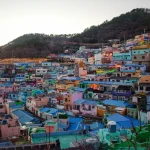
After the cable car, walk down to the harbour and the Dongpirang Mural Village, a hillside neighbourhood with painted walls and narrow stairs. The sea breeze here carries a faint salty, fishy smell from the nearby market. It is a more relaxed, less polished experience than Busan’s Gamcheon.
If you have time, a ferry or cruise to Hansando, an island linked to Admiral Yi Sun-sin’s naval history, adds another half day, so it suits an overnight stay better than a day trip.
Namhae: Terraced Villages for a Long Day
Namhae is the farthest of the four, with a bus time of around 2 hours 30 minutes each way from Seobu. It is doable in one day, but only if you commit to an early start and a short list of stops. Local buses are infrequent, so most visitors take a taxi between sites.
- Darangi Village: Rice terraces drop in narrow steps toward the sea. In late spring and early summer, the fields are green and the village feels still and rural. The walking paths are steep in places, so wear shoes with grip.
- Sangju Silver Sand Beach: A pine-backed beach with clear water. Nearby, you can find a quiet trail up to Boriam hermitage, though it needs more time than a standard day trip allows.
Be honest with yourself about the schedule. If you want to see Darangi Village and one other place, leave Busan before 8 AM. If you want a slower pace, stay one night and treat Namhae as a weekend trip instead.
Best Season and Timing
- Spring (April to May): Best for Geoje gardens and Namhae terraces. Temperatures sit around 15 to 22°C.
- Summer (June to August): Bamboo groves in Ulsan stay cool and shaded, but humidity is heavy and the rainy season brings sudden downpours. Check the forecast on the KMA app before you go.
- Autumn (October to November): Clear skies make Tongyeong’s cable car views the best of the year. Temperatures are around 12 to 20°C.
- Winter (December to February): Quieter, but some ferries run less often. Tongyeong’s harbour and Ulsan’s coast are the most reliable options.
Weekdays are far calmer than weekends, particularly at Oedo Botania and Tongyeong’s cable car, where queues can reach an hour on holiday Saturdays.
2026 Budget Reality
Using an exchange rate of about 1,350 KRW to 1 USD, here is what a day trip typically costs per person, including transport, entry, and food.

- Budget (about 35,000 to 50,000 KRW / $26 to $37): Intercity bus, local buses with T-Money, one paid attraction, and a simple meal such as gimbap or a set lunch in a local restaurant.
- Mid-range (about 70,000 to 110,000 KRW / $52 to $81): Express bus or KTX, a mix of taxis and buses, two paid attractions (such as Oedo ferry and entry or the cable car), and a seafood lunch.
- Comfortable (about 150,000 to 250,000 KRW / $111 to $185): Private taxi for the full day (often 150,000 to 200,000 KRW / $111 to $148 for a day charter, negotiated in advance), a sit-down seafood meal, and boat tours.
Typical costs: Ulsan bus fares are around 6,000 to 8,000 KRW each way, Geoje around 8,000 to 10,000 KRW, Tongyeong around 13,000 to 16,000 KRW, and Namhae around 15,000 to 20,000 KRW. Prices have crept up slightly since 2024, so check the Kobus app for the latest fare before you leave. Attraction entry is usually 5,000 to 25,000 KRW ($4 to $19).
Frequently Asked Questions
What is the easiest nature day trip from Busan?
Ulsan is the easiest. A bus from Nopo Terminal or a KTX ride takes under an hour. Taehwagang Bamboo Grove is flat, free to enter, and close to the station. You can add Daewangam Park by taxi or local bus and still be back in Busan for dinner.
Can I do these day trips without a car?
Yes. Ulsan, Geoje, Tongyeong, and Namhae all have intercity buses from Busan, and local buses connect the main sights. Namhae is the exception: local buses are infrequent there, so most people use taxis between villages. Download Kakao T and plan your return bus in advance.
Which Busan bus terminal do I need?
Use Seobu (West) Bus Terminal at Sasang Station for Geoje, Tongyeong, and Namhae. Use Nopo Bus Terminal for Ulsan and Gyeongju. Both are reachable by subway. Check your destination on the Kobus or Bus Tago app before heading out, because some routes use different pickup platforms.
Is a one-day trip to Namhae realistic?
It is possible but tiring. The bus takes about 2 hours 30 minutes each way, so you leave Busan very early and return late. Choose one or two stops, such as Darangi Village and a beach. If you want to relax and take photos, stay overnight instead.
When is the best time of year for nature day trips from Busan?
Spring and autumn are best. April to May offers green gardens and mild weather for Geoje and Namhae, while October to November gives clear skies for Tongyeong’s views. Summer is hot and rainy, and winter is quiet. Weekdays are always calmer than weekends at popular sites.
Explore more
Shinsegae Centum City: Your Complete Guide to Asia’s Largest Mall in Busan
Haeundae Beach Guide: Top Things to Do in Busan’s Iconic District
Tongyeong Day Trip: Discover the ‘Naples of Korea’ from Busan
📷 Featured image by Ji Yong Won on Unsplash.