What Bukchon Actually Feels Like
Most visitors arrive at Bukchon Hanok Village expecting a postcard. What they find is something more complicated — and more rewarding. Wedged between Gyeongbokgung Palace to the west and Changdeokgung Palace to the east, Bukchon sits on a hillside in central Seoul where about 900 traditional hanok houses still stand, many of them occupied. In 2026, with Seoul’s newer districts pulling tourists toward Seongsu and Mangwon, Bukchon has actually become slightly easier to visit on weekday mornings — though weekends remain crowded year-round.
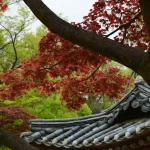
Walking the upper lanes feels genuinely different from anywhere else in the city. The grey ceramic roof tiles curve and overlap in waves. The smell of old timber mixes with incense drifting from a small gate shrine. Below you, the Seoul skyline — glass towers, cranes, N Seoul Tower on the ridge — sits in full view, which is the detail most photos don’t capture: the contrast is the whole point. Bukchon isn’t preserved in isolation. It survives inside a living, breathing megacity, and that tension is what makes it worth the climb.
Navigating the Eight Scenic Spots
Seoul’s Jongno District officially designates eight viewpoints along Bukchon’s walking route, numbered and marked with small signposts. You don’t need to hit all eight, and honestly, a few are more interesting than others.
- Spot 2 (Gahoe-dong Alley, upper section): This is the photograph everyone takes — a steep lane curving downhill with rooftops stacked on both sides. Arrive before 9:00 AM or after 17:00 to have it to yourself.
- Spot 3: A lower vantage point on the same alley. Less dramatic than Spot 2, but useful for seeing the roofline composition from below.
- Spot 5 (Samcheong-dong direction): The transition point where the neighbourhood softens into the café-lined street heading south toward Gyeongbokgung. Worth pausing here before descending.
- Spot 6: A quieter residential section that most tour groups skip entirely. A small courtyard gate here is partially visible from the lane — it gives a better sense of how people actually live in these houses than any of the more photographed spots.
Spots 1, 4, 7, and 8 are fine but largely interchangeable with surrounding streets. If your time is limited, focus on the upper Gahoe-dong lanes and then walk south through Samcheong-dong to exit at Anguk Station. The full route, done properly, takes about 90 minutes on foot.

Living Neighbourhood, Not a Theme Park
This is the part most travel sites gloss over. Bukchon is not an open-air museum. Around 2,500 people live here. They work, sleep, cook, and raise children inside these hanok. Since 2023, Jongno District has enforced strict visitor conduct rules, and in 2026 those rules carry real teeth.
- Noise limit: Conversations must stay below 50 decibels in residential lanes — roughly a quiet indoor voice. Wardens patrol the upper alleys, especially on weekends, and can issue on-the-spot fines of 50,000 KRW (~$37 USD).
- No entry after 20:00: The upper residential sections of Gahoe-dong and Gye-dong are formally closed to non-residents after 8:00 PM. Signs are posted clearly at lane entrances in Korean, English, Chinese, and Japanese.
- Photographing residents: Do not photograph people in their courtyards or near their gates without permission. Gates that are slightly open are not invitations. Several residents have signs in English specifically requesting this.
- No food in the upper lanes: Eating while walking through the residential sections is now prohibited. There are benches near Spot 5 where you can sit.
These rules exist because residents have threatened to push for full closure of certain lanes — something that happened temporarily in 2019 and could happen again. Respecting the space keeps it accessible for everyone.
Where to Eat and Drink Near Bukchon
Bukchon itself has almost no food options inside the residential lanes by design. Everything useful is on the perimeter or a short walk south into Samcheong-dong or west into the streets near Anguk Station.
Samcheong-dong (south exit from Bukchon)
The main street running south from Bukchon toward Gyeongbokgung is lined with small cafés and lunch spots. Cafe Bora remains the most photographed (matcha soft-serve, long queues), but the smaller independent cafés one or two blocks east of the main road have better coffee and no wait. Look for places with handwritten menus on A-frame boards — those tend to be locally run rather than franchise-operated.
Gye-dong and the northern edge
The streets north of Bukchon, toward Gye-dong, have a cluster of traditional tea houses that opened or expanded between 2024 and 2026 as part of a district initiative to give visitors somewhere to sit without entering residential lanes. Several serve sikhye (sweet rice drink) and sujeonggwa (cinnamon persimmon punch) — both good choices after a sweaty uphill walk. Prices here are higher than average but the interiors are worth it: low wooden tables, ondol-heated floors in winter, paper screens diffusing afternoon light.
Insadong (10-minute walk west)
For a full meal, walk west toward Insadong. The main pedestrian street has become heavily commercial, but the small alleys branching off it — particularly Ssamziegil and the lanes east of it — still have independent Korean lunch spots with set menus around 12,000–15,000 KRW (~$9–$11 USD).
2026 Budget Reality
Bukchon itself has no admission fee. The hanok are private homes or private businesses — you’re walking public streets. Budget accordingly for transport, food, and any paid experiences.
- Getting there (subway): Anguk Station (Line 3) — single journey from central Seoul costs 1,450–1,650 KRW (~$1.10–$1.25 USD) with a T-Money card. The tap of the card on the gate reader has become the default entry method; cash top-up machines at the station still work but take longer.
- Hanok experience (budget tier): Free — walking the lanes costs nothing. Some residents rent out rooms through platforms like Airbnb or Korean hanok-stay operators; budget stays start around 80,000–100,000 KRW (~$59–$74 USD) per night.
- Hanok experience (mid-range): Several hanok guesthouses in and around Bukchon offer overnight stays with breakfast for 150,000–220,000 KRW (~$111–$163 USD). Quality varies significantly — check reviews from 2025 onward specifically.
- Guided walking tours: English-language guided tours of Bukchon run by local cultural organisations cost 25,000–45,000 KRW (~$18.50–$33 USD) per person. These typically last 2 hours and include access to at least one hanok interior. Worth it if this is your first time — the architectural context makes everything click.
- Food and drink near Bukchon: Tea house drinks: 8,000–12,000 KRW (~$6–$9 USD). Café coffee: 6,000–9,000 KRW (~$4.50–$6.70 USD). Sit-down lunch in Samcheong-dong or Insadong: 12,000–20,000 KRW (~$9–$15 USD).
- Comfortable tier (hanok overnight): Premium restored hanok guesthouses with private courtyards and concierge run 300,000–500,000 KRW (~$222–$370 USD) per night. These book out weeks in advance around cherry blossom season (late March to mid-April) and autumn foliage (mid-October to early November).
Getting There and Getting Around
Anguk Station on Line 3 (the orange line) is the primary access point. Exit 2 puts you at the base of the main Bukchon approach in under five minutes on foot. Exit 1 leads toward Gyeongbokgung if you’re combining both in one day.
The GTX-A line, which has been running since 2024, doesn’t stop near Bukchon directly — its Seoul Station and Suseo connections are useful for getting into central Seoul quickly from the suburbs, but once you’re in the city, Line 3 remains the practical choice for this neighbourhood. If you’re coming from Hongdae or Sinchon, transfer at Gyeongbokgung Station rather than backtracking through central Seoul.
Taxis and ride-hailing apps (Kakao T remains dominant in 2026) can drop you on Bukchon-ro, the main road bordering the neighbourhood, but cannot enter the upper residential lanes. Plan to walk. The terrain is hilly — comfortable shoes are not optional. The steepest sections near Spot 2 involve a gradient that will slow most people to a careful pace on the way down.
Cycling is not recommended inside Bukchon. The lanes are narrow, often shared with pedestrians, and some sections have steps rather than ramps.
Best Times to Visit
Time of day matters more than time of year here.
By hour
- 07:30–09:00: The quietest window. A few residents out, almost no tourists. The light on the rooftiles in early morning is exceptional.
- 10:00–16:00: Peak crowds, especially on weekends. Tour groups arrive in waves, and the famous alley at Spot 2 becomes a slow-moving queue of people taking photos.
- 16:30–19:30: Crowds thin. Afternoon light comes from the west, which illuminates the upper lanes well. This is the second-best window after early morning.
- After 20:00: Upper residential sections close. Don’t plan to be there.
By season
- Spring (late March–April): Cherry blossoms appear along Samcheong-dong and near the palace walls. Beautiful but the most crowded period of the year.
- Summer (July–August): Hot and humid. Weekday mornings are manageable. Weekends are uncomfortable.
- Autumn (October–November): The best overall season. Maple and ginkgo colour appears around the hanok walls. Cooler temperatures make the uphill walking easier. Still busy but not as extreme as spring.
- Winter (December–February): Least crowded. Snow on the curved rooftiles is genuinely striking. Dress properly — the hilltop position means wind cuts through faster than it does at street level in the rest of Seoul.
Frequently Asked Questions
Is there an entrance fee for Bukchon Hanok Village?
No. Bukchon’s lanes are public streets, so there’s no admission charge for walking through the neighbourhood. Some individual hanok that operate as cultural centres, craft workshops, or guesthouses may charge separately for their specific activities or experiences, but simply visiting the area is free.
How long should I spend at Bukchon?
Plan for 90 minutes to 2 hours if you’re walking the main scenic route at a relaxed pace. Add another 30–45 minutes if you continue south through Samcheong-dong toward Gyeongbokgung. A half-day combining Bukchon, Samcheong-dong, and the palace is a realistic and satisfying itinerary.
Can I wear hanbok in Bukchon?
Yes, and many visitors do. Hanbok rental shops are clustered near Anguk Station and along the road leading up to Bukchon. Rentals typically cost 20,000–40,000 KRW (~$15–$30 USD) for a few hours. Wearing hanbok at nearby Gyeongbokgung Palace offers free palace entry, which can offset part of the rental cost.
Is Bukchon suitable for visitors with limited mobility?
The main scenic alleys involve significant inclines and uneven stone paving. The steeper sections near Spot 2 are not accessible by wheelchair. The lower streets bordering Bukchon — including Bukchon-ro and the start of Samcheong-dong — are flat and accessible. A partial visit to the lower sections is possible, but the upper lanes require reasonable mobility.
What has changed at Bukchon since 2024?
Jongno District tightened noise and access rules in 2025, adding weekend wardens and confirmed 8:00 PM closing for upper residential lanes. Google Maps now routes Bukchon pedestrian paths accurately. Several new hanok tea houses opened on the northern edge of the village as designated rest areas, reducing pressure on the residential alleys themselves.
Explore more
Gangnam Shopping Spree: Luxury Brands & Trendy Boutiques
Seoul Street Food Guide: Best Markets & Must-Try Bites
The Ultimate Guide to Day Trips from Seoul: 10+ Must-Do Excursions