On this page
- Before You Go: What Most Visitors Get Wrong in 2026
- What’s New at Jeju’s Heritage Sites in 2026
- Understanding the Three UNESCO Designations
- Hiking Hallasan: Trails, Zones, and What You Actually See
- Inside the Lava Tubes: Manjanggul and Geomunoreum
- Seongsan Ilchulbong: What the Sunrise Actually Looks Like
- 2026 Budget Reality: What It Costs to Visit the Heritage Sites
- Getting Around the Heritage Sites Without a Car
- Planning Your Route: Two Days or Three
- Frequently Asked Questions
💰 Click here to see Korea Budget Breakdown
💰 Prices updated: 2026-10-01. Budget figures are estimates — always verify before travel.
Exchange Rate: $1 USD = 1,356 KRW
Daily Budget (per person) • Pricing updated as of 2026-10-01
Daily Budget
Shoestring: 60,000 KRW - 95,000 KRW ($44.25 – $70.06)
Mid-range: 130,000 KRW - 250,000 KRW ($95.87 – $184.37)
Comfortable: 350,000 KRW - 550,000 KRW ($258.11 – $405.60)
Accommodation (per night)
Hostel/guesthouse: 25,000 KRW - 65,000 KRW ($18.44 – $47.94)
Mid-range hotel: 90,000 KRW - 165,000 KRW ($66.37 – $121.68)
Food (per meal)
Budget meal (street food): 9,000 KRW ($6.64)
Mid-range meal (restaurant): 22,000 KRW ($16.22)
Upscale meal: 65,000 KRW ($47.94)
Transport
Single subway/bus trip: 1,600 KRW ($1.18)
Climate Card (30-day unlimited): 67,000 KRW ($49.41)
Before You Go: What Most Visitors Get Wrong in 2026
Jeju‘s UNESCO World Heritage Sites attract over four million visitors a year, and in 2026 that number hasn’t dropped — it’s shifted. Post-pandemic visitor patterns stabilised, but Jeju’s provincial government responded to overtourism pressure by tightening reservation systems, adjusting trail access windows, and adding new fees at two of the three major heritage zones. Travelers who show up expecting a casual walk to a volcano crater or a spontaneous lava tube tour regularly find themselves turned away or facing hours-long queues. This guide gives you the practical, current picture so that doesn’t happen to you.
What’s New at Jeju’s Heritage Sites in 2026
Several changes took effect in early 2026 that anyone planning a visit needs to know before booking flights.
- Hallasan mandatory reservations expanded: The Gwaneumsa and Seongpanak trails — the two routes that reach the Baekrokdam crater — now require advance reservations year-round, not just during peak season. Slots open 30 days ahead through the Hallasan National Park reservation portal. The Eorimok and Yeongsil trails (which don’t reach the summit) remain walk-in, but daily caps are enforced from March through November.
- Geomunoreum tuff cone real-name ticketing: Geomunoreum, the masterpiece of the lava tube system, moved to a fully real-name reservation system in 2025 and tightened its daily visitor quota to 500 people in 2026. You book by passport or ID number. Tickets cannot be transferred. This is the site most commonly missed by travelers who didn’t plan ahead.
- Seongsan Ilchulbong fee increase: Entry rose to 4,000 KRW (about $3) for adults in January 2026. Jeju residents still enter free. The sunrise entry window now officially opens at 5:00 AM from April through September.
- Electric shuttle expansion: Jeju’s electric bus network added three new routes connecting Seongsan, the Geomunoreum area, and Jeju City’s eastern terminal. These are a genuine improvement for travelers without a rental car.
- K-ETA status in 2026: Travelers from most Western countries still require K-ETA pre-registration before arrival in South Korea. Jeju’s visa-free exception for international air arrivals (a long-standing special policy) remains in place, but it only applies if you fly directly into Jeju International Airport without transiting through mainland Korea. Confirm your eligibility before booking connections through Incheon or Gimpo.
Understanding the Three UNESCO Designations
Jeju’s UNESCO status is sometimes described loosely as “Jeju being a UNESCO site,” but the designation is more specific than that. In 2007, UNESCO inscribed three distinct outstanding universal value components under a single nomination called Jeju Volcanic Island and Lava Tubes.
Component 1: Hallasan Natural Reserve
This covers the volcanic shield that forms Jeju’s backbone — South Korea’s highest mountain at 1,947 metres — along with its summit crater lake, Baekrokdam. The reserve protects rare plant communities that shift dramatically by altitude, from subtropical evergreen forest at the base to alpine vegetation near the peak. UNESCO recognised both the geological record and the biological diversity locked inside this landscape.
Component 2: Geomunoreum Lava Tube System
This is not just one cave. The designation covers a 13-kilometre lava tube system that includes seven individual tubes, of which Manjanggul is the most accessible to the public. Geomunoreum is the source vent — the tuff cone from which lava once flowed — and it’s the protected site with the strictest access controls. The tubes are globally significant because their lava tube decorations (stalactites, lava bridges, carbonate speleothems) are among the most varied and well-preserved anywhere on Earth.
Component 3: Seongsan Ilchulbong Tuff Cone
This is the dramatic crater rising from the eastern tip of Jeju, formed by a hydrovolcanic eruption roughly 100,000 years ago when rising magma met shallow seawater. UNESCO values it as a near-perfect textbook example of a tuff cone, with its 182-metre crater walls intact and its geological layers visible in the cliff faces below. The name translates roughly to “Sunrise Peak,” and that part needs no translation once you’ve stood on the rim at dawn.
Hiking Hallasan: Trails, Zones, and What You Actually See
Hallasan is not a day hike you casually add to a beach afternoon. The Seongpanak trail — the most popular summit route — is 9.6 kilometres one way with a cumulative elevation gain of about 1,340 metres. Allow at least five hours up and three and a half hours down. The Gwaneumsa trail is 8.7 kilometres one way but technically harder, with steeper switchbacks through dramatic rocky gorges.
Both summit routes close in winter when conditions become dangerous, and there are strict turnaround times posted at the entrance gates — the rangers enforce them seriously. Missing the turnaround cutoff means you’re turned back regardless of how close to the top you are.
What the summit actually delivers: Baekrokdam crater lake sits in a bowl at the top, its surface often dusted with low cloud that rolls in without warning. On a clear day, you can see the scattered oreum (parasitic cones) that dot Jeju’s landscape like punctuation marks. The silence up there is different from the silence below — the wind strips away any pretense that you’re in a tourist zone.
For travelers who don’t want the full summit experience, the Eorimok trail (no reservation required) climbs through dense forest of old Hallasan silver fir to the Manseburi rest area, giving excellent views of the upper mountain without the full commitment. The Yeongsil trail rewards hikers with the most visually striking rock formations on the mountain — twisted basalt columns called Yeongsilgiam — before dead-ending at the Baerokdam-adjacent zone, which is as far as it goes.
Inside the Lava Tubes: Manjanggul and Geomunoreum
Manjanggul Cave
Of the seven tubes in the Geomunoreum system, Manjanggul is the one open to general visitors without a reservation (though a timed entry system runs during peak months). The main accessible section runs about one kilometre into the tube — the total length is over 13 kilometres, most of it sealed off for preservation.
Walking into Manjanggul, the temperature drops to a steady 11°C year-round regardless of what Jeju’s surface is doing in August heat. The air smells faintly mineral, a cool stone breath that hits you before your eyes adjust to the darkness. The lighting inside is minimal and deliberate — enough to walk safely but not enough to flatten the drama of the space. The highlight is the lava column at the far end of the accessible section, standing 7.6 metres tall, the largest of its kind in the world.
Wear layers and closed shoes. The path is wet in sections, and the rough basalt floor is uneven. Comfortable sneakers work; sandals absolutely do not.
Geomunoreum Tuff Cone
This is the source of the entire lava system, and visiting it is a completely different experience from Manjanggul. Geomunoreum is an above-ground tuff cone — a hill, essentially, formed from volcanic tephra — with a hiking trail that circles its rim and craters. The walk is roughly 1.8 kilometres and takes about an hour at a relaxed pace.
The landscape here feels raw and overgrown in a way that Manjanggul’s lit, groomed cave path doesn’t. Secondary craters indent the hillside, and the parasitic cone views stretch across the Jeju plain. Because visitor numbers are capped so low, you’re unlikely to share the trail with large tour groups — which makes it feel like one of Jeju’s better-kept open secrets, even in peak season.
Seongsan Ilchulbong: What the Sunrise Actually Looks Like
The path up Seongsan Ilchulbong from the main entrance is a broad stone staircase of 99 steps, followed by a steeper ridgeline section that opens suddenly onto the crater rim. The climb takes 20 to 30 minutes at a comfortable pace. You won’t need trekking poles, but the final section is steep enough that some people prefer to take it slowly.
For sunrise visits, most people arrive in the dark — 40 minutes before sunrise is enough — and stand along the rim as the sky behind Udo Island (visible offshore) begins to redden. When the sun actually clears the horizon, the light hits the tuff cone’s eroded inner walls in orange and amber bands that shift quickly. The whole spectacle is over in about 15 minutes, and then the tour buses arrive.
If you’re not a sunrise person, the mid-morning visit between 9:00 AM and 11:00 AM offers better light for photography of the crater itself, and the views out over the Seongsan fishing harbor are clear and calm. The crater floor — visible from the rim but not accessible — is a flat meadow where local haenyeo (female divers) historically used to dry their catches. A small haenyeo diving performance area operates near the base of the peak during daylight hours.
The eastern cliff face of Seongsan, viewed from the water, is one of the geological highlights — layers of ash and tuff clearly visible in alternating bands, compressed into something that looks almost architectural. A walking path along the seafront below the cliffs gives you this view without the climb.
2026 Budget Reality: What It Costs to Visit the Heritage Sites
Here’s what you’ll realistically spend across the three UNESCO components, broken down by category.
Entry Fees
- Hallasan National Park: Free entry to the park; no trail fee. Reservation slots themselves are free.
- Manjanggul Cave: 4,000 KRW (~$3) per adult
- Geomunoreum: 3,000 KRW (~$2.20) per adult; reservation required
- Seongsan Ilchulbong: 4,000 KRW (~$3) per adult
Getting There — Transport Costs
- Budget (public bus): 1,200–1,500 KRW (~$0.90–$1.10) per ride on Jeju’s electric bus network. Getting from Jeju City to Seongsan by express bus costs around 4,500 KRW (~$3.30). Factor in connection waits — public transit works, but it adds time.
- Mid-range (rental car): Small car rentals average 55,000–75,000 KRW per day (~$40–$55) in 2026, excluding fuel. Parking at heritage sites ranges from free (Hallasan trailheads) to 2,000–3,000 KRW at Seongsan and Manjanggul.
- Comfortable (private day tour): English-language guided tours covering two to three heritage sites run 80,000–120,000 KRW (~$59–$89) per person, typically including transport and a guide but not entrance fees.
Food and Accommodation Near the Sites
- Budget meals: Kimbap or ramyeon near Seongsan’s entrance area, 5,000–8,000 KRW (~$3.70–$6)
- Mid-range meals: Haemul ttukbaegi (seafood hot pot) or black pork in Seongsan town, 12,000–18,000 KRW (~$9–$13)
- Accommodation in Seongsan area: Guesthouses 35,000–55,000 KRW/night (~$26–$41); pension-style rooms 80,000–130,000 KRW/night (~$59–$96)
Getting Around the Heritage Sites Without a Car
Jeju has a reputation as a place where you must rent a car, and for general island exploration that’s still largely true. But for the UNESCO sites specifically, the 2026 bus improvements make a car-free itinerary genuinely workable.
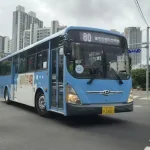
From Jeju City’s Jungang-ro bus terminal, the 701 express bus runs to Seongsan in about 70 minutes. From Seongsan, a local connecting bus reaches the Manjanggul and Geomunoreum areas, though the schedule has gaps — check the Jeju bus app (available in English) for real-time departure boards. The Hallasan trailheads at Eorimok and Seongpanak are served by buses 240 and 281 respectively from Jeju City.
For the Gwaneumsa trailhead — which gives the best summit route if you want to do Hallasan seriously — a taxi from Jeju City costs around 12,000–15,000 KRW (~$9–$11) one way. There’s no direct bus. Most hikers taxi up and bus down or arrange a return taxi pickup.
Tapping a T-Money card on the Jeju bus reader works the same as anywhere in Korea — a satisfying beep and the fare deducts automatically. If you’re arriving from Seoul and already have a charged T-Money card from the subway, it works here with no adjustment needed.
Planning Your Route: Two Days or Three
Two-Day Itinerary
Day 1 — East Jeju: Start before sunrise at Seongsan Ilchulbong for the crater rim experience, then descend and drive or bus 20 minutes north to Manjanggul Cave by mid-morning. If you secured a Geomunoreum reservation for the afternoon, it pairs well on the same day — the site is roughly 30 minutes west of Manjanggul by road.
Day 2 — Hallasan: An early start is essential. Catch the first bus to Seongpanak or Eorimok trailhead by 7:00 AM. For the summit, expect to be back at the trailhead by 4:00–5:00 PM. This is a full physical day — don’t schedule evening activities.
Three-Day Itinerary
Spreading the itinerary across three days lets you add depth. Use the extra day to walk the Seongsan seafront cliffs in the morning, explore Udo Island by bicycle (a 15-minute ferry from Seongsan pier), and approach Hallasan from the Gwaneumsa side instead of Seongpanak — a harder trail that most visitors skip, with more dramatic scenery in the upper valleys.
Basing yourself in Seongsan for the first two nights and then moving to a Hallasan-area guesthouse for the mountain day cuts down on travel time and lets you front-load the eastern sites while you’re fresh.
Frequently Asked Questions
Do I need to book Hallasan trails in advance?
For the summit trails (Gwaneumsa and Seongpanak), yes — reservations are mandatory year-round in 2026. Book through the Hallasan National Park reservation portal up to 30 days in advance. The lower trails (Eorimok, Yeongsil, Dullegil) are walk-in, but daily caps apply March through November, so early arrival is still recommended.
Is Jeju visa-free for international travelers in 2026?
Jeju maintains a special visa-free policy for international visitors arriving on direct international flights into Jeju International Airport. This does not apply if you transit through Incheon or any mainland Korean airport. K-ETA requirements for South Korea still apply to most nationalities entering through the mainland, so check your specific situation before booking connecting routes.
Can I visit all three UNESCO sites in one day?
Technically possible but not recommended. Seongsan Ilchulbong, Manjanggul, and Geomunoreum can be linked in a single east-Jeju day if you have a car and move efficiently. Hallasan, however, requires a full separate day for any meaningful experience. Rushing all three into 24 hours means you won’t do justice to any of them.
What’s the best time of year to visit Jeju’s heritage sites?
Late September through early November offers the clearest skies for Hallasan summit views and cooler temperatures for the lava tube walk. Spring (April to May) brings crowds but also wildflower blooms on Hallasan’s lower trails. Summer (July–August) means high humidity and frequent mist on the summit; typhoon season peaks in August and can close trails for days at a time.
Are the UNESCO sites accessible for travelers with mobility limitations?
Partially. Manjanggul Cave’s main accessible section is walkable for most people, though the uneven floor and one low ceiling section are challenging for wheelchairs. Seongsan Ilchulbong’s staircase path is not wheelchair-accessible. Hallasan has a flat Dullegil circular trail at the mountain’s base that is paved and manageable for visitors who cannot hike elevation. Geomunoreum’s rim trail involves moderate slopes and is not accessible for wheelchairs.
📷 Featured image by Looie Kang on Unsplash.