On this page
- Seoul in 2026: Still Affordable, But Only If You Plan
- 2026 What’s New for Budget Travelers
- Where to Sleep Without Bleeding Your Wallet
- Getting Around Seoul for Almost Nothing
- Eating Well on a Tight Budget
- Free and Near-Free Seoul
- The Smart Shopper’s Seoul
- 2026 Budget Reality: What a Day in Seoul Actually Costs
- Frequently Asked Questions
💰 Click here to see Korea Budget Breakdown
💰 Prices updated: 2026-10-01. Budget figures are estimates — always verify before travel.
Exchange Rate: $1 USD = 1,356 KRW
Daily Budget (per person) • Pricing updated as of 2026-10-01
Daily Budget
Shoestring: 60,000 KRW - 95,000 KRW ($44.25 – $70.06)
Mid-range: 130,000 KRW - 250,000 KRW ($95.87 – $184.37)
Comfortable: 350,000 KRW - 550,000 KRW ($258.11 – $405.60)
Accommodation (per night)
Hostel/guesthouse: 25,000 KRW - 65,000 KRW ($18.44 – $47.94)
Mid-range hotel: 90,000 KRW - 165,000 KRW ($66.37 – $121.68)
Food (per meal)
Budget meal (street food): 9,000 KRW ($6.64)
Mid-range meal (restaurant): 22,000 KRW ($16.22)
Upscale meal: 65,000 KRW ($47.94)
Transport
Single subway/bus trip: 1,600 KRW ($1.18)
Climate Card (30-day unlimited): 67,000 KRW ($49.41)
Seoul in 2026: Still Affordable, But Only If You Plan
Seoul has always rewarded travelers who do their homework. But in 2026, with the Korean won sitting around 1,350 to the dollar and accommodation prices having crept up roughly 15% since 2024, arriving without a strategy will cost you. The good news: the city’s public infrastructure, street food culture, and sheer density of free experiences mean a genuinely enjoyable Seoul trip is still very achievable on 60,000–80,000 KRW (~$44–$59 USD) per day — if you know where to put your money and where to simply walk past.
2026 What’s New for Budget Travelers
A few things have changed since 2024 that directly affect how much you spend and how you move around.
- K-ETA is back: South Korea reinstated the K-ETA (Korea Electronic Travel Authorization) requirement for most visa-free nationalities in early 2026. The fee is 10,000 KRW (~$7.40 USD). Apply at least 72 hours before departure. Do it when you book flights — not at the airport.
- GTX-A now runs full service: The GTX-A line, which connects Suseo in the south to Dongtan and Pyeongtaek, reached full operational status in 2026. For budget travelers staying slightly outside central Seoul, this matters — you can base yourself in Suwon or Suseo-area neighborhoods and reach Gangnam in under 20 minutes for around 4,000–5,500 KRW (~$3–$4 USD). That’s still cheaper than central Seoul accommodation price differences.
- Climate Card 2026 update: Seoul’s Climate Card (unlimited transit pass) now comes in 30-day versions priced at 65,000 KRW (~$48 USD) or a 7-day version at 23,000 KRW (~$17 USD). For stays of five days or more, the 7-day card almost always pays off if you ride transit more than twice a day.
- Gyeongbokgung night tours resumed: After a scheduling gap, the popular night tours at Gyeongbokgung Palace are fully operational again with expanded booking slots. Still only 3,000 KRW (~$2.20 USD).
- Google Maps Korea update: Google Maps finally synced with Korean transit data properly in late 2025, making real-time bus and subway navigation reliable for non-Korean speakers. Naver Maps remains more accurate for walking routes, but Google works well enough now for first-timers.
Where to Sleep Without Bleeding Your Wallet
Accommodation is where most Seoul budgets either hold or collapse. Location matters enormously — not just for price, but for how much you end up spending on transport.
Guesthouses and Hostels
The traditional backpacker zones — Hongdae and Insadong — still have the densest cluster of guesthouses with dorm beds running 18,000–30,000 KRW (~$13–$22 USD) per night. Hongdae has better nightlife access; Insadong puts you closer to palaces and central Seoul. Both are on subway lines with easy transfers.

In 2026, Euljiro has emerged as a genuine budget option for solo travelers who want something more local than the standard backpacker belt. Several small guesthouses have opened in the Euljiro 3-ga and 4-ga area, offering private rooms for 45,000–60,000 KRW (~$33–$44 USD). You’re surrounded by hardware shops and old-school Korean restaurants, and you’re steps from Lines 2 and 3.
Jjimjilbang: The Budget Traveler’s Secret
Jjimjilbangs are 24-hour Korean bathhouses with communal sleeping areas. They’re not glamorous, but they work. The entry fee — which includes use of the hot baths, saunas, and sleeping floor — typically runs 10,000–15,000 KRW (~$7.40–$11 USD). Dragon Hill Spa in Yongsan is the most famous, open 24 hours and easy to reach by subway. It’s loud on weekends, but on a Tuesday night it’s genuinely restful. Bring a change of clothes and a small lock for the locker. Sleeping on the heated ondol floor in your issued shorts and t-shirt, surrounded by the low hum of the sauna fans, is one of those experiences Seoul regulars quietly love.
Budget Hotels by Neighbourhood
If you want a private room with a private bathroom at the lowest possible price, look at Dongdaemun and Jongno — both have older business hotels that haven’t kept pace with trendy pricing. Expect 50,000–70,000 KRW (~$37–$52 USD) for a clean, functional room. It’s not stylish, but the subway access from both areas is exceptional.
Getting Around Seoul for Almost Nothing
Seoul’s public transit system is genuinely one of the best in the world, and for budget travelers it’s the single biggest lever you can pull. Using it well means the city’s geography stops being a problem.
T-Money vs. Climate Card: Which One?
A standard T-Money card costs 3,000 KRW (~$2.20 USD) at any convenience store (GS25, CU, 7-Eleven). Each subway or bus trip costs roughly 1,400–1,600 KRW (~$1.00–$1.20 USD), and — this matters — you get free transfers between subway and bus within 30 minutes of tapping out. So a journey that involves one subway ride and one bus costs the same as a single fare. That tap of your T-Money card against the yellow reader at the subway gate is the sound of saving money every time you do it correctly.

If you’re staying seven or more days and moving around a lot, the Climate Card 7-day pass at 23,000 KRW (~$17 USD) gives you unlimited rides. Do the math before you buy: if you’re doing two to three transit trips per day, the pass pays for itself in four days.
Walking Corridors Worth Using
Several key Seoul neighborhoods are more walkable than maps suggest. The stretch from Gyeongbokgung Palace to Insadong to Tapgol Park is under 2 kilometres and connects multiple free sights. Similarly, the Cheonggyecheon Stream walking path runs 5.8 kilometres east from City Hall area toward Dongdaemun — flat, car-free, and lined with benches. Many travelers subway between points that are a 15-minute walk apart. Use Naver Maps walking mode and you’ll often discover the transit ride wasn’t necessary.
Avoid Taxis During These Times
Taxis in Seoul are metered and relatively cheap by international standards — a 5-kilometre ride runs about 6,000–8,000 KRW (~$4.40–$5.90 USD). But after midnight on weekends, a 20% surcharge kicks in, and surge pricing from app-based services like Kakao T can push a short ride to 15,000–20,000 KRW (~$11–$15 USD). If you’re out late on weekends, stay out until the subway reopens at 5:30 a.m. or factor in the taxi premium. The 24-hour buses (prefixed with “N”) also cover most routes at night for standard T-Money fares.
Eating Well on a Tight Budget
You can eat extraordinarily well in Seoul for under 10,000 KRW (~$7.40 USD) per meal, consistently, without repeating yourself for a week. The key is knowing which specific spots and zones are priced for locals, not for tourists with cameras out.
Gwangjang Market
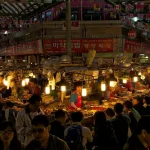
This is the most honest answer to “where do I eat cheaply in Seoul.” Gwangjang Market in Jongno has been feeding Seoulites since 1905 and the stall prices haven’t gone stratospheric the way some tourist-facing spots have. A plate of bindaetteok (mung bean pancakes) from the inner stalls runs 4,000–6,000 KRW (~$3–$4.40 USD). Arrive before noon on a weekday if you want a seat without waiting. The market hum — vendors calling out, the sizzle of batter hitting hot oil — makes it clear you’re eating somewhere real.
University District Lunch Sets
The neighborhoods around Sinchon, Hongdae, and Anam (near Korea University) have dozens of restaurants targeting students with limited budgets. Lunch sets (점심 특선, jeomsim teukseon) typically run 7,000–9,000 KRW (~$5.20–$6.70 USD) and include a main dish, rice, and multiple side dishes. These spots rarely have English menus, but a photo menu or pointing works fine. The food quality is consistently good — these restaurants survive on repeat student customers, not one-time tourists.

Convenience Store Meals
This sounds like a downgrade but it isn’t. Korean convenience stores — especially GS25 and CU — stock freshly prepared triangular kimbap (from 1,000 KRW / ~$0.74 USD each), hot snacks from the counter, and prepared meals you heat in-store for 3,500–5,500 KRW (~$2.60–$4.10 USD). The banana milk and coffee selections alone are worth a stop. Use these for breakfast and late-night hunger without guilt. Budget travelers who ignore the convenience store are spending unnecessary money.
Noryangjin Fish Market
For a sit-down meal that feels like a splurge but isn’t, Noryangjin Fish Market works like this: buy raw seafood at one of the ground-floor vendors, then take it upstairs to one of the cooking restaurants, who will prepare it for a service fee of around 5,000–10,000 KRW (~$3.70–$7.40 USD). A satisfying seafood meal for two people often lands under 40,000 KRW (~$29.60 USD) total. Arrive after 6 p.m. for the best selection and negotiating flexibility.
Free and Near-Free Seoul
Seoul’s public cultural infrastructure is quietly generous. Some of its best experiences cost nothing at all.
- Gyeongbokgung Palace grounds: Free on the last Wednesday of every month (Culture Day). Normal entry is 3,000 KRW (~$2.20 USD) — already cheap, but free is better. The hanbok rental shops nearby charge 15,000–25,000 KRW (~$11–$18.50 USD) if you want the experience, and wearing hanbok gets you free entry on other days.
- Namsan Seoul Tower base: Walking up Namsan Mountain is free. The cable car costs 13,000 KRW (~$9.60 USD) round trip, but the 20-minute walk up through the forested path is genuinely pleasant and skips the queue. The tower observation deck is separate and costs extra — the view from the outdoor terrace below the tower is almost as good and costs nothing.
- National Museum of Korea: Permanent collection admission is free. It’s one of the largest museums in Asia. Budget at least two hours. Located in Yongsan, easy subway access from Line 4 Ichon station.
- Bukhansan National Park: No entry fee. Multiple trailheads accessible by subway. The Bukhansanseong trail takes about three hours round trip and has views over the entire city. Wear proper shoes — the granite paths get slippery after rain.
- Cheonggyecheon Stream: Free. Open 24 hours. Particularly good on summer evenings when the city heat radiates off the pavement and the stream runs cool below street level.
- DDP (Dongdaemun Design Plaza): The building itself is free to walk through and photograph. Specific exhibitions inside have admission fees, but the architecture and the outdoor plaza cost nothing.

The Smart Shopper’s Seoul
Shopping in Seoul doesn’t have to drain your budget — but you need to know which venues are priced for tourists and which ones are priced for people who actually live here.
Where Locals Actually Buy Things
Dongdaemun Market (the actual market streets, not the malls) sells fabric, clothing, and accessories at wholesale-adjacent prices. If you’re buying multiple pieces — basic tees, socks, casual items — the per-unit cost drops significantly. The market operates late into the night and is busiest after 10 p.m.
Namdaemun Market is better for everyday goods, snacks, imported food items, and cheap kitchenware. It’s also where you’ll find some of the best priced street food in a central location — fish cake skewers and hotteok (sweet pancakes) for 1,000–2,000 KRW (~$0.74–$1.50 USD).
For cosmetics, the Olive Young chain has standardized pricing across all branches, so buying in Myeongdong (the most tourist-heavy shopping street) costs the same as buying in a quieter neighborhood. However, the Myeongdong branch frequently runs promotions and hands out samples more liberally due to foot traffic competition. The irony is that Seoul’s most tourist-targeted street can actually be competitive on cosmetics pricing.
Where to Be Careful
Insadong’s tourist-facing gift shops charge significant premiums on items — pottery, fans, traditional goods — that can be found at identical or better quality in Insa-dong Ssamziegil (the inner courtyard complex) for lower prices, or in the permanent market stalls deeper in the alley. The closer to the main street, the higher the markup.
2026 Budget Reality: What a Day in Seoul Actually Costs
Here’s what you can realistically expect to spend per day in Seoul in 2026, with no corners cut on experience.
- Budget tier (25,000–45,000 KRW / ~$18.50–$33 USD per day): Jjimjilbang accommodation, convenience store breakfast, market lunch, one cheap restaurant dinner, transit on T-Money. You’re covering all basics and getting real Seoul experiences. This requires flexibility and no paid attractions.
- Mid-range tier (60,000–90,000 KRW / ~$44–$67 USD per day): Private room in a budget guesthouse or older business hotel, one coffee shop breakfast, one sit-down meal, one street food meal, a paid attraction or two, Climate Card transit. This is the most practical daily budget for first-time visitors who want comfort without luxury.
- Comfortable budget (100,000–150,000 KRW / ~$74–$111 USD per day): Mid-range hotel, three meals at sit-down restaurants (not fine dining), occasional taxi, museum entry, one experience activity (cooking class, escape room, etc.). At this level you’re not budget traveling — you’re just spending sensibly. Seoul will not feel expensive to you at this tier.

Note: these figures exclude accommodation for the budget tier calculation since jjimjilbang stays blur the line between accommodation and activity. One-way flights, airport transit, and pre-trip costs (K-ETA: 10,000 KRW / ~$7.40 USD) are also excluded.
The single biggest day-budget variable is alcohol. A convenience store beer runs 2,500–3,500 KRW (~$1.85–$2.60 USD). The same beer in a bar in Itaewon or Gangnam runs 7,000–12,000 KRW (~$5.20–$8.90 USD). Budget travelers who drink should pre-game at convenience stores or stick to pojangmacha (street tents) where a bottle of soju costs 4,000–5,000 KRW (~$3–$3.70 USD).
Frequently Asked Questions
How much money do I need per day in Seoul in 2026?
A genuine minimum budget is around 40,000–50,000 KRW (~$29–$37 USD) per day including basic accommodation, meals, and transit. Most travelers who want a private room, three meals, and occasional paid activities will be comfortable at 80,000–100,000 KRW (~$59–$74 USD) per day. Seoul rewards structured spending rather than just cutting everything.
Is Seoul more expensive than Tokyo or Bangkok for budget travelers?
In 2026, Seoul sits between the two. It’s cheaper than Tokyo for accommodation and food at the budget tier, but more expensive than Bangkok. Street food and public transit are among Seoul’s strongest budget advantages. If you use them consistently, your daily spend will likely come in lower than an equivalent Tokyo trip.
What is the cheapest area to stay in Seoul?
Dongdaemun and Jongno offer the best combination of low accommodation prices and strong subway access. Euljiro is emerging as a locally-priced option with more character than typical budget zones. Avoid basing yourself in Gangnam unless you find an unusually good deal — the accommodation price premium there rarely makes sense for budget travelers.
Do I need cash in Seoul, or does card work everywhere?
Cards work at the vast majority of restaurants, convenience stores, and shops in 2026. However, some traditional markets — including parts of Gwangjang and Namdaemun — are still cash-preferred. Carry 30,000–50,000 KRW (~$22–$37 USD) in cash as a baseline. ATMs at GS25 and 7-Eleven convenience stores accept foreign cards reliably and charge modest fees.
Is the Seoul Climate Card worth buying for short trips?
The 7-day Climate Card at 23,000 KRW (~$17 USD) is worth it if you’re in Seoul for five or more days and riding transit at least twice daily. For shorter stays or more static itineraries, a loaded T-Money card is more flexible. The Climate Card does not cover airport express (AREX) trains or the GTX-A line — factor that in if you’re using those routes.
Explore more
T-Money Card: Everything You Need to Know for Getting Around Seoul
Insadong Shopping: Traditional Korean Crafts & Souvenirs
📷 Featured image by Ethan Brooke on Unsplash.