On this page
- What the T-Money Card Actually Is (and What It Costs to Get One)
- How to Buy, Load, and Use It Step by Step
- Where T-Money Works — and Where It Doesn’t
- Transfer Discounts: The Real Reason T-Money Saves You Money
- 2026 Fare Reality: What You’ll Actually Pay
- The Alternatives — Climate Card, K-Pass, and Cash
- Common Mistakes Tourists Make With T-Money
- Getting a Refund Before You Leave Korea
- Frequently Asked Questions
Plenty of first-time visitors to Korea land at Incheon, walk up to a subway turnstile, and suddenly realize they have no idea how to pay. In 2026, foreign credit cards still do not tap directly on Seoul’s subway gates or bus card readers — that gap hasn’t closed the way many travelers hoped. The T-Money card solves this problem cleanly and cheaply. But is it always the right choice, or are there situations where a different option makes more sense? Here’s the full picture.
What the T-Money Card Actually Is (and What It Costs to Get One)
T-Money is Korea’s reloadable smart card for public Transport. You load cash onto it, then tap it on readers at subway gates and bus doors instead of buying a separate ticket every time. It works nationwide — Seoul, Busan, Daegu, Daejeon, Gwangju, Incheon — not just in the capital.
The card itself costs between 2,500 KRW and 5,000 KRW (roughly $1.85–$3.70 USD) depending on the design and where you buy it. Standard cards are on the cheaper end. Limited-edition or character-design cards cost more. Either way, that initial purchase price is non-refundable — you’re buying the card, not just the balance on it. Factor that into your thinking if you’re only in Korea for two or three days.
How to Buy, Load, and Use It Step by Step
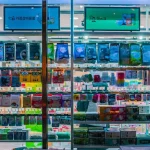
You do not need to hunt for a special counter or travel desk. T-Money cards are sold at convenience stores — 7-Eleven, GS25, CU, E-Mart24, and Ministop — all over the country. You’ll find these stores within walking distance of almost every subway station in Korea. You can also buy one from ticket vending machines inside subway stations, which are marked in English.
At a convenience store, just hand the cashier the card and say “티머니 카드 주세요” (T-meo-ni ka-deu ju-se-yo). Pay the card cost in cash. To load money onto it right there, say “이만원 충전 해주세요” — “Please top up 20,000 KRW.” Loading 20,000 KRW (~$14.80 USD) is a reasonable starting amount for a few days of city travel.
At a subway station machine, select English, choose “Recharge,” place the card on the pad, pick your amount, and feed in cash. The machines accept both bills and coins. Some machines list a credit card option, but foreign cards frequently fail at this step — bring KRW notes to be safe.
Using the card is immediate. At a subway turnstile, tap the card flat on the yellow pad. You’ll hear a short beep and the screen flashes your remaining balance. On a bus, tap on the reader near the driver when you board, then tap again on the reader near the back door when you get off. That second tap is not optional — it’s how the system calculates your fare and applies transfer discounts.
Where T-Money Works — and Where It Doesn’t
This is the most important thing to understand before you rely on T-Money for everything.
T-Money works on:
- Seoul, Busan, Daegu, Daejeon, Gwangju, and Incheon subway lines
- City and village buses nationwide (nearly all routes)
- The AREX All-Stop Train (일반열차) from Incheon Airport to Seoul Station — fare runs approximately 4,750 KRW (~$3.50 USD) for the full route
- GTX-A Line — the high-speed commuter rail that launched its first section in March 2024 and now runs the full Unjeong–Seoul Station route; T-Money is the standard payment method
- Some convenience store purchases, vending machines, and coin lockers
T-Money does NOT work on:
- The AREX Express Train (직통열차) — this non-stop service from Incheon Airport to Seoul Station costs 11,000 KRW (~$8.15 USD) for adults and requires a separate ticket bought at the AREX Travel Center, the AREX website (www.arex.or.kr), or the AREX app
- KTX and all other Korail intercity trains — book via the KorailTalk app or www.letskorail.com
- Most intercity and express buses between cities
The short version: T-Money handles everything inside a city. Once you’re crossing provinces by high-speed train or express bus, you need separate tickets.
Transfer Discounts: The Real Reason T-Money Saves You Money
Single-use subway tickets cost 100 KRW more than the T-Money fare per ride. That’s not the main saving. The real financial benefit is the transfer discount system.
When you tap out of a subway and tap onto a connecting bus — or vice versa — within 30 minutes (extended to 1 hour between 9 PM and 7 AM), the system treats the journey as one continuous trip. You pay only the fare difference rather than a full new fare. You can chain up to 4 transfers under one base fare. This stacks across subway lines, blue buses, green buses, and combinations of both.
If you pay cash on a bus, you get no transfer discount at all — you pay the full fare fresh every time you board something new. Over a full day of sightseeing that involves even two or three mode switches, the savings add up to several hundred KRW. Over a week, that’s real money.

2026 Fare Reality: What You’ll Actually Pay
Seoul’s subway base fare moved up from 1,400 KRW to 1,550 KRW (~$1.15 USD) with a T-Money card — a change implemented in late 2024 or early 2025. Single-use tickets run 100 KRW more per ride.
Seoul bus fares in 2026 with T-Money:
- Blue/Green buses (main city routes): 1,500 KRW (~$1.10 USD)
- Yellow buses (circulation/loop routes): 1,400 KRW (~$1.05 USD)
- Red buses (express routes to outer areas): 3,000 KRW (~$2.20 USD)
- Night buses: 2,500 KRW (~$1.85 USD)
Cash passengers pay 200 KRW more on every bus route.
GTX-A fares start at a 3,200 KRW base (~$2.35 USD), with a 250 KRW distance surcharge per 5 km up to 10 km, then per 10 km after that. A Suseo–Dongtan trip (32.8 km) costs around 4,450 KRW (~$3.30 USD). Transfer discounts apply when you connect to or from regular subway and bus lines.
For budget planning across a typical Seoul day:
- Budget traveler (4–5 transit trips, tight routing): 6,000–8,000 KRW (~$4.45–$5.90 USD)
- Mid-range traveler (6–8 trips, mixed subway and bus): 9,000–13,000 KRW (~$6.65–$9.65 USD)
- Comfortable pace (10+ trips, some taxis, GTX): 15,000–22,000 KRW (~$11.10–$16.30 USD)
The Alternatives — Climate Card, K-Pass, and Cash
Three alternatives come up constantly in 2026, and tourists need to understand exactly who each one is actually for.
Climate Card (기후동행카드) launched in January 2024. It’s a 30-day unlimited pass covering Seoul subway lines, Seoul city buses (not red express buses), and the Ddareungi public bike system. Cost in 2026 is 62,000 KRW (~$45.90 USD) for subway and bus, or 65,000 KRW (~$48.15 USD) with Ddareungi access added. Buy it at Seoul subway station ticket booths, or as a mobile card on Android phones with NFC. The catch: it covers Seoul only. It doesn’t work in Gyeonggi, Incheon, on AREX, or on KTX. If you’re spending two weeks or more in Seoul and won’t venture outside the city boundary much, it’s worth doing the math. If you’re also visiting Busan or Jeju, T-Money travels with you — the Climate Card doesn’t.
K-Pass launched in March 2024 and gives registered users a monthly refund of 20%–53% on public transport spending. It sounds appealing until you read the eligibility rules: you need a Korean bank account, a Korean phone number, and either Korean citizenship or an Alien Registration Card. Short-term tourists are out. This is a resident benefit, not a visitor benefit.

Cash still works on buses — you drop exact change into the box near the driver, no change is given — and you can buy single-use subway tickets from vending machines. Both cost more per ride than T-Money and neither gives you transfer discounts. Cash is a backup, not a strategy.
Common Mistakes Tourists Make With T-Money
The turnstile will let you walk through even if your balance is too low — and then flag you on exit. Always make sure you have at least 2,000 KRW on the card before starting a journey, not after finishing one.
Forgetting to tap out on buses is probably the most common error. If you board a bus, tap in, and then just walk off at your stop without tapping the rear reader, the system charges you the maximum possible fare for that route and blocks your transfer discount. The physical sensation of tapping out — the reader gives a different tone than the tap-in — becomes automatic after one day, but the first few times it genuinely slips people’s minds.
Trying to load T-Money with a foreign credit card at subway machines is a common time-waster. It rarely works. Always carry KRW cash specifically for top-ups, especially during the first day when you’re still finding your feet.
Finally, don’t assume T-Money covers the AREX Express Train. Many tourists tap their card at the Airport Express gate expecting it to work, only to get an error. The all-stop train is fine. The non-stop express requires a separate ticket.
Getting a Refund Before You Leave Korea
If you have leftover balance when you’re done traveling, you can recover most of it. The process depends on how much is left on the card.
For balances of 20,000 KRW or less: walk into any convenience store, hand the card to the cashier, and say “환불” (hwan-bul). A 500 KRW service fee is deducted and you receive the rest in cash on the spot. Quick and easy.
For balances over 20,000 KRW: you need to visit a T-Money service center at a major subway station or the T-Money headquarters. This takes more time, so try to time your top-ups toward the end of your trip so you don’t land in this situation at the last minute.
The card purchase fee itself — the 2,500–5,000 KRW you paid to get the card — is never refunded, under any circumstances. If the card physically malfunctions, service centers will refund both the remaining balance and the card cost, but a working card is treated as a spent purchase.

Frequently Asked Questions
Can I use a foreign credit card or Apple Pay instead of T-Money on Seoul’s subway?
No — as of 2026, foreign credit cards and mobile payment systems like Apple Pay and Google Pay are not accepted directly at Seoul subway turnstiles or bus card readers. T-Money, or a registered Korean transit card, remains the standard tap-and-go method for public transport. Foreign cards work for buying KTX and AREX Express tickets online or at counters.
How much should I load onto my T-Money card when I first arrive?
For a standard week-long trip with regular city transit use, 30,000–50,000 KRW (~$22–$37 USD) is a solid starting load. You can top up easily at any convenience store. If you’re staying longer or plan heavy use of buses and the subway daily, lean toward the higher end to avoid frequent reloads.
Is the Climate Card better than T-Money for a two-week Seoul trip?
It can be, but only if you’ll stay almost entirely within Seoul and use transit heavily. At 62,000 KRW (~$45.90 USD) for 30 days unlimited, it pays off if you’re making six or more transit trips daily. If you’re day-tripping to Incheon, Suwon, or other cities outside Seoul, you’ll still need a T-Money card alongside it — the Climate Card stops working at the city boundary.
Does T-Money work on the GTX-A Line in 2026?
Yes. The GTX-A Line, which completed its full Unjeong–Seoul Station route after its initial Suseo–Dongtan launch in March 2024, accepts T-Money as standard payment. Fares start at 3,200 KRW base (~$2.35 USD) with distance surcharges added. Transfer discounts apply when connecting to regular subway and bus lines.
What happens if my T-Money card runs out of balance mid-journey?
On the subway, a low or zero balance will trigger an error at the exit gate. You’ll need to use the “Fare Adjustment” machine near the exit to pay the outstanding amount in cash before the gate releases. On a bus, if the reader rejects your card, you’ll need to pay cash for that ride. Always keep a buffer of at least 2,000–3,000 KRW on the card.
Explore more
Using Your Credit Card in Korea: What International Travelers Should Expect
Korea e-Arrival Card & Q-Code: Do You Still Need Them for Entry?
Essential Korean Phrases for Travelers: Navigating Without Fluency
📷 Featured image by Balazs Busznyak on Unsplash.