💰 Click here to see Korea Budget Breakdown
💰 Prices updated: 2026-10-01. Budget figures are estimates — always verify before travel.
Exchange Rate: $1 USD = 1,356 KRW
Daily Budget (per person) • Pricing updated as of 2026-10-01
Daily Budget
Shoestring: 60,000 KRW - 95,000 KRW ($44.25 – $70.06)
Mid-range: 130,000 KRW - 250,000 KRW ($95.87 – $184.37)
Comfortable: 350,000 KRW - 550,000 KRW ($258.11 – $405.60)
Accommodation (per night)
Hostel/guesthouse: 25,000 KRW - 65,000 KRW ($18.44 – $47.94)
Mid-range hotel: 90,000 KRW - 165,000 KRW ($66.37 – $121.68)
Food (per meal)
Budget meal (street food): 9,000 KRW ($6.64)
Mid-range meal (restaurant): 22,000 KRW ($16.22)
Upscale meal: 65,000 KRW ($47.94)
Transport
Single subway/bus trip: 1,600 KRW ($1.18)
Climate Card (30-day unlimited): 67,000 KRW ($49.41)
Jeonju’s reputation as Korea‘s food capital often gets visitors rushing through the hanok village with a bowl of bibimbap before catching the next KTX back to Seoul. But this approach misses the city’s genuine character — the quiet morning streets before tour groups arrive, the family-run restaurants that have perfected their recipes over three generations, and the living neighborhoods where traditional architecture isn’t just a photo backdrop.
Why Jeonju Deserves More Than a Day Trip
Most travel guides treat Jeonju as a quick cultural pit stop, but the city reveals its personality slowly. The hanok village transforms completely between the crowded afternoon peak and the golden hour when families emerge for evening walks. Street food vendors start their prep work at 5 AM, and watching elderly women hand-roll mandu dumplings while chatting about their grandchildren tells you more about Korean culture than any museum display.
The city’s food scene operates on local rhythms. Restaurants close between lunch and dinner service, traditional markets shut down by 4 PM, and the best naengmyeon (cold noodle) shops only serve until they run out of broth — usually by 2 PM. Rushing through misses these patterns entirely.
Jeonju also serves as the perfect introduction to Korean traditional culture without Seoul’s overwhelming scale or Gyeongju’s museum-like atmosphere. Here, hanok houses are still homes, traditional crafts are practiced daily, and you can learn to make proper kimchi from someone’s grandmother rather than a cooking class instructor.
Jeonju Hanok Village: Beyond the Tourist Photos
The hanok village contains over 800 traditional Korean houses, making it the country’s largest collection of hanok architecture. But the real discovery happens in the residential sections where families actually live in these traditional homes, hanging laundry between wooden beams and tending small gardens behind curved tile roofs.
Visit early morning (before 9 AM) or late afternoon (after 5 PM) when the village belongs to residents rather than tour groups. The sound of wooden doors sliding open and the sight of steam rising from kitchen chimneys creates an entirely different atmosphere than the midday rush.
The Gyeonggijeon Shrine, where portraits of Joseon Dynasty kings are housed, offers the village’s most authentic historical experience. The changing of the guard ceremony happens at 11 AM and 3 PM on weekends, but the real attraction is the traditional music that drifts across the courtyard during practice sessions most weekday afternoons.
Traditional craft workshops line Taejo-ro street, where you can watch master artisans creating hanji (traditional paper), pottery, and fans using methods unchanged for centuries. The paper-making workshop near the village entrance allows visitors to create their own hanji — a genuinely hands-on cultural experience rather than just observation.
Cultural Experiences Worth the Time
The Hanok Living Experience lets you sleep in a traditional house with ondol (underfloor heating) and wake up to the sound of temple bells from nearby Jeondeungsa Temple. Book through the official Jeonju tourism website for authentic family-run hanok stays rather than tourist-oriented guesthouses.
Jeondong Cathedral, built in 1914 in Romanesque style, creates a striking architectural contrast with the surrounding hanok houses. The evening mass (7 PM on Sundays) fills with both locals and visitors, and the cathedral stays illuminated until 10 PM for night photography.
Jeonju’s Legendary Food Scene (and Where Locals Actually Eat)
Jeonju claims to be the birthplace of bibimbap, but the city’s food reputation extends far beyond its most famous dish. The city’s location in fertile Jeolla Province, combined with centuries of royal court culinary traditions, created a food culture that prioritizes ingredient quality and preparation technique over flashy presentation.

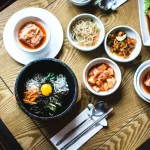
Real Jeonju bibimbap uses more than 20 different vegetables and comes with a raw egg yolk that cooks when mixed with warm rice. Tourist restaurants often serve simplified versions with 8-10 ingredients, so look for places where locals eat — typically family-run restaurants with handwritten menus and no English signage.
Essential Jeonju Foods Beyond Bibimbap
Jeonju-style kongnamul gukbap (bean sprout soup with rice) represents the city’s soul food. The broth simmers for hours with anchovies and kelp, creating a clear but deeply flavored base. Locals eat this for breakfast, lunch, or as a hangover cure, and most restaurants serve it with unlimited banchan (side dishes).
Choco pie emerged from Jeonju’s PNB Bakery in 1974, though locals prefer the traditional rice cakes from century-old confectioneries along Taejo-ro. These small family businesses create dozens of rice cake varieties using recipes passed down through generations.
Jeonju makgeolli deserves special attention. Local breweries produce rice wine using traditional methods, and several hanok village establishments serve it in traditional brass bowls alongside pajeon (scallion pancakes) made with local ingredients.
Where to Eat Like a Local
Nambu Market, operating since 1905, reveals Jeonju’s authentic food culture. The covered market sections contain restaurants that have served the same dishes for decades, including the famous kalguksu (knife-cut noodle) shops where grandmothers roll and cut noodles by hand throughout the day.
Jungang Market specializes in traditional Korean sweets and snacks. The hoddeok (sweet pancake) stalls here use fillings unique to Jeonju, including red bean paste mixed with pine nuts and cinnamon. The smell of these pancakes cooking on griddles fills the entire market area.
For dinner, avoid the hanok village’s touristy restaurants and head to residential neighborhoods where families run small establishments specializing in single dishes. These places often close when ingredients run out, operate without set hours, and serve food that represents genuine local taste rather than adapted tourist versions.

Getting to Jeonju: KTX vs Bus in 2026
The KTX from Seoul Station to Jeonju Station takes exactly 1 hour 28 minutes and costs 23,700 KRW (about $17.50 USD) for standard cars. The 2026 schedule includes departures every 30 minutes during peak hours (7-9 AM and 5-7 PM) and hourly service throughout the day.
Express buses from Seoul’s Express Bus Terminal to Jeonju take 2 hours 40 minutes and cost 12,800 KRW (about $9.50 USD). Buses depart every 20 minutes from 6 AM to 10 PM, making this option more flexible for spontaneous trips. The bus terminal sits closer to downtown Jeonju than the KTX station, saving on local transportation.
From Busan, the KTX takes 2 hours 15 minutes (32,400 KRW / $24 USD), while buses take 4 hours 20 minutes (19,300 KRW / $14.30 USD). The time difference makes KTX worthwhile for Busan travelers.
Airport Connections
Jeonju’s small airport only serves domestic routes to Jeju Island. International travelers should fly into Incheon and take the AREX to Seoul Station, then transfer to KTX. Total journey time from Incheon landing to Jeonju: approximately 3.5 hours including transfers.
From Gimpo Airport, take the subway to Seoul Station (40 minutes) and catch the KTX. This route works well for domestic connections or flights from nearby Asian cities that use Gimpo rather than Incheon.
Getting Around Jeonju
Jeonju’s compact downtown area makes walking the most practical option for visitors. The hanok village, main markets, and most restaurants cluster within a 2-kilometer radius, easily walkable in 20-30 minutes.
City buses connect outlying areas to downtown, but most tourist attractions lie within walking distance of each other. The bus system uses standard Korean transportation cards (T-Money, Cashbee), and rides cost 1,300 KRW (about $1 USD) for adults.
Bicycle rentals operate from several locations near the hanok village entrance. The city added protected bike lanes throughout downtown in 2025, making cycling safe and convenient. Rental costs average 3,000 KRW ($2.20 USD) for 2 hours or 10,000 KRW ($7.40 USD) for full-day access.

Taxis in Jeonju start at 3,800 KRW (about $2.80 USD) and increase by 100 KRW every 142 meters. Most destinations within the city center cost 5,000-8,000 KRW ($3.70-5.90 USD). From Jeonju Station (KTX) to the hanok village, taxis cost approximately 6,000 KRW ($4.45 USD) and take 15 minutes.
2026 Budget Breakdown: What You’ll Actually Spend
Jeonju offers excellent value compared to Seoul or Busan, with high-quality traditional foods at reasonable prices and affordable accommodation options ranging from hanok stays to modern hotels.
Budget Travel (Under 60,000 KRW / $45 USD per day)
- Accommodation: Guesthouse or hostel (20,000-30,000 KRW / $15-22 USD)
- Meals: Street food, market restaurants, local spots (15,000-20,000 KRW / $11-15 USD)
- Transportation: Local buses, walking (2,000-5,000 KRW / $1.50-3.70 USD)
- Activities: Free cultural sites, market exploration (5,000 KRW / $3.70 USD)
Mid-Range Travel (60,000-120,000 KRW / $45-89 USD per day)
- Accommodation: Mid-range hotel or hanok guesthouse (40,000-70,000 KRW / $30-52 USD)
- Meals: Mix of local restaurants and traditional dining (25,000-40,000 KRW / $18.50-30 USD)
- Transportation: Taxis for convenience, bicycle rental (8,000-15,000 KRW / $6-11 USD)
- Activities: Cultural workshops, guided tours (15,000-25,000 KRW / $11-18.50 USD)
Comfortable Travel (Over 120,000 KRW / $89 USD per day)
- Accommodation: Luxury hanok stay or 4-star hotel (80,000-150,000 KRW / $59-111 USD)
- Meals: High-end traditional restaurants, chef experiences (50,000+ KRW / $37+ USD)
- Transportation: Private taxis, car service (20,000-40,000 KRW / $15-30 USD)
- Activities: Private cultural lessons, premium experiences (40,000+ KRW / $30+ USD)
Specific 2026 Prices
Jeonju bibimbap at tourist restaurants: 12,000-18,000 KRW ($8.90-13.30 USD). At local family restaurants: 8,000-12,000 KRW ($5.90-8.90 USD). The price difference reflects ingredient quality and preparation methods rather than location markup.
Hanok village entrance remains free, but cultural experience programs cost 5,000-15,000 KRW ($3.70-11 USD) depending on activity. Traditional craft workshops average 20,000 KRW ($15 USD) for 2-hour sessions including materials.

Makgeolli tastings at traditional breweries cost 15,000-25,000 KRW ($11-18.50 USD) for flights of 5-6 varieties with traditional snacks. Local bars serve makgeolli for 3,000-5,000 KRW ($2.20-3.70 USD) per bowl.
Frequently Asked Questions
How long should I spend in Jeonju?
One full day covers the main highlights, but two days allows for deeper cultural experiences and less rushed exploration. Overnight stays reveal the hanok village’s authentic character after day tourists leave.
Is Jeonju worth visiting if I’ve already been to Bukchon Hanok Village in Seoul?
Absolutely. Jeonju’s hanok village is larger, less commercialized, and includes residential areas where people actually live. The food scene and traditional culture experiences also surpass Seoul’s tourist-oriented offerings.
What’s the best time of year to visit Jeonju?
Spring (April-May) and fall (September-October) offer ideal weather and beautiful scenery. Summer can be hot and humid, while winter provides cozy hanok experiences with traditional heating systems.
Can I experience traditional culture without speaking Korean?
Yes, many cultural workshops offer English instruction, and the hanok village information center provides English-speaking volunteers. Traditional experiences like tea ceremonies and craft workshops transcend language barriers.
Should I book hanok accommodation in advance?
Definitely, especially for weekends and peak seasons. The best traditional hanok stays fill up quickly, and last-minute bookings often mean settling for tourist-oriented guesthouses rather than authentic family-run properties.
Explore more
Beyond Bulguksa: Discovering Gyeongju’s Hidden Historical Gems
Top Things to Do in Gyeongju: A Journey Through Ancient Korean History
Is Gyeongju Worth Visiting? Why Korea’s Silla City is a Must-See
📷 Featured image by Anthony Salerno on Unsplash.