On this page
- Gyeongju: Korea’s Ancient Capital and the Best Day Trip in the Country
- Jeonju: Hanok Village, Bibimbap, and Korea’s Food Capital
- Suwon: Korea’s Most Accessible UNESCO Fortress
- The Dongseo Trail: Korea’s Answer to the Camino de Santiago
- Gangwon-do: Mountains, Coast, and the 2026 Wellness Cluster
- Andong: The Most Korean City in Korea
- Gunsan: Korea’s Most Interesting Time Warp
- Daegu: The City Getting Its Moment
- Damyang: Bamboo, Silence, and a Complete Change of Pace
- Planning Your Regional Korea Trip: Practical Considerations
- Frequently Asked Questions
- Regional Korea vs the Big Three: What You’re Actually Choosing Between
- Quick Reference: Regional Destinations at a Glance
- Pohang: Steel City Surprises
- How to Build a Regional Korea Itinerary That Actually Works
- The Thing About Getting Off the Main Route
Most Korea trips follow the same route. Seoul for a week, a night or two in Busan, maybe a flight to Jeju. It’s a great trip — but it’s also the same trip about ten million other people are taking this year. The Korea that doesn’t make the algorithm — the thousand-year-old capital with burial mounds in the middle of residential streets, the coast-to-coast hiking trail that just opened its final section, the port city turned retro film location, the surf town on the east coast that Koreans have known about for years and tourists are only just finding — that version of Korea is still largely uncrowded, underpriced, and significantly more interesting for anyone who’s already done the obvious route.
This guide covers eight destinations worth getting off the tourist trail for. Some are easy day trips from Seoul or Busan. Some deserve their own dedicated trip. All of them will give you a version of Korea that most visitors completely miss.
Gyeongju: Korea’s Ancient Capital and the Best Day Trip in the Country
If you visit one place outside the big three cities in Korea, make it Gyeongju. The former capital of the Silla Kingdom — which ruled most of the Korean peninsula for almost a thousand years — Gyeongju has more UNESCO World Heritage Sites than anywhere else in Korea and a density of historical remains that genuinely earns it the nickname “the museum without walls.” Royal burial mounds rise from the middle of residential neighbourhoods. A 7th-century astronomical observatory sits beside a convenience store. The country’s most important Buddhist temple complex is carved into a granite mountain 15 minutes from the city centre.
In 2026, Gyeongju has had a significant revival thanks to the expansion of Hwangnidan-gil — a district of converted hanok buildings housing independent cafes, craft workshops, and galleries that has grown from a single street into a whole grid of artsy lanes spreading across the old city area. It’s the kind of neighbourhood development that Seoul’s Seongsu or Busan’s Gamcheon represents in their respective cities — creative energy repurposing old architecture — except with Gyeongju burial mounds as the backdrop instead of industrial buildings.
What to See in Gyeongju
Bulguksa Temple is the headline attraction and one of the most important Buddhist temples in Korea — a UNESCO World Heritage complex built in 528 AD and reconstructed after the Japanese invasions of the 16th century. The stone staircases, pagodas, and main hall are genuinely beautiful in a way that reads as understated until you understand the age of what you’re looking at. Get there when it opens (7am in spring/summer) before the tour groups arrive.
Seokguram Grotto — 3km up the mountain from Bulguksa by shuttle bus or a 45-minute walk — is a carved granite Buddha seated inside a domed stone chamber, looking east over the Korean Strait. Built in 774 AD. The Buddha itself is one of the finest sculptures in East Asia and the setting — a hillside grotto with the ocean horizon visible on clear days — is extraordinary. Limited daily visitors allowed; arrive early or book in advance.
Daereungwon Tumuli Park is the largest collection of Silla burial mounds, right in the middle of the city. Twenty-three royal tombs covered in grass, some up to 23 metres high, surrounded by residential streets. The juxtaposition — ancient earthen hills, street food stalls on their perimeters, school kids cycling between them — is peculiarly charming. Entry around 3,000 KRW (~$2.20 USD). The inside of Cheonmachong (the only tomb open to visitors) shows the extraordinary contents excavated from these mounds — gold crowns, jade jewellery, weapons — displayed in situ where possible.
Cheomseongdae Observatory — built in 634 AD, the oldest surviving astronomical observatory in East Asia — sits in the middle of a field near the burial mounds. It’s smaller than you expect (about 9 metres tall) and more impressive for its age than its size. Free to view from outside; the surrounding field is worth wandering through at sunset when the light catches the stone.
Donggung Palace and Wolji Pond is Gyeongju’s best evening attraction. The reconstructed Silla palace buildings reflected in the pond, illuminated at night, with the 2026 media art installations adding light projections to the surface of the water. The Gyeongju Moonlight Tour — a guided evening experience through the lit palace grounds — has become one of the most popular night tourism experiences in Korea. Entry around 3,000 KRW (~$2.20 USD); arrive after dark for the full effect.
Getting to Gyeongju
From Seoul: KTX to Singyeongju Station takes about 2 hours. From Singyeongju, the 2026 Smart Shuttle buses run every 10 minutes to the historic core — no taxi needed. Total Seoul to Gyeongju historic centre is around 2 hours 20 minutes. A very achievable day trip from Seoul, though an overnight stay lets you do the evening palace experience properly.
From Busan: KTX takes about 24 minutes from Busan Station to Singyeongju. This makes Gyeongju the easiest and most rewarding day trip from Busan by some distance. The Gyeongju-Busan Tourist Bus offers a scenic alternative that stops at coastal temples including Haedong Yonggungsa — a Buddhist temple built directly on coastal rocks above the sea, one of the more dramatic temple settings in the country.
Jeonju: Hanok Village, Bibimbap, and Korea’s Food Capital

Jeonju in North Jeolla Province is the most underrated city in Korea for food and the best-preserved traditional urban environment outside of a museum. The Jeonju Hanok Village — 735 traditional Korean houses clustered in a neighbourhood that dates back to the Joseon Dynasty — is the largest surviving hanok district in the country and, unusually for a tourist attraction of this scale, still partially inhabited by actual residents.
Jeonju is also the birthplace of bibimbap — Korea’s most globally recognised dish — and the city takes this seriously. The local version (Jeonju bibimbap) uses beef tartare instead of cooked meat, a richer gochujang paste, and significantly more banchan (side dishes) than the Seoul restaurant version. Eating it here, in a restaurant that has been serving the same recipe for decades, is one of those food experiences that recalibrates your understanding of a dish you thought you already knew.
What to Do in Jeonju
The Hanok Village is the centre of gravity — a genuinely beautiful neighbourhood of curved tiled rooftops, narrow lanes, and the smell of traditional Korean food being prepared in open-fronted restaurants. It’s tourist-friendly without feeling manufactured. The balance of actual residents, working craft workshops (paper-making, fan-making, pottery), and food stalls feels authentic in a way that more heavily developed heritage sites often lose.
In 2026, the Hanok Village has expanded its craft workshop experiences significantly — half-day classes in hanji (traditional Korean paper) making, dancheong (traditional decorative painting), and makgeolli brewing are all available and bookable through the Jeonju Tourism app. These are not tourist-facing performances; they’re working craft studios that take visitors for sessions. The hanji workshop in particular is genuinely interesting — the paper is made from mulberry bark using techniques unchanged for over a thousand years.
Gyeonggijeon Shrine — a royal shrine housing a portrait of King Taejo, the founder of the Joseon Dynasty — is the most historically significant site in the village and worth 30 minutes of your time. The surrounding bamboo grove is one of the best examples of traditional landscape design in the region.
The Jeonju Bibimbap Street — a concentrated cluster of restaurants near the main village entrance — is where to eat. Most restaurants serve the full traditional version with stone bowl, beef tartare, and the complete banchan spread. Budget around 15,000–25,000 KRW (~$11–$18.50 USD) per person. Arrive before noon or after 2pm to avoid the worst queues.
Getting to Jeonju
From Seoul: KTX to Jeonju Station takes about 1 hour 45 minutes. Alternatively, the express bus from Seoul’s Nambu Terminal takes about 2 hours 30 minutes and drops you closer to the Hanok Village. Jeonju is feasible as a day trip from Seoul but an overnight stay is better — the village at night, when the day-trippers have left, is a completely different experience.
Suwon: Korea’s Most Accessible UNESCO Fortress

Suwon has always been close to Seoul — 30 kilometres south — but the 2026 GTX-C line expansion has made it arguably the most accessible significant day trip destination in the country. From central Seoul to Suwon Station is now approximately 20 minutes. That changes the calculus completely: you can realistically do Suwon as a morning trip, be back in Seoul for lunch, and still feel like you’ve seen something genuinely impressive.
The draw is Hwaseong Fortress — a UNESCO World Heritage-listed defensive wall built between 1794 and 1796 by King Jeongjo. The 5.7km circuit of walls, gates, watchtowers, and command posts encircles the old city centre and represents the most intact example of late Joseon Dynasty military architecture in Korea. Walking the full circuit takes about two hours at a relaxed pace and the views from the elevated sections — over Suwon’s mix of old and new, with distant mountains on clear days — are genuinely worth the journey.
What’s Changed in 2026
In 2026, Hwaseong has introduced AI shuttle vehicles for visitors with limited mobility — small electric vehicles that navigate the fortress wall circuit autonomously, making the full 5.7km accessible to people who couldn’t walk the full distance. This is a significant upgrade and a model other Korean heritage sites are watching closely.
The Hwaseong Haenggung Palace — the temporary royal palace inside the fortress walls — has been significantly expanded as an experiential destination in 2026. Traditional archery, royal costume rental, and guided demonstrations of Joseon military drills run throughout the day. Entry to the palace is approximately 1,500–3,000 KRW (~$1.10–$2.20 USD) on top of the standard fortress entry.
The Suwon Hwaseong Cultural Festival in October has been designated as a “Representative Global Festival” for 2024–2026, featuring English-subtitled traditional performances and royal dessert workshops. If your trip overlaps with October, Suwon is worth a dedicated full day rather than a quick morning trip.
Beyond the Fortress: Suwon’s Tech Neighbourhood
The area around Gwanggyo in Suwon’s eastern district has become one of Korea’s most interesting planned tech neighbourhoods — Samsung’s global headquarters are here, surrounded by a carefully designed urban environment of parks, cultural centres, and the architectural landmark Gwanggyo Lake Park. If you’re interested in how Korea designs its tech industry environments (very differently from Silicon Valley), the contrast between the 18th-century fortress walls and the 21st-century tech campus 10 minutes away tells you something real about the country’s relationship with its own history.
The Dongseo Trail: Korea’s Answer to the Camino de Santiago
The biggest news in Korean outdoor tourism in 2026 is the completion of the Dongseo Trail — Korea’s first coast-to-coast long-distance hiking route. The full trail stretches 849 kilometres across 55 sections, from Anmyeon Island on the west coast to Uljin on the east coast. All 55 sections are now fully operational as of March 2026, making it one of the most ambitious trail completions in Asia this decade.
The comparison to the Camino de Santiago isn’t just marketing — the trail was explicitly designed around the pilgrimage walking concept, passing through 90 “hub villages” where hikers can stay in local guesthouses and eat meals prepared from regional ingredients. The emphasis throughout is on cultural immersion rather than physical challenge — the trail deliberately avoids the major mountain ranges and instead follows river valleys, coastal paths, traditional agricultural roads, and the kind of quiet rural Korea that urban visitors rarely access.
Planning Your Dongseo Trail Experience
The full trail takes approximately 45–55 days walking at a moderate pace of 15–20km per day. Each section is 9–16km and rated moderate difficulty — this is not a technical mountain route. The trail is designed for sustained comfortable walking, not high-altitude scrambling.
For shorter trips, individual sections or clusters of sections are entirely viable. The trail is set up so that you can join and leave at any of the hub villages. The most popular approach for visitors with a week is to walk sections 1–5 or 51–55, which offer the coastal scenery of the west and east coast starts respectively.
The Uljin Section (Section 55) on the east coast is the 2026 standout. It passes through a Korean Red Pine forest that was heavily damaged by the 2022 wildfires and has undergone significant restoration — the contrast between the damaged and regenerating sections of forest is striking, and the forest healing infrastructure (interpretation boards, walking meditation platforms, rest areas designed around natural sound environments) is some of the most thoughtfully designed outdoor infrastructure in Korea.
Accommodation: Hub village guesthouses need to be booked in advance — at least two weeks ahead during spring and autumn peak seasons. The National Forest Service app (available in English from 2026) handles bookings for the official trail accommodation. Some hub villages have only two or three guesthouses, so leaving this to the last minute is a real risk during popular sections.
Gangwon-do: Mountains, Coast, and the 2026 Wellness Cluster

Gangwon-do — the province that covers Korea’s northeastern mountain region and the east coast — has been designated as Korea’s primary Wellness Tourism Cluster for 2026 by the Ministry of Culture. The designation formalises what outdoor enthusiasts and weekend escapers from Seoul have known for years: this is the best natural environment within easy reach of the capital, combining the highest mountains on the Korean mainland, the country’s best surf beaches, and a landscape genuinely different from anywhere else in Korea.
Sokcho and Seoraksan: The Classic Mountain Experience
Sokcho is the gateway town to Seoraksan National Park — the most dramatic mountain scenery on the Korean mainland. The granite peaks, deep valleys, and autumn foliage of Seoraksan are genuinely spectacular and the park is one of the few places in Korea where you can have a full mountain wilderness experience without going to Jeju. The main cable car from Sogongwon Park takes you up to the base of the Ulsanbawi rock formation in about six minutes; the hike to the Biseondae rock platform gives you the best panoramic views with a moderate two-hour round trip.
Sokcho itself has a strong food culture centred on freshly caught east coast seafood — the Sokcho Jungang Market has some of the best cheap seafood in Korea, including the local speciality sundae (blood sausage stuffed with vermicelli, not the ice cream) and jjamppong (spicy seafood noodle soup). Getting from Seoul: express bus from Seoul’s Dong Seoul or Sinbundang terminals takes about 2 hours 30 minutes.
Yangyang: Korea’s Surf Capital
Yangyang on the east coast is Korea’s best-known surf destination and in 2026 has developed significantly beyond its original surf-camp audience. The beaches — particularly Surfyy Beach and Jukdo Beach — have a well-developed infrastructure of surf schools, yoga studios, specialty cafes, and accommodation ranging from surf hostels to boutique hotels. The vibe is young, relaxed, and international in a way that few places in Korea outside Seoul manages.
The 2026 addition of Eco-Surfing schools — which combine surf lessons with organised beach restoration sessions — reflects the Gangwon-do wellness cluster designation. It’s not greenwashing in the usual sense; the east coast beaches have genuine litter problems from ocean plastic, and the restoration component is substantive. You surf, you clean up, you feel less conflicted about flying to Korea.
From Seoul, the expressway to Yangyang takes about 2 hours 30 minutes by bus — or faster by the new East-West Expressway that connects the capital directly to the east coast. The drive through the mountains is worth doing at least once; the tunnel that crosses the Taebaek range emerges to a completely different landscape and weather system on the coast side.
Wonju: The Sleep Wellness Destination
Wonju — the largest city in Gangwon-do — has found an unlikely niche in 2026 as Korea’s “sleep wellness” capital. Several dedicated Digital Healthcare centres have opened in the forests around the city, offering stays focused on sleep science: AI-monitored environments that adjust temperature and ambient sound through the night based on biometric readings, forest acoustic therapy sessions, traditional Hanok bedding with temperature-controlled ondol floors, and herbal tea therapy programmes.
It sounds niche. The reality is that Korea’s population is severely sleep-deprived — one of the lowest average sleep durations in the OECD — and the demand for this kind of structured rest retreat from Seoul’s overworked population is significant. For visitors, a one or two-night stay at one of the Wonju healing centres is either a genuinely interesting wellness experiment or a very comfortable way to spend a night in the mountains, depending on how seriously you engage with the programme. Prices run 100,000–200,000 KRW (~$74–$148 USD) per night including the monitoring programme.
Pyeongchang: Beyond the Olympics
Most people know Pyeongchang from the 2018 Winter Olympics — the ski resorts (Alpensia, Yongpyong) are still operating and genuinely good by Asian standards in winter. In 2026, the “Green Belt” programme has developed the area’s summer and autumn credentials: high-altitude meadow hiking, mountain bike trails on the repurposed Olympic cross-country ski routes, and meditation retreats in alpine forests. The KTX from Seoul to Jinbu Station (the Pyeongchang area stop) takes about 80 minutes — one of the fastest mountain access routes from any capital city in the world.
Andong: The Most Korean City in Korea
If you want to understand what Korean culture looks like without the contemporary K-Pop and tech overlay, go to Andong. The capital of North Gyeongsang Province is Korea’s most important centre of Confucian culture and traditional aristocratic (yangban) heritage — the architecture, the food, and the social customs here are closer to historical Korea than anywhere else in the country.
Hahoe Folk Village — a UNESCO World Heritage village of traditional thatched and tiled-roof houses still inhabited by descendants of the original Joseon-era families — is the most authentic traditional settlement in Korea. Unlike the Jeonju Hanok Village, which has been significantly commercialised, Hahoe is quieter, more rural, and genuinely still used for farming and traditional life by its residents. The surrounding countryside — the Nakdong River making a complete loop around the peninsula of land on which the village sits — provides one of the most memorable landscape settings in the country.
The Andong Mask Festival (held annually in late September to early October, 2026 dates: September 26–October 5) is one of Korea’s best traditional festivals — mask dances, shamanist performances, and traditional music in an outdoor festival format that isn’t primarily designed for foreign tourists. The masks used in the Andong tradition are distinctive and the performances have UNESCO Intangible Cultural Heritage status.
Andong jjimdak — braised chicken with vegetables in a rich soy and chilli sauce — is the city’s signature dish, one of the most satisfying Korean comfort foods, and typically serves two to three people from one pot. The restaurant district around the old market in central Andong is the place to eat it.
Getting there: KTX-Ieum from Seoul to Andong takes about 2 hours. The new connection makes Andong accessible as a day trip, though an overnight stay for the Hahoe Village experience is strongly recommended.
Gunsan: Korea’s Most Interesting Time Warp

Gunsan in North Jeolla Province is one of the most peculiar and fascinating cities in Korea — a port city that was a major Japanese colonial administrative centre in the early 20th century and still has more surviving Japanese-era architecture than anywhere else in the country. Walking its streets involves a genuine cognitive shift: the tiled rooftops of Japanese wooden buildings beside Korean storefronts, the old Japanese bank building that now houses a cultural centre, the Buddhist temple with architectural details that don’t quite look Korean.
The Gunsan Modern History Museum and the surrounding preserved colonial district present this history unflinchingly — the Japanese colonial period is a deeply sensitive topic in Korea, and Gunsan’s approach of preserving and contextualising the architecture rather than demolishing it represents a particular kind of historical reckoning that’s worth engaging with.
In 2026, Gunsan has become known as a K-Drama filming location — the preserved 1930s streetscapes have been used as sets for period dramas and the city has leaned into this as a tourism draw with self-guided “filming location tours.” The combination of genuine historical significance and the drama tourism audience has brought a new generation of visitors who would otherwise have no reason to visit Gunsan.
Getting there: Express bus from Seoul Nambu Terminal, about 2 hours 40 minutes. Or combine with a Jeonju trip — the two cities are about 50km apart and make a natural North Jeolla Province pairing.
Daegu: The City Getting Its Moment
Daegu — Korea’s fourth-largest city — has historically been one of the most overlooked destinations in the country by international visitors. In 2026 that’s starting to change, driven partly by a genuinely interesting urban culture that differs markedly from Seoul, Busan, or the historic cities of the south.
Daegu is conservative in its politics and traditional in its culture — it’s the region that maintains the most distinctly “Korean” social norms and the most pride in traditional music, textiles (it’s historically Korea’s textile centre), and local food. The result is a city with a strong local identity and the kind of hipster neighbourhood scene (centred on Seomun Market and the surrounding alleys) that develops when young creatives from the city decide to reinterpret their own traditions rather than import Seoul’s aesthetic.
Seomun Market is the centrepiece — one of Korea’s three largest traditional markets with a 400-year history, still operating as a working wholesale and retail market for textiles, food, and everyday goods. The evening market that runs alongside it from 7pm–11pm has the best street food concentration in Daegu and costs a fraction of equivalent eating in Seoul.
The Daegu Yangnyeongsi Herb Medicine Market — a 350-year-old traditional medicine market near the old city centre — is one of the most atmospheric and unusual places in Korea. Hundreds of stalls selling dried herbs, roots, and traditional medicine ingredients under a street lined with herbal medicine clinics. The smell alone is worth the trip.
Getting there: KTX from Seoul to Dongdaegu Station takes about 1 hour 40 minutes. Daegu is also an easy stop between Seoul and Busan — break the Seoul–Busan journey here for a night and you have a genuinely different Korea experience as your connecting point.
Damyang: Bamboo, Silence, and a Complete Change of Pace

Damyang in South Jeolla Province is a small town 25km north of Gwangju built around one of the most distinctive landscapes in Korea — a vast bamboo forest that covers the hills around the town and defines both its economy and its identity. The Juknokwon Bamboo Garden is the main attraction: 31 hectares of dense bamboo groves with walking paths that make a genuinely disorienting and beautiful world. The bamboo grows to 10–15 metres high and the effect of walking through the canopy — the light filtering through the leaves, the particular sound of bamboo moving in the wind, the cool air even in summer — is unlike anything else in Korea.
Damyang is also known for traditional Korean tea culture — the area around Soswaewon Garden (a 16th-century scholar’s garden considered one of the finest traditional Korean gardens in the country) has several tea houses serving traditional Korean tea ceremonies. The combination of the bamboo forest, the historic garden, and a quiet tea ceremony afternoon makes Damyang one of the genuinely restorative day trips available from the Korean south.
Getting there: Bus from Gwangju (25 minutes), and Gwangju is reached by KTX from Seoul in about 1 hour 40 minutes. A natural pairing with a Jeonju visit — both are in the Jeolla provinces and represent the most culturally distinct part of Korea from the Seoul-centric mainstream.
Planning Your Regional Korea Trip: Practical Considerations
Transport Between Regional Cities
Korea’s KTX network connects most regional cities to Seoul efficiently, but connections between regional cities (not via Seoul) are often slower. The express bus network fills this gap — intercity buses are comfortable, affordable (typically 10,000–25,000 KRW / ~$7.40–$18.50 USD for journeys of 2–3 hours), and connect cities that the train network doesn’t serve directly. The bus terminal in each city is always near the main train station.
For a multi-city regional trip — say, Seoul → Gyeongju → Andong → Jeonju → Seoul — plan each leg individually using Naver Maps or the Korail app. The routing isn’t always obvious and some combinations work better with a bus segment instead of a train connection.
Language Outside the Tourist Belt
English is significantly less available outside Seoul, Busan, and Jeju. The major tourist sites in cities like Gyeongju and Jeonju have English signage, but restaurants, markets, and transport outside the tourist core often don’t. The Papago app (real-time Korean camera translation) becomes genuinely essential in regional Korea in a way that it isn’t quite as critical in Seoul. Download it and use it confidently — Koreans in regional cities are generally patient and helpful with foreign visitors trying to communicate, even when there’s a significant language barrier.
Accommodation in Smaller Cities
The accommodation options in regional Korea are less varied than the big three cities but this isn’t necessarily a problem. Most regional cities have a good supply of yeogwan (Korean-style guesthouses) and motel-style accommodation at 40,000–70,000 KRW (~$29–$52 USD) per night — clean, basic, functional. For the Jeonju hanok village experience and the Gangwon-do wellness retreats, the accommodation is part of the point. Budget 30–50% less for equivalent room quality compared to Seoul or Busan.
Frequently Asked Questions

Which regional destination is best for a first-time Korea visitor?
Gyeongju, without question. The historical significance is unmatched, it’s the easiest regional city to reach from both Seoul and Busan, the English-language infrastructure at tourist sites is good, and a single day gives you a genuinely complete picture of what you’re seeing. Do Gyeongju before you make decisions about your second Korea trip — it usually recalibrates where you want to go next.
Is the Dongseo Trail suitable for non-serious hikers?
Yes — the trail was explicitly designed for cultural immersion rather than athletic challenge. Most sections are 9–16km of moderate walking on well-maintained paths. The challenge is logistical rather than physical: accommodation needs advance booking, some sections are remote, and the full trail requires 45–55 days. For individual sections or a week-long segment, any reasonably fit person who enjoys walking can handle it comfortably.
How much does a day trip from Seoul to Gyeongju cost?
KTX return ticket from Seoul: approximately 120,000 KRW (~$89 USD) round trip. Entry fees across all the main sites: approximately 10,000–15,000 KRW (~$7.40–$11 USD). Food and bike rental: 20,000–30,000 KRW (~$14.80–$22 USD). Total day trip budget approximately 150,000–165,000 KRW (~$111–$122 USD) per person, excluding optional extras.
What’s the best way to see multiple regional destinations in one trip?
The Gyeongju–Andong–Jeonju triangle works well as a 4–5 day regional circuit based from Busan or Seoul. Gyeongju one or two nights, bus to Andong one night, KTX or bus to Jeonju one or two nights, KTX back to Seoul. Alternatively, a southern circuit: Jeonju–Damyang–Gunsan as a 3–4 day North and South Jeolla Province exploration that gets completely off the tourist trail.
Regional Korea vs the Big Three: What You’re Actually Choosing Between
There’s a version of Korea that most international visitors experience — Seoul’s Han River skyline, Busan’s beaches, Jeju’s volcanic coast — and it’s genuinely impressive. It also misses roughly 80% of what makes Korea interesting as a country to understand. The regional cities and landscapes carry the weight of Korean history, the depth of Korean food culture, the texture of Korean daily life, and the kind of environmental variety that a country this geographically compact shouldn’t logically have.
What you’re choosing when you add Gyeongju or Jeonju or the Gangwon coast to your trip is a Korea that doesn’t perform itself for you. The tourist infrastructure exists — it’s just less comprehensive, which means the experience is more unmediated. You eat in a restaurant because locals eat there, not because it’s been reviewed on TripAdvisor 4,000 times. You walk through a neighbourhood because it’s on your route, not because it’s been designated a tourist zone. That sounds like a small thing until you’ve done a week in Seoul’s tourist circuit and realise how thoroughly managed the experience has been.
The practical argument is simpler: everything on this list is within 2–3 hours of Seoul by train or bus. Adding one or two regional stops to a Korea trip costs relatively little in time or money and returns disproportionately in experience. Gyeongju is 2 hours from Seoul and older than almost anything you can visit in Western Europe. Jeonju is 1 hour 45 minutes from Seoul and has the best food in the country. The Gangwon coast is 2 hours 30 minutes from Seoul and has actual waves.
The Korea beyond the big three is not a consolation prize for people who’ve already done Seoul. It’s the other half of the country — and in 2026, with the Dongseo Trail complete, the GTX-C making Suwon a 20-minute trip, and regional tourism investment at its highest level in a decade, the infrastructure to actually explore it has never been better.
Quick Reference: Regional Destinations at a Glance
| Destination | Best For | From Seoul | Day Trip? |
|---|---|---|---|
| Gyeongju | Ancient history, UNESCO sites, night culture | 2h by KTX | Yes (overnight better) |
| Jeonju | Hanok village, bibimbap, craft culture | 1h45m by KTX | Yes (overnight recommended) |
| Suwon | Hwaseong Fortress, easy half-day | 20min by GTX-C | Yes |
| Andong | Confucian heritage, mask festival, jjimdak | 2h by KTX-Ieum | Overnight recommended |
| Gunsan | Colonial history, K-Drama locations | 2h40m by bus | Day trip or pair with Jeonju |
| Daegu | Traditional markets, herb medicine, food | 1h40m by KTX | Yes (or stopover Seoul–Busan) |
| Damyang | Bamboo forest, traditional gardens, tea | 2h10m (KTX + bus) | Day trip or pair with Jeonju |
| Sokcho/Seoraksan | Mountain scenery, east coast seafood | 2h30m by bus | Overnight recommended |
| Yangyang | Surfing, east coast beach culture | 2h30m by bus | Weekend stay recommended |
| Dongseo Trail | Long-distance hiking, rural immersion | Any entry point | Multi-day minimum |
Pohang: Steel City Surprises

Pohang is the most industrial city on the Korean east coast — home to POSCO, one of the world’s largest steel manufacturers, and for most of its modern history not a destination that appeared on travel itineraries. In 2026, Pohang has become unexpectedly interesting for two reasons that have nothing to do with steel.
The first is the Space Walk — a 333-metre elevated circular walkway above Hwanho Park that has become one of the most photographed structures in the Korean southeast. The design is explicitly space-themed, with observatory platforms, interactive science installations, and views over the coastline and the POSCO complex that create the kind of industrial-sublime landscape photography that has its own dedicated following online. Entry is free.
The second is the Pohang International Fireworks Festival — held annually in August, it’s one of the largest fireworks events in Korea and the combination of the steel city backdrop, the waterfront location, and the scale of the pyrotechnics makes it one of the more spectacular festival experiences in the country. Getting there from Gyeongju (30 minutes by bus) makes it a natural evening addition to a Gyeongju day trip during the festival period.
The Guryongpo Retro Street — a preserved Japanese colonial-era fishing village near Pohang — has become a K-Drama filming location and echoes the Gunsan situation in miniature: preserved historical streetscapes that tell an uncomfortable story and have been adopted by the creative industry as authentic backdrop. Worth two hours if you’re passing through.
How to Build a Regional Korea Itinerary That Actually Works
The most common mistake in planning a regional Korea trip is trying to cover too many cities in too few days. Korea’s train network is fast but the cities themselves require time to absorb — Gyeongju alone has a full day of sites before you’ve touched the evening options. Here are four itinerary frameworks that work well in practice.
The History Circuit (5 Days)
Seoul (base) → Suwon day trip → overnight train or KTX to Gyeongju → Gyeongju 2 nights → day trip to Andong → return to Seoul or continue to Busan. This route covers three UNESCO World Heritage sites (Hwaseong Fortress, Gyeongju Historic Areas, Hahoe Village), spans 1,500 years of Korean history, and uses the fast rail network efficiently throughout.
The Food and Culture Circuit (4 Days)
Seoul → KTX to Jeonju (1h45m) → Jeonju 2 nights → bus to Damyang day trip → bus or KTX to Gunsan → return to Seoul or continue south. This covers the two best food cities outside Seoul, the bamboo forest, and the colonial history experience, all within the Jeolla provinces that are consistently the most underexplored part of Korea by international visitors.
The East Coast Route (4–5 Days)
Seoul → express bus to Sokcho → Sokcho/Seoraksan 2 nights → bus south to Yangyang → Yangyang 1 night → bus to Gangneung (1 hour) → KTX back to Seoul (2 hours) or continue to Busan. This covers the best of the Gangwon coast with mountain scenery, seafood, surf culture, and the charming coastal city of Gangneung (known for the best coffee culture on the east coast and the Gyeongpo Lagoon).
The Long Walk (Any Duration)
Join the Dongseo Trail at any entry point and walk for as many days as your schedule allows. Book hub village accommodation two weeks in advance in peak seasons. Take a bus back to the nearest city when your segment is complete. The trail is designed for exactly this kind of partial engagement — there’s no obligation to start at one end and finish at the other, and no hierarchy of “proper” and “improper” ways to experience it. Walk what you can. Come back for more later.
The Thing About Getting Off the Main Route

There’s a moment most travellers describe on their first trip beyond Seoul — usually somewhere between Gyeongju and Jeonju, or on the Gangwon coast, or walking through the Andong countryside — where Korea stops being a sequence of Instagram locations and starts being a place. The density of the country helps. In two hours on a train you can move from a city of ten million people to a village where Joseon Dynasty houses are still inhabited by the same families that built them four centuries ago. That compression of time and place is Korea’s most underappreciated quality and the regional destinations are where it’s most directly experienced.
The 2026 investments in regional accessibility — the Dongseo Trail completion, the GTX-C expansion, the new KTX-Ieum routes to Andong and Gangneung — have made this version of Korea more reachable than it’s ever been from a logistics standpoint. The crowds haven’t caught up yet. That won’t last indefinitely. The window where you can walk through Hahoe Village at 8am with no other tourists in sight, or hike the Uljin section of the Dongseo Trail through the regenerating pine forest without passing another person for an hour, is genuinely open right now.
Use it.
Explore more
Gyeongju: The “Museum Without Walls” and the New Hwangnidan-gil Scene
Jeonju Hanok Village: A Guide to Craft Workshops and Bibimbap Tours
Gangwon-do Wellness: Forest Bathing and Luxury Retreats in the Green Belt
The Andong Mask Festival: Cultural Immersion Tips
Gunsan Time Travel: Exploring 1930s Architecture and Retro Film Locations
Daegu Hipster Alleys: Discovering the Individualist Spirit of the South
The Dongseo Trail: How to Hike Across Korea from West to East
Suwon Hwaseong Fortress: A Day Trip Guide via the GTX-C Line
Damyang Bamboo Forest: Peace, Quiet, and Traditional Tea
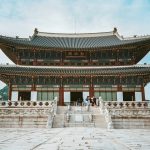
📷 Featured image by insung yoon on Unsplash.