On this page
- 2026 What’s New at Gwanghwamun Square
- Understanding the “King’s Road” Layout and Design
- BTS Photo Spots and K-Pop Pilgrimage Points
- The Statues and Their Stories
- Underground Connections and Exhibition Spaces
- Where to Eat Around the Square
- Perfect Timing: When to Visit for Photos and Events
- Getting There and Getting Around
- Day Trip Extensions from Gwanghwamun
- Practical Tips and 2026 Budget Guide
- Frequently Asked Questions
After years of construction delays and design revisions, Seoul‘s rebuilt Gwanghwamun Square finally opened to the public in late 2022. But by 2026, this central plaza has evolved into something the original planners never fully anticipated: a pilgrimage site for international fans seeking the perfect BTS photo, complete with underground cultural spaces that most visitors still don’t know exist.
2026 What’s New at Gwanghwamun Square
The square you’ll visit in 2026 is dramatically different from the construction zone that frustrated tourists through 2021. The completed design stretches 740 meters along Sejong-daero, creating what city planners call the “King’s Road” — a ceremonial axis connecting Gwanghwamun Gate to the Blue House area.
New in 2026 is the fully operational underground cultural complex, accessed through discrete glass pavilions that blend seamlessly into the plaza’s minimalist design. The GTX-A line, which opened in March 2024, now delivers visitors directly to Gwanghwamun Station in just 19 minutes from Suseo, making this area more accessible than ever before.
The square’s smart lighting system, completed in late 2025, responds to weather conditions and special events. During the winter months, warm LED strips embedded in the walkways prevent ice formation while creating subtle golden pathways that photograph beautifully against Seoul’s skyline.
Understanding the “King’s Road” Layout and Design
The rebuilt square follows the original Joseon Dynasty layout, where this space served as the approach to Gyeongbokgung Palace. Walking north from the Sejong statue toward Gwanghwamun Gate, you’re following the same path Korean kings took for over 500 years.
The design divides into three distinct zones. The southern section, anchored by King Sejong’s statue, functions as Seoul’s civic heart. The middle zone features the “Stream of History” — a shallow water feature that flows year-round, representing the Han River’s historical importance. The northern section leads to Admiral Yi Sun-sin’s statue and provides clear sightlines to Gyeongbokgung’s main gate.

The square’s width varies deliberately. Narrow sections create intimate gathering spaces, while the broad central plaza can accommodate 20,000 people during events. Underground, the cultural complex mirrors this rhythm with small exhibition rooms connected by grand corridors.
Stone used throughout the square comes from three Korean provinces, each representing a different historical period. The dark granite near Sejong’s statue represents the Goryeo Dynasty, while lighter stones toward the north symbolize the modern Republic of Korea. Walking the full length, you’re literally moving through 1,000 years of Korean history.
The Stream of History Water Feature
The shallow water channel running through the square’s center operates from March through November. In winter, it transforms into a reflective surface covered by transparent panels, creating mirror-like effects for photography. The water flows at exactly the same angle as the original stream that once crossed this area during the Joseon Dynasty.
Children splash in the water during summer months, while couples pose for photos along the stone edges. The sound of flowing water masks traffic noise from Sejong-daero, creating an unexpectedly peaceful environment in central Seoul.
BTS Photo Spots and K-Pop Pilgrimage Points
International fans discovered Gwanghwamun Square after several BTS members posted photos from the area on social media in 2023. The group never filmed an official music video here, but their casual Instagram posts turned specific locations into must-visit photo spots.
The most popular BTS photo location sits at the intersection of the Stream of History and the main east-west axis, about 200 meters north of Sejong’s statue. RM posted a nighttime photo from this exact spot in December 2023, showing the illuminated fountains with Gwanghwamun Gate in the background. Fans recreate this shot daily, especially during blue hour when the lighting conditions match his original photo.

A second hotspot lies near the underground entrance closest to the Sejong Center. Jin shared a casual daytime photo here in early 2024, sitting on the stone benches that surround the glass pavilion. The benches face south toward Cheonggyecheon, providing natural lighting that flatters selfies.
The northern section near Admiral Yi’s statue attracts fewer crowds but offers cleaner backgrounds for photos. Jungkook’s workout photos from this area in summer 2024 sparked a trend of fitness-themed shots against the statue’s dramatic backdrop.
Photography Tips for K-Pop Fans
Early morning visits (7-9 AM) provide the clearest shots without crowds. The square’s security guards are accustomed to international visitors taking photos and won’t interfere unless you’re blocking pedestrian traffic. Tripods are allowed but must be removed if crowds gather.
The best lighting occurs 30 minutes before sunset, when warm light hits the square from the west while the eastern buildings remain in shadow. This creates natural backlighting that matches many BTS members’ original photos.
During cherry blossom season (early April), petals blown from nearby Gyeongbokgung create spontaneous photo opportunities. Many fans time their visits to coincide with this brief window when pink petals scatter across the square’s dark stone surfaces.
The Statues and Their Stories
King Sejong’s bronze statue, installed in 2009, weighs 20 tons and stands 6.2 meters tall. The king holds a scroll representing the Korean alphabet (Hangeul), which he created in the 15th century. The statue’s base contains a time capsule scheduled to open in 2409, exactly 600 years after Hangeul’s creation.
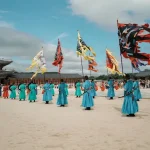
Every hour from 10 AM to 6 PM, a brief light show illuminates the statue while speakers play traditional Korean court music. This five-minute presentation happens regardless of weather, creating dramatic atmospheric shots during rain or snow.

Admiral Yi Sun-sin’s statue, moved to its current location during the square’s reconstruction, faces south toward the Han River and the sea beyond. The admiral’s turtle ship, carved in relief on the statue’s base, references his naval victories against Japanese invasions in the 1590s.
Between the two main statues, smaller bronze installations mark significant events in Korean history. Most visitors miss these subtle markers, but they provide context for understanding the square’s symbolic importance as Korea’s ceremonial center.
Hidden Details in the Statuary
Sejong’s robes feature actual Korean text, reproducing passages from historical documents about Hangeul’s creation. Photography enthusiasts use telephoto lenses to capture these details, which aren’t visible from ground level.
Yi Sun-sin’s sword points directly toward Busan, the city he defended during the Japanese invasions. This alignment wasn’t accidental — architects spent months calculating the precise angle to achieve this symbolic gesture.
Underground Connections and Exhibition Spaces
The square’s underground levels connect directly to Line 5 (Gwanghwamun Station) and provide climate-controlled space for year-round visits. Three glass pavilions on the surface provide access to different underground zones, each with distinct purposes.
The King Sejong Story exhibition occupies the largest underground space, featuring interactive displays about Hangeul’s development and Sejong’s scientific achievements. Admission costs 3,000 KRW ($2.25), and the exhibition stays open until 8 PM except Mondays.
The Admiral Yi Memorial Hall, smaller but equally detailed, displays replica turtle ships and battle maps from the Imjin War. A 15-minute video presentation (available in English, Chinese, and Japanese) runs every 30 minutes from 10 AM to 5:30 PM.
The third underground section houses temporary exhibitions that change quarterly. Recent displays have featured Korean ceramics, traditional architecture, and contemporary art installations. This space connects to an underground shopping area with bookstores, cafes, and gift shops selling items you won’t find elsewhere in Seoul.

The Underground Tunnel System
Climate-controlled tunnels connect the square’s underground areas to Gwanghwamun Station, Jonggak Station, and the basement levels of surrounding office buildings. During extreme weather, you can access restaurants, shops, and cultural sites without stepping outside.
The tunnel walls display rotating photo exhibitions documenting Seoul’s development. Walking through these corridors provides an unexpected art gallery experience while moving between destinations.
Where to Eat Around the Square
The square itself contains only beverage stands and ice cream carts, but the surrounding blocks offer everything from street food to high-end Korean cuisine. The underground shopping complex includes several cafes and casual dining options.
Tosokchon Samgyetang, a five-minute walk north toward Gyeongbokgung, serves Seoul’s most famous ginseng chicken soup. Expect queues during lunch hours, but the restaurant’s multiple floors accommodate crowds efficiently. A complete meal costs 18,000-25,000 KRW ($13-19).
For quick meals between sightseeing, head to the Gwanghwamun Food Alley running parallel to Sejong-daero’s eastern side. This narrow street contains over 20 small restaurants specializing in different regional Korean dishes. Most meals cost 8,000-15,000 KRW ($6-11).
The Sejong Center’s basement food court offers international options alongside Korean standards. The location provides air conditioning during summer months and heated seating in winter. Meals range from 6,000-12,000 KRW ($4.50-9).
Coffee and Casual Dining
Starbucks Reserve on the ground floor of the Kyobo Building provides premium coffee with views overlooking the square. The location stays open until 10 PM and offers outdoor seating during mild weather.
For traditional Korean tea, visit Insadong Suyeonsanbang on nearby Insadong-gil. This hanok-style teahouse serves over 30 varieties of traditional teas alongside Korean sweets. The walk from the square takes eight minutes through quieter side streets.
Perfect Timing: When to Visit for Photos and Events
The square hosts major events throughout the year, with the largest crowds during National Foundation Day (October 3) and Liberation Day (August 15). These occasions feature cultural performances and military ceremonies but make casual photography impossible.

For photography, the golden hours (7-9 AM and 6-8 PM) provide optimal lighting conditions. Winter months offer cleaner air and sharper building details in photos, while spring brings cherry blossoms and mild temperatures ideal for longer visits.
Weekday mornings attract fewer tourists, allowing unobstructed access to popular photo spots. Business commuters cross the square quickly, leaving the ceremonial areas relatively empty for photos.
The hourly statue lighting shows create photography opportunities every 60 minutes. Arriving 10 minutes before each hour allows time to position yourself for the best shots during the five-minute presentation.
Seasonal Considerations
Summer humidity creates haze that reduces photo clarity, especially for shots including distant mountains or buildings. The underground areas provide relief during Seoul’s hottest months (July-August).
Winter brings clear skies and dramatic lighting but temperatures often drop below -10°C. The square’s stone surfaces become slippery during ice storms, making careful footwear essential.
Spring cherry blossom season (early April) attracts the largest photography crowds. Professional photographers arrive before dawn to capture empty shots, while casual visitors find better conditions after 8 PM when tour groups depart.
Getting There and Getting Around
Gwanghwamun Station (Line 5) provides direct underground access to the square. Exit 6 emerges closest to the Sejong statue, while Exit 8 leads directly to the Admiral Yi statue area. The new GTX-A line reaches this station in 19 minutes from Suseo, 34 minutes from Dongtan.
Jonggak Station (Line 1) requires a five-minute walk but offers connections to more Seoul destinations. Exit 5 leads directly onto Jongno, the main east-west street running parallel to the square’s northern edge.
Multiple bus routes serve the Gwanghwamun area, but subway travel proves more reliable given Seoul’s traffic conditions. The T-money card works on all public transportation, and top-up machines accept international credit cards at all subway stations.

Parking around the square is limited and expensive (3,000 KRW/$2.25 per hour). The Sejong Center parking garage offers hourly rates but fills completely during weekends and major events.
Walking Distances to Major Attractions
Gyeongbokgung Palace entrance: 400 meters (5 minutes) Cheonggyecheon stream: 300 meters (4 minutes) Insadong cultural district: 600 meters (8 minutes) Myeongdong shopping: 1.2 kilometers (15 minutes) Seoul Station: 2.8 kilometers (6 minutes by subway)
The square serves as an ideal starting point for exploring central Seoul on foot. Wide sidewalks and pedestrian-friendly intersections make navigation simple for international visitors.
Day Trip Extensions from Gwanghwamun
Gyeongbokgung Palace, directly north of the square, offers the most obvious extension. The changing of the guard ceremony occurs at 10 AM, 2 PM, and 3:30 PM daily except Tuesdays. Combining a palace visit with the square creates a full morning or afternoon of historical sightseeing.
Bukchon Hanok Village lies 15 minutes northeast on foot. The traditional architecture contrasts beautifully with the square’s modern design, providing diverse photo opportunities within a single outing. Early morning visits (8-10 AM) avoid crowds in the narrow hanok streets.
Cheonggyecheon, the restored urban stream, begins just south of the square. Walking the stream’s length takes 90 minutes and passes through multiple neighborhoods, ending at the Dongdaemun area. Evening walks feature colorful LED displays along the water.
The National Museum of Modern and Contemporary Art’s Seoul branch occupies a striking building 10 minutes east of the square. Free admission to the sculpture garden makes this an easy addition to any itinerary, with indoor galleries requiring separate tickets (4,000 KRW/$3).
Cultural District Walking Route
A logical walking route connects Gwanghwamun Square to Insadong’s galleries and traditional shops, then continues to Jongmyo Shrine, ending at Dongdaemun’s night markets. This 4-kilometer route takes most of a day with stops but covers Seoul’s historical core efficiently.

Rest stops along this route include traditional teahouses in Insadong, the peaceful gardens at Jongmyo, and countless street food options near Dongdaemun. The entire route uses sidewalks and pedestrian areas, making navigation stress-free.
Practical Tips and 2026 Budget Guide
Visiting Gwanghwamun Square itself costs nothing, but underground exhibitions and nearby attractions require separate admission fees. Budget travelers can enjoy the square, statue shows, and basic photography without spending beyond transportation costs.
2026 Budget Breakdown
Budget Day (per person): – Subway travel: 3,000 KRW ($2.25) – Convenience store snacks: 5,000 KRW ($3.75) – Underground exhibition: 3,000 KRW ($2.25) – Total: 11,000 KRW ($8.25)
Mid-Range Day (per person): – Subway + taxi travel: 8,000 KRW ($6) – Casual restaurant meal: 12,000 KRW ($9) – Coffee and snacks: 6,000 KRW ($4.50) – Multiple exhibitions: 8,000 KRW ($6) – Souvenir shopping: 15,000 KRW ($11.25) – Total: 49,000 KRW ($36.75)
Comfortable Day (per person): – Private transportation: 25,000 KRW ($18.75) – Quality restaurant meal: 35,000 KRW ($26.25) – Premium coffee and treats: 12,000 KRW ($9) – All exhibitions plus palace: 15,000 KRW ($11.25) – Quality souvenirs: 40,000 KRW ($30) – Total: 127,000 KRW ($95.25)
Money-Saving Tips
The square’s free WiFi covers the entire area, eliminating data usage concerns for international visitors. Multiple convenience stores within 200 meters sell drinks and snacks at standard Seoul prices.
Many surrounding attractions offer combination tickets. The Palace Pass includes four palaces plus Jongmyo Shrine for 10,000 KRW ($7.50), significant savings compared to individual admissions.
Free walking tours departing from the square operate daily at 10 AM and 2 PM. These 90-minute tours cover the square’s history and nearby attractions, providing professional context without cost.
Frequently Asked Questions
Is Gwanghwamun Square the same as the old location? No, the current square sits 140 meters north of its previous location and features completely new underground facilities. The 2022 reconstruction created a larger, more historically accurate space aligned with the original Joseon Dynasty layout.

Can I visit the underground areas without paying admission? Yes, the underground shopping areas, tunnels, and rest areas are free to access. Only the specific King Sejong and Admiral Yi exhibition halls require paid admission. The underground spaces provide climate-controlled walking routes between subway stations.
When do the statue lighting shows operate? The King Sejong statue lighting show runs every hour from 10 AM to 6 PM daily, lasting approximately five minutes. The system operates in all weather conditions. Admiral Yi’s statue features less frequent lighting, typically during evening hours and special events only.
Are there restrictions on photography or filming? Photography is freely permitted throughout the square, including the underground areas. Tripods are allowed but must be removed if they obstruct pedestrian traffic. Commercial filming requires permits from Seoul city government, but casual video recording faces no restrictions.
How crowded does the square get during peak times? Major national holidays and weekend afternoons bring the largest crowds, sometimes exceeding 15,000 people. Early morning visits (before 9 AM) and weekday evenings offer the most space for comfortable sightseeing and photography. The underground areas remain less crowded even during peak surface times.
📷 Featured image by Nurulloh A.A on Unsplash.