On this page
- The Regional Map Redrawn — GTX-A and New Rail Links Change Everything
- Gyeongju — Living Inside an Open-Air Museum
- Jeonju — Where Korean Food Culture Is Still Intact
- Gangwon’s Interior — Mountains, Trails, and the Post-Olympics Quiet
- Tongyeong — The Coastal City Most Travelers Completely Miss
- Day Trip or Overnight? — How to Decide for Each Destination
- 2026 Budget Reality — What Regional Korea Actually Costs
- Getting Around Without a Seoul-Centric Mindset
- Frequently Asked Questions
💰 Click here to see Korea Budget Breakdown
💰 Prices updated: 2026-10-01. Budget figures are estimates — always verify before travel.
Exchange Rate: $1 USD = 1,356 KRW
Daily Budget (per person) • Pricing updated as of 2026-10-01
Daily Budget
Shoestring: 60,000 KRW - 95,000 KRW ($44.25 – $70.06)
Mid-range: 130,000 KRW - 250,000 KRW ($95.87 – $184.37)
Comfortable: 350,000 KRW - 550,000 KRW ($258.11 – $405.60)
Accommodation (per night)
Hostel/guesthouse: 25,000 KRW - 65,000 KRW ($18.44 – $47.94)
Mid-range hotel: 90,000 KRW - 165,000 KRW ($66.37 – $121.68)
Food (per meal)
Budget meal (street food): 9,000 KRW ($6.64)
Mid-range meal (restaurant): 22,000 KRW ($16.22)
Upscale meal: 65,000 KRW ($47.94)
Transport
Single subway/bus trip: 1,600 KRW ($1.18)
Climate Card (30-day unlimited): 67,000 KRW ($49.41)
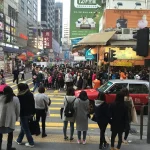
In 2026, Seoul is more visited than ever — and more crowded. The Hongdae guesthouses fill up weeks in advance, the Gyeongbokgung lines snake before 9am, and the Myeongdong streets feel less like discovery and more like a theme park. That’s not a criticism of Seoul. It’s just reality. Meanwhile, a two-hour train ride away, there are walled Joseon streets with nobody in them, coastlines with actual breathing room, and food that hasn’t been adjusted for Tourist taste buds. The regional gap in Korean tourism is real, and this guide is built to close it.
The Regional Map Redrawn — GTX-A and New Rail Links Change Everything
The biggest shift in Korean regional travel since 2024 is infrastructure. The GTX-A line, now fully operational between Dongtan and Suseo, slashed commute times from the southern Seoul metro area — but its real impact for travelers is what it freed up on the main KTX corridors. With commuter pressure redistributed, KTX services to Busan, Daejeon, and Gyeongju run more frequently and with more available seats, especially on weekday mornings.
More importantly, the Jungang Line upgrades completed in late 2025 now make Andong, Chungju, and Wonju significantly more accessible by rail from Seoul’s Cheongnyangni station. These mid-sized inland cities were always worth visiting — they just required a bus. That’s changed. Check Korail’s 2026 timetables directly; some routes have doubled in frequency compared to 2023.
Google Maps Korea integration also improved in 2025, with real-time intercity bus data now visible for most express bus terminals. If you’re planning to mix train and bus across regions — which is often the smartest approach — route planning is no longer the headache it used to be.
Gyeongju — Living Inside an Open-Air Museum
Gyeongju is the former capital of the Silla Kingdom, and calling it a city undersells what it actually is: a place where burial mounds sit in the middle of residential neighborhoods, where temple bells echo across rice paddies at dawn, and where the past hasn’t been roped off and museumified — it’s just there, on the street, next to a convenience store.
The grass-covered royal tombs at Daereungwon look surreal in morning fog. Bulguksa Temple, about 16 kilometers from the city center by bus, is genuinely one of the best-preserved Unified Silla structures in the country — the stone staircases alone justify the trip. Nearby Seokguram Grotto sits at the top of a forested hill, and the walk up through pine trees before the stone Buddha comes into view is an experience that photographs don’t prepare you for.
The Hwangni-dan-gil street area near the old downtown has filled with independent cafes and guesthouses in converted hanok buildings since 2023. It’s not untouched, but it’s not Insadong either. The pace is slower. The coffee shop owner will probably ask where you’re from.
Getting there: KTX from Seoul to Singyeongju takes about 2 hours. From Busan, it’s around 35 minutes. Local buses connect Singyeongju station to the city center and main sites.
Jeonju — Where Korean Food Culture Is Still Intact
Every Korean city claims good food. Jeonju actually has the receipts. It’s been recognized as a UNESCO Creative City of Gastronomy, but that designation doesn’t capture what makes eating here different: the food is rooted in this specific place, not adapted for the widest possible palate.
Jeonju bibimbap — served in a hot stone bowl with local vegetables, a raw egg yolk, and a specific gochujang that’s made in the region — tastes different here than it does in Seoul. The banchan (side dishes) at a traditional restaurant come in quantities that will surprise you. Eight to twelve small plates alongside your main dish is normal. The fermented tastes are stronger, the portions more generous, and the price is noticeably lower than Seoul equivalents.
The Hanok Village (Jeonju Hanokmaul) gets busy on weekends, but the streets behind the main strip — toward Omokdae Hill and the Confucian school — are quieter and give a better sense of how the neighborhood actually functions. The night food stalls near the village entrance sell choco pie hotteok and fermented rice wine (makgeolli) poured fresh from ceramic jugs. The smell of frying dough after dark, under red lanterns, is the kind of thing you remember specifically.
Getting there: KTX-Eum from Seoul Yongsan to Jeonju takes about 1 hour 45 minutes. The city is walkable from the station with a short taxi or bus ride to the Hanok Village.
Gangwon’s Interior — Mountains, Trails, and the Post-Olympics Quiet
The 2018 Pyeongchang Winter Olympics left Gangwon Province with world-class ski infrastructure and, after the initial boom, a return to something approaching its original quietness. By 2026, Pyeongchang itself is a mid-sized town again — functional, not flashy — while the mountains around it are as good as ever.
Odaesan National Park, less than an hour from Jinbu station by bus, has some of the best forest trail walking in Korea. The path from Woljeongsa Temple — a working Buddhist complex with a nine-story stone pagoda in its courtyard — up through old-growth fir trees toward Sangwonsa is about 9 kilometers and rarely crowded. In autumn, the color is extraordinary. In winter, the snow-muffled silence on that trail is total.
Sokcho, on the coast, is the gateway to Seoraksan National Park and has become a legitimate food destination in its own right. The open market near the bus terminal sells grilled squid and freshly fried doughnuts (sundae and twigim) that locals eat for breakfast. The East Sea view from the beach at sunrise is worth the early alarm.
Getting there: KTX-Eum from Seoul Cheongnyangni to Gangneung takes about 2 hours. Intercity buses from Gangneung reach Sokcho in 1.5 hours and Odaesan in about 45 minutes.
Tongyeong — The Coastal City Most Travelers Completely Miss
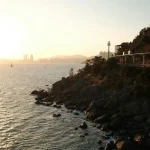
Tongyeong sits at the southern tip of the Korean peninsula, on a coastline that cuts into the sea in a way that produces hundreds of small islands, narrow straits, and fishing harbors where the catch comes in before sunrise. It’s one of the most visually striking cities in Korea, and almost no foreign travelers go there.
The cable car up to Mireuksan gives a panoramic view of the island-scattered sea that is genuinely hard to describe without sounding like a brochure — so instead: stand at the top on a clear day and count how many islands you can see. The answer is usually somewhere over thirty. The city below is compact and walkable, with a covered market (Jungangsigjang) that sells the best gul (oysters) in Korea. Tongyeong produces about 70% of Korea’s oyster harvest, and a bowl of freshly shucked oysters with vinegared dipping sauce costs around 8,000 KRW (~$6 USD) at a market stall.
The composer Yun Isang was born here, and the city has a small but serious classical music culture — the Tongyeong International Music Festival runs each March. The waterfront at night, with fishing lights reflecting off calm water and the smell of salt and grilled fish in the air, is the kind of place that makes you wonder why you spent so long in Hongdae.
Getting there: No direct train. From Seoul, take KTX to Masan or Changwon, then an intercity bus to Tongyeong (about 1 hour). Total journey around 3.5 hours. From Busan, intercity buses run directly and take about 1.5 hours.
Day Trip or Overnight? — How to Decide for Each Destination
The honest answer varies by destination and your travel pace. Here’s how to think about each one:
- Gyeongju: Possible as a day trip from Busan, genuinely requires an overnight from Seoul. Two nights is ideal to reach Bulguksa, Seokguram, the tombs, and the Hwangni-dan-gil area without rushing.
- Jeonju: Manageable as a long day trip from Seoul, but the city rewards an overnight stay. The evening food culture — night market stalls, makgeolli bars — is where the real texture is.
- Gangwon Interior / Odaesan: Overnight minimum. The best of Gangwon requires time to move between the coast and the mountains, and that can’t be done in a single day from Seoul.
- Tongyeong: Almost impossible as a day trip from Seoul given transit time. Plan at least one night. Two nights lets you take a ferry to one of the nearby islands — Bijindo or Hansan Island are both accessible and worth it.
2026 Budget Reality — What Regional Korea Actually Costs
Regional Korea is meaningfully cheaper than Seoul across nearly every category. Here’s what to expect in 2026:
Accommodation (per night)
- Budget: Guesthouses and basic motels — 35,000–55,000 KRW (~$26–$41 USD)
- Mid-range: Hanok stays, business hotels — 80,000–130,000 KRW (~$59–$96 USD)
- Comfortable: Boutique hotels or resort-style guesthouses — 150,000–220,000 KRW (~$111–$163 USD)
Food (per meal)
- Budget: Market stalls, kimbap shops, local lunch sets — 5,000–10,000 KRW (~$4–$7 USD)
- Mid-range: Sit-down bibimbap, Korean BBQ for one, seafood stews — 12,000–25,000 KRW (~$9–$19 USD)
- Comfortable: Full traditional course meals, high-grade hanwoo — 40,000–80,000 KRW (~$30–$59 USD)
Transport
- KTX Seoul to Gyeongju: ~55,000 KRW (~$41 USD) one way
- KTX Seoul to Jeonju: ~28,000 KRW (~$21 USD) one way
- Intercity bus Busan to Tongyeong: ~8,000 KRW (~$6 USD) one way
- Local city buses in regional cities: 1,300–1,500 KRW per ride (~$1 USD)
A realistic two-night regional trip — including transport from Seoul, accommodation, all meals, and site entry fees — runs roughly 300,000–500,000 KRW (~$222–$370 USD) per person at a mid-range level. That’s comparable to what two nights in a Seoul guesthouse costs, without the crowds.
Getting Around Without a Seoul-Centric Mindset
Most regional travel guides treat Seoul as the default hub — you go out, you come back. That model works, but it’s not the only one, and it’s often not the best one. Several of these destinations connect directly to each other.
Gyeongju to Jeonju, for example, is doable by bus with a transfer in Daejeon. Tongyeong to Gyeongju runs by intercity bus. If you’re spending a week in Korea and want to see two or three regional cities, route them logically rather than returning to Seoul between each one — you’ll save hours and see more.
T-Money cards work on local buses in all major regional cities, including Gyeongju, Jeonju, Gangneung, and Tongyeong. Load one in Seoul or at any convenience store and tap on/off without needing to carry coins. In 2026, the Naver Maps app remains the most reliable for regional bus routes, with real-time arrival data for most city and intercity services. Kakao Maps has improved its walking directions but still lags on rural bus data.
Renting a car opens up the most options in Gangwon and around the Tongyeong coastline. International driving permits are accepted with a home license at major rental companies. Roads in rural Korea are well-maintained, and driving outside peak seasons means almost no traffic. Fuel is around 1,750 KRW per liter (~$1.30 USD) in 2026.
Frequently Asked Questions
Do I need a K-ETA to visit regional Korea in 2026?
K-ETA requirements depend on your passport, not your destination within Korea. As of 2026, most Western passport holders remain exempt from K-ETA for stays under 90 days following the ongoing exemption policy. Check the official Hi Korea portal before travel, as the list of exempt nationalities has been updated several times since 2023.
Is English widely spoken in regional Korean cities?
Less so than Seoul, but more than you might fear. Major tourist sites in Gyeongju and Jeonju have English signage and occasional staff who can assist. In smaller towns and markets, very little English is spoken. Naver Papago or Google Translate with camera translation handles most situations, including menus. Learning basic Korean phrases earns visible goodwill.
Which regional destination is best for first-time visitors to Korea?
Jeonju is the easiest entry point. It’s close to Seoul, has a walkable historic center, excellent food at every price level, and enough English-friendly infrastructure to feel manageable. Gyeongju is a strong second choice — slightly more spread out but equally rewarding and well-connected by KTX from both Seoul and Busan.
Are regional destinations safe for solo travelers?
Korea’s regional cities are among the safest destinations in Asia for solo travel. Crime rates are low throughout the country, public transport is reliable, and solo dining is entirely normalized — many traditional Korean restaurants offer single-portion meals or counter seating designed for one. Solo female travelers consistently report feeling comfortable in regional areas.
What’s the best season to visit Korea’s regional destinations?
Spring (April–May) and autumn (October–November) are peak seasons for good reason — cherry blossoms and fall foliage respectively are genuinely spectacular outside Seoul. Summer (June–August) works well for Gangwon’s coast and mountains. Winter is excellent for Jeonju’s hanok culture and indoor food scene, and ski access in Gangwon. Avoid Golden Week in early May and Chuseok for accommodation prices.
Explore more
Why You Need to Visit Suwon on Your Next Korea Trip
Best Things to Do in Sokcho Beyond Seoraksan: Beaches, Seafood & More
7 Must-Visit Cities in South Korea (Beyond Seoul, Busan, Jeju)
📷 Featured image by Kelvin Zyteng on Unsplash.