On this page
- 2026 What’s New in Busan
- How Busan Is Laid Out
- Getting to Busan and Moving Around
- Day 1: Old Port Busan
- Day 2: Haeundae and the Eastern Coast
- Day 3: Beomeosa, Seomyeon, and Gwangalli at Night
- Where to Eat Along Your Route
- Swap Options and Day Trips
- 2026 Budget Reality
- Seasons and Practical Tips
- Frequently Asked Questions
💰 Click here to see Korea Budget Breakdown
💰 Prices updated: 2026-11-01. Budget figures are estimates — always verify before travel.
Exchange Rate: $1 USD = 1,334 KRW
Daily Budget (per person) • Pricing updated as of 2026-11-01
Daily Budget
Shoestring: 70,000 KRW - 120,000 KRW ($52.47 – $89.96)
Mid-range: 180,000 KRW - 300,000 KRW ($134.93 – $224.89)
Comfortable: 270,000 KRW - 550,000 KRW ($202.40 – $412.29)
Accommodation (per night)
Hostel/guesthouse: 28,000 KRW - 65,000 KRW ($20.99 – $48.73)
Mid-range hotel: 90,000 KRW - 165,000 KRW ($67.47 – $123.69)
Food (per meal)
Budget meal (street food): 9,000 KRW ($6.75)
Mid-range meal (restaurant): 22,000 KRW ($16.49)
Upscale meal: 65,000 KRW ($48.73)
Transport
Single subway/bus trip: 1,600 KRW ($1.20)
Climate Card (30-day unlimited): 68,000 KRW ($50.97)
Most visitors treat Busan as a quick add-on to Seoul, then lose half a day crossing a city that stretches along 40 kilometres of coastline. Hotels near Haeundae also jump in price during film festival weeks and big holidays, so a loose plan gets expensive fast. This itinerary groups sights by area, so you spend your three days at the temples, beaches, and markets instead of on the metro.
2026 What’s New in Busan
- Payments: Contactless bank cards and phone payments are spreading across Korean transit. Coverage is still uneven, so a rechargeable T-money card is the safe choice.
- Taxi apps: Kakao T now works for many foreign-card users, which makes late-night rides from Gwangalli much easier than before. Set up the app before you land.
- Entry rules: The K-ETA exemption for many nationalities has been extended in stages. Check the official K-ETA page for your passport before booking flights.
- Airport: The new Gadeokdo airport is still under construction. In 2026 you will land at Gimhae International, which connects to the city by light rail and metro.
- Coastal attractions: The Haeundae Blueline Park rail and capsule routes along the coast are now a standard part of a Busan trip, and weekend drone and light shows at Gwangalli are a regular draw. Schedules change by season and weather, so check the day before.
- Maps: Google Maps works for walking and transit directions in Busan, but Naver Map and Kakao Map still give more accurate bus timing and driving routes.
How Busan Is Laid Out
Busan is a port city squeezed between mountains and sea, so it feels like several towns joined together. The old port in the southwest is crowded, hilly, and full of fish markets. The eastern side around Haeundae is modern, with high-rise hotels, wide beaches, and resort energy. Seomyeon sits in the middle as the commercial hub, busy day and night.
Locals are proud and direct, and the Busan dialect sounds rougher and faster than Seoul speech. Visitors usually find people helpful once they ask.
Where to Base Yourself
- Seomyeon: Best for a first visit. Metro Lines 1 and 2 cross here, so you can reach every sight in this plan with one change at most.
- Nampo-dong: Best for old-city atmosphere and an early start on Day 1. Rooms are smaller and nights are quieter.
- Haeundae: Best if beach views matter. It is the most expensive area and the farthest from the old port.
- Gwangalli: A good middle option with bridge views and plenty of cafes, though the metro station is a 10-minute walk from the sand.

Getting to Busan and Moving Around
From Seoul Station, the KTX reaches Busan Station in roughly 2 hours 20 minutes to 2 hours 45 minutes, depending on the train. A standard seat costs about 60,000 KRW (~$44). The SRT from Suseo Station is similar in speed and slightly cheaper. Use the Korail Talk app or the SRT app, and book weekend seats early. From Gimhae Airport, the light rail to Sasang Station and then Metro Line 2 is the cheapest route.
Inside the city, the metro is your backbone. Lines 1 to 4 cover most sights, and a ride costs about 1,650 KRW (~$1.20). Buses fill the gaps to temples and hillside villages. A taxi across town costs 8,000 to 15,000 KRW (~$6 to $11) and saves time late at night. You do not need a car.
Day 1: Old Port Busan
Start in the oldest, most walkable part of the city. This is where Busan feels most like itself.
Morning: Gamcheon Culture Village
Take Metro Line 1 to Toseong Station and catch the village minibus from Exit 6 up the hill. Arrive by 9:30 a.m. before the tour groups. Gamcheon is a hillside neighbourhood of stacked pastel houses that began as a refugee settlement during the Korean War. Today it is full of murals, small galleries, and lanes that open onto sudden views of the harbour. A stamp-trail map costs around 2,500 KRW (~$1.85). Wear shoes with grip, because the alleys are steep and slick after rain.
Midday: Jagalchi Market
Ride down to Jagalchi Station (Line 1). Korea’s largest seafood market is loud, wet, and bright. Vendors call out from behind tanks of live fish, and the smell of brine and grilled fish hangs over the whole block. Even if you do not buy anything, walk the ground-floor aisles and look at the catch.
Afternoon: Nampo-dong and Gukje Market
Walk north to Nampo-dong, where BIFF Square (the film festival street) has hand-prints of actors and a crowd of street stalls. Gukje Market next door is a maze of fabric shops, kitchenware, and vintage goods. It is crowded but easy to cross on foot in an hour.

Evening: Yongdusan Park
Finish at Yongdusan Park and Busan Tower. The tower observation deck costs around 12,000 KRW (~$9), and sunset over the harbour with the lights of Yeongdo Bridge coming on is worth it. Take the escalators up from Nampo to avoid the stairs.
Day 2: Haeundae and the Eastern Coast
Day 2 shifts to the shoreline. Go early, because the temple is the main event and gets crowded by 10 a.m.
Morning: Haedong Yonggungsa
From Haeundae Station Exit 7, take Bus 181 for about 40 minutes. Haedong Yonggungsa is a seaside temple built on rocks, with stone lanterns, a golden Buddha, and waves breaking just below the main hall. The temple opens early, entry is free, and the best light comes before 9 a.m. Listen for the temple bell mixing with the sound of the surf. You need about 1.5 hours here.
Late Morning: Blueline Park and Cheongsapo
Take the bus or a taxi to Cheongsapo, a small fishing port with a lighthouse and a glass-floor skywalk viewpoint. From here, the Haeundae Blueline Park coastal route runs between Cheongsapo and Mipo. You can ride the Beach Train or the Sky Capsule for sea views, or walk the seaside trail. Pick one section and ride it, rather than trying to cover the whole line.
Afternoon: Haeundae Beach
Haeundae is Korea’s most famous beach, 1.5 kilometres of pale sand backed by skyscrapers. Outside July and August you will find it calm. Walk the full length from the Dongbaek Island end to the Mipo end, then continue along Dalmaji Hill for ocean views and small cafes. In summer, the water is warm enough for swimming, and lifeguards are on duty.
Evening: Haeundae Market and Dongbaek Park
Walk Dongbaek Island at dusk. The path is flat, pine-lined, and quiet, and you can see Gwangan Bridge lights from the far end.
Day 3: Beomeosa, Seomyeon, and Gwangalli at Night
The last day moves inland to a mountain temple, then back to the city for nightlife.
Morning: Beomeosa
Take Metro Line 1 to Beomeosa Station, then a short bus or taxi ride up the hill. Beomeosa was founded in 678 and sits on the slopes of Geumjeongsan. Compared with Haedong Yonggungsa, it feels deeper and quieter, with old pine trees, wooden halls, and the smell of incense and damp stone. Entry is free. Allow 1.5 to 2 hours, and walk the forest path above the main hall if you have energy.

Midday: Seomyeon
Return to Seomyeon, the city’s busiest district. The underground shopping arcade is full of fashion and cosmetics stores, and the streets above are packed with arcades, karaoke, and late-night restaurants. Use it as a break, a shopping stop, and a lunch stop.
Evening: Gwangalli Beach
Take Line 2 to Geumnyeonsan Station and walk to Gwangalli. Sunset over Gwangan Bridge is the classic Busan view. The bridge is lit in changing colours after dark, and on many weekend evenings a drone show runs above the bay. Sit on the sand or at a rooftop cafe along Gwangalli Beach Road and watch the lights turn on.
Where to Eat Along Your Route
- Jagalchi Market, second-floor restaurants: Choose a fish at a ground-floor stall, then take it upstairs and have it prepared at a restaurant. Agree on the price before you sit.
- Bupyeong Kkangtong Market: Near Jagalchi, this market has a busy evening food-stall scene with dumplings, noodles, and skewers.
- BIFF Square, Nampo-dong: Famous for ssiat hotteok, a sweet pancake stuffed with seeds and nuts. Expect a queue, and expect it to be worth it.
- Seomyeon Pork Soup Alley (Dwaeji Gukbap Golmok): A cluster of small restaurants that serve a bowl in minutes. Cheap, filling, and good before or after Beomeosa.
- Haeundae Traditional Market: Tteokbokki, fish cakes, and fried snacks, steps from the beach.
- Cheongsapo grilled clam street: Open-air grills along the waterfront where you order by the tray.
- Millak Raw Fish Town, near Gwangalli: Sashimi restaurants with ocean views. Go in a small group and share a set.
Swap Options and Day Trips
If you have an extra half day or want to replace a stop, here are your best alternatives.
- Songdo Beach: Korea’s oldest public beach, with a marine cable car and a skywalk over the water. A good swap for Day 1 afternoon.
- Taejongdae: A cliff park at the southern tip, with a lighthouse and coastal walking trails. Plan 2 to 3 hours. The Danubi train runs a loop for about 4,000 KRW (~$3).
- Oryukdo Skywalk: Short, free, and easy to pair with a bus ride along the south coast.
- Gyeongju: About 1 to 1.5 hours from Busan by train or bus. The old Silla capital has royal tombs, Bulguksa Temple, and Seokguram Grotto. This needs a full day.
- Tongdosa Temple, Yangsan: One of Korea’s major temples, about an hour from central Busan. A calmer alternative to Beomeosa if you want to avoid crowds.

2026 Budget Reality
Using ~1,350 KRW = 1 USD, here are realistic per-person daily costs for 2026, including a bed.
- Budget: Hostel dorm bed 25,000 to 35,000 KRW (~$19 to $26). Meals 20,000 to 30,000 KRW (~$15 to $22). Transit and entries about 8,000 KRW (~$6). Total roughly 55,000 to 75,000 KRW (~$41 to $56) per day.
- Mid-range: Hotel room 100,000 to 180,000 KRW (~$74 to $133), split by two travellers. Meals 50,000 to 80,000 KRW (~$37 to $59). Taxis and entries 20,000 to 40,000 KRW (~$15 to $30). Total roughly 120,000 to 200,000 KRW (~$89 to $148) per day each.
- Comfortable: Ocean-view hotel in Haeundae 250,000 to 450,000 KRW (~$185 to $333) per room. Meals 100,000 to 200,000 KRW (~$74 to $148). Taxis and activities 50,000 to 80,000 KRW (~$37 to $59). Total roughly 250,000 to 450,000 KRW (~$185 to $333) per day each.
Typical single costs: a bowl of pork soup is 10,000 to 11,000 KRW (~$7.50 to $8), a ssiat hotteok is 2,000 to 3,000 KRW (~$1.50 to $2.20), and a shared sashimi set at Millak runs about 60,000 to 100,000 KRW (~$44 to $74). Temples are free, which keeps Day 2 and Day 3 cheap.
Seasons and Practical Tips
Late April to early June and late September to November are the best windows, with mild days around 15 to 25°C and clear skies. July and August bring swimming and crowds, with heat and humidity near 30°C. Typhoons can hit from late August through September, so keep your temple and coastal days flexible and check the forecast the night before. Winter is cold, windy, and quiet, around 0 to 8°C, and the coast feels bracing but empty.
- Start Gamcheon, Haedong Yonggungsa, and Beomeosa before 9:30 a.m. to avoid peak crowds.
- Carry small cash for market stalls, even though most restaurants take cards.
- Cover shoulders and knees at temples, and keep your voice low in the main halls.
- Wear comfortable walking shoes. Busan is hilly, and Day 1 alone can cross 15,000 steps.
- Download Papago or Google Translate for menus at smaller seafood restaurants.
Frequently Asked Questions
Is 3 days enough for Busan?
Yes. Three days covers the old port, the eastern coast, and one major temple without rushing. You will skip some sights, like Taejongdae or Songdo, but the core of Busan fits. Add a fourth day only if you want a trip to Gyeongju or more beach time.
How do I get from Seoul to Busan in 2026?

The KTX from Seoul Station takes about 2 hours 20 minutes to 2 hours 45 minutes and costs around 60,000 KRW (~$44) one way. The SRT from Suseo is slightly cheaper and similar in speed. Book through the Korail Talk app or the SRT app, since weekend seats sell out early.
Which area is best to stay in for a first visit?
Choose Seomyeon for transport and food, Nampo-dong for old-city atmosphere, or Haeundae for beach views. For a first three-day trip, Seomyeon works best because of its central metro location.
When is the best time to visit Busan?
Late April to early June and late September to November. The weather is mild, skies are clear, and beaches are quiet. July and August bring swimming and crowds, plus heat and humidity near 30°C. Typhoons can disrupt travel from late August through September, so keep your plans flexible then.
Do I need a car to explore Busan?
No. Busan’s metro, buses, and taxis cover everything here, and parking near Haeundae and Gamcheon is hard. Use a T-money card for transit and Kakao T for taxis. A car only helps if you plan several remote day trips outside the city.
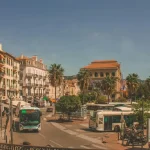
📷 Featured image by Martin Bammer on Unsplash.