On this page
- Getting from Busan to Gyeongju: Transportation Options & Timing
- Must-See Historical Sites: Bulguksa Temple and Seokguram Grotto
- Tumuli Park and Royal Tombs: Walking Among Ancient Kings
- Anapji Pond: Best Photo Spots and Visiting Times
- Gyeongju Food Scene: Where to Eat Between Sightseeing
- Day Trip vs Overnight: Making the Most of Your Time
- 2026 Budget Breakdown: What You’ll Actually Spend
- Frequently Asked Questions
💰 Click here to see Korea Budget Breakdown
💰 Prices updated: 2026-10-01. Budget figures are estimates — always verify before travel.
Exchange Rate: $1 USD = 1,356 KRW
Daily Budget (per person) • Pricing updated as of 2026-10-01
Daily Budget
Shoestring: 60,000 KRW - 95,000 KRW ($44.25 – $70.06)
Mid-range: 130,000 KRW - 250,000 KRW ($95.87 – $184.37)
Comfortable: 350,000 KRW - 550,000 KRW ($258.11 – $405.60)
Accommodation (per night)
Hostel/guesthouse: 25,000 KRW - 65,000 KRW ($18.44 – $47.94)
Mid-range hotel: 90,000 KRW - 165,000 KRW ($66.37 – $121.68)
Food (per meal)
Budget meal (street food): 9,000 KRW ($6.64)
Mid-range meal (restaurant): 22,000 KRW ($16.22)
Upscale meal: 65,000 KRW ($47.94)
Transport
Single subway/bus trip: 1,600 KRW ($1.18)
Climate Card (30-day unlimited): 67,000 KRW ($49.41)
Planning a day trip from Busan to Gyeongju in 2026 feels overwhelming when you realize this UNESCO World Heritage city holds over 1,000 years of Korean history. The challenge isn’t finding things to see—it’s choosing what to prioritize in a single day without feeling rushed through Korea‘s ancient capital.
Getting from Busan to Gyeongju: Transportation Options & Timing
The most efficient route from Busan to Gyeongju runs via KTX to Singyeongju Station, taking just 22 minutes and costing 8,400 KRW (~$6.20 USD). Trains depart every 20-30 minutes from Busan Station starting at 5:40 AM, with the last return service at 10:47 PM—giving you plenty of flexibility for your day trip.
From Singyeongju Station, local bus 700 connects directly to Gyeongju’s main tourist areas every 15 minutes for 1,500 KRW (~$1.10 USD). The bus ride takes 25 minutes to reach Bulguksa Temple or 30 minutes to downtown Gyeongju. You’ll hear the automated announcements in Korean, English, Chinese, and Japanese—a 2026 upgrade that makes navigation much easier for international visitors.
Direct buses from Busan’s Central Bus Terminal offer a budget alternative at 4,800 KRW (~$3.55 USD) each way, but the 1 hour 15 minute journey eats into your sightseeing time. The express buses run every 20 minutes during peak hours, with the first departure at 6:00 AM and last return at 9:40 PM.
Must-See Historical Sites: Bulguksa Temple and Seokguram Grotto
Start your Gyeongju exploration at Bulguksa Temple, where the morning light illuminates the stone bridges and pagodas without the afternoon crowds. The temple opens at 7:00 AM, and arriving early means you’ll have the iconic Dabotap and Seokgatap pagodas nearly to yourself for photos.
The temple’s admission costs 6,000 KRW (~$4.45 USD) for adults, with the ticket valid for same-day entry to Seokguram Grotto—an 8-kilometer uphill journey best covered by bus 12. The grotto houses Korea’s most famous Buddhist sculpture, though viewing time is limited to preserve the 8th-century masterpiece. You’ll stand behind protective glass, but the serene expression of the seated Buddha still commands the cave-like chamber.

Plan 90 minutes at Bulguksa Temple to properly explore the main halls, appreciate the architectural details without rushing, and walk the peaceful trails behind the complex. The sound of wooden percussion from morning prayers echoes through the courtyards, creating an atmosphere that connects you to centuries of Buddhist tradition.
Seokguram requires 45 minutes including the bus ride—the viewing chamber allows only brief stops, but the mountain views from the approach trail justify the journey. The combination ticket saves 1,000 KRW compared to separate entries, and both sites close at 6:00 PM during standard season.
Tumuli Park and Royal Tombs: Walking Among Ancient Kings
Downtown Gyeongju’s Tumuli Park transforms the concept of royal cemeteries into an accessible outdoor museum where you can climb on burial mounds that once housed Silla Dynasty kings. The park’s 23 large tumuli create rolling green hills in the city center, offering a surreal landscape where ancient and modern Korea intersect.
The highlight is Cheonmachong Tomb, the only tumulus open for interior exploration. You’ll descend into the burial chamber to see golden crowns, jewelry, and artifacts exactly as archaeologists discovered them. The tomb’s name means “Heavenly Horse Tomb,” referring to the painted saddle flaps found inside—now displayed in the underground museum section.
Entry costs 3,000 KRW (~$2.20 USD) for adults, and the park stays open until 9:00 PM with dramatic lighting after sunset. The elevated wooden walkways installed in 2025 provide better viewing angles of the tombs while protecting the grass from foot traffic. Plan 60-90 minutes to explore properly, including time to read the informational panels that explain Silla burial customs.

The largest tumulus, Hwangnamdaechong, measures 120 meters long and contained dual burial chambers for a king and queen. You can’t enter this tomb, but walking around its base gives perspective on the massive scale of Silla royal burials. The gentle slopes make excellent spots for rest breaks while taking in views across the park.
Anapji Pond: Best Photo Spots and Visiting Times
Anapji Pond delivers Gyeongju’s most Instagram-worthy moment, especially during the golden hour before sunset when traditional pavilions reflect perfectly in the still water. Originally built as a royal garden for Silla crown princes, the reconstructed complex showcases Korean landscape architecture at its most refined.
The best photography spots line the pond’s eastern shore, where you can capture the three main pavilions with their upturned eaves mirrored in the water. Evening visits from 5:00 PM onward offer the most dramatic lighting, with LED illumination activating at sunset to create ethereal reflections. The ticket booth closes at 9:00 PM, with final entry at 8:30 PM.
Entry costs 3,000 KRW (~$2.20 USD) for adults, with the site remaining open until 10:00 PM. The wooden boardwalks around the pond allow close-up views of lotus flowers during summer months, while winter visits showcase the stark beauty of bare pavilion frames against grey skies.
Allow 45 minutes for a leisurely walk around the pond’s perimeter, plus extra time for photography if the lighting conditions are favorable. The site connects directly to the nearby Gyeongju National Museum via a pleasant 10-minute walk through residential neighborhoods lined with persimmon trees.
Gyeongju Food Scene: Where to Eat Between Sightseeing
Gyeongju’s signature dish, ssambap, elevates the concept of lettuce wraps with locally grown vegetables and aged doenjang (soybean paste) that carries UNESCO recognition for traditional preparation methods. The best version appears at Ssambap restaurants clustered near Bulguksa Temple, where set meals cost 12,000-15,000 KRW (~$9-11 USD) and include 15-20 side dishes.

For quick eating between historical sites, Hwangnam-dong’s street food alley offers hwangnam-ppang, Gyeongju’s famous pastry filled with sweet red bean paste. These palm-sized treats cost 1,500 KRW (~$1.10 USD) each and make perfect walking snacks. The original Hwangnam Bakery, established in 1939, still draws lines of locals and tourists seeking the authentic recipe.
Downtown lunch options center around Gyeongju’s traditional market area, where small restaurants serve milmyeon (wheat noodles in cold broth) for 8,000 KRW (~$6 USD). This regional specialty originated from post-war ingredient substitutions but evolved into a beloved local comfort food, especially refreshing during summer sightseeing.
The aroma of grilling galbi (marinated ribs) fills the air around restaurant districts near Tumuli Park, where dinner sets range from 18,000-25,000 KRW (~$13-18 USD) per person. These establishments stay open late, making them ideal for day-trippers catching evening trains back to Busan.
Day Trip vs Overnight: Making the Most of Your Time
A single day allows coverage of Gyeongju’s four essential sites—Bulguksa Temple, Seokguram Grotto, Tumuli Park, and Anapji Pond—with strategic planning and early departure from Busan. Leave Busan by 7:30 AM to reach Bulguksa by 9:00 AM, allowing 3.5 hours for the temple complex and grotto before heading downtown by 1:00 PM.
The afternoon timeline works perfectly for lunch near Tumuli Park, exploring the royal tombs during the cooler part of the day, then reaching Anapji Pond by 5:00 PM for optimal lighting conditions. This schedule gets you back to Singyeongju Station by 8:30 PM, with comfortable buffer time for the return journey to Busan.
Overnight stays unlock Gyeongju’s quieter attractions like Cheomseongdae Observatory at sunrise, bike rides through countryside tomb clusters, and extended time at the National Museum. The city’s hanok guesthouses near downtown cost 45,000-65,000 KRW (~$33-48 USD) per night, while modern hotels range from 80,000-120,000 KRW (~$59-89 USD).

Day-trippers miss the peaceful morning atmosphere at historical sites and the evening beauty of illuminated pavilions, but gain the convenience of sleeping in their Busan accommodations. The choice depends on your Korea itinerary length and preference for deep exploration versus efficient coverage.
2026 Budget Breakdown: What You’ll Actually Spend
Transportation Costs:
- KTX Busan to Singyeongju (round-trip): 16,800 KRW (~$12.45 USD)
- Local bus 700 and tourist routes: 6,000 KRW (~$4.45 USD)
- Alternative express bus option: 9,600 KRW (~$7.10 USD)
Admission Fees:
- Bulguksa Temple + Seokguram Grotto: 6,000 KRW (~$4.45 USD)
- Tumuli Park: 3,000 KRW (~$2.20 USD)
- Anapji Pond: 3,000 KRW (~$2.20 USD)
- Total attractions: 12,000 KRW (~$8.90 USD)
Food Budget Ranges:
- Budget day: 25,000 KRW (~$18.50 USD) – street food, simple meals
- Mid-range day: 40,000 KRW (~$29.60 USD) – restaurant meals, local specialties
- Comfortable day: 60,000 KRW (~$44.45 USD) – quality restaurants, multiple courses
Total Day Trip Cost:
- Minimum total: 53,800 KRW (~$39.85 USD)
- Realistic total: 68,800 KRW (~$50.95 USD)
- Comfortable total: 88,800 KRW (~$65.80 USD)
Frequently Asked Questions
How early should I leave Busan for a Gyeongju day trip?
Depart Busan by 7:30 AM to reach Bulguksa Temple by 9:00 AM, avoiding crowds and securing the best lighting for photography. The early KTX trains run frequently and connect perfectly with tourist buses.
Can I see all major Gyeongju attractions in one day?
Yes, the four essential sites—Bulguksa Temple, Seokguram Grotto, Tumuli Park, and Anapji Pond—fit comfortably into a day trip with strategic timing and efficient transportation between locations.
Is public transportation reliable between Gyeongju attractions?
Tourist buses 10, 11, and 700 run every 15-20 minutes between major sites. The 2026 Citymapper Korea app provides real-time tracking, making connections predictable and stress-free.
What’s the best time to visit Anapji Pond for photos?
Arrive between 5:00-6:00 PM for golden hour lighting, staying through sunset when LED illumination creates magical reflections. The site remains open until 10:00 PM for extended evening photography.
Should I book accommodations in advance for Gyeongju?
For day trips, no accommodation booking needed. Overnight visitors should reserve hanok guesthouses 2-3 days ahead during peak seasons (spring, autumn), as authentic traditional lodging options remain limited.
Explore more
How to Spend 2 Days in Gyeongju: Temples, Tombs & Traditional Charm
Is Gyeongju Worth Visiting? Discover Korea’s UNESCO World Heritage City
Top 10 Things to Do in Gyeongju: A Journey Through Korea’s History
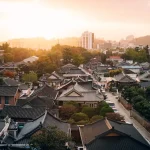
📷 Featured image by Mathew Schwartz on Unsplash.