On this page
- Jeju’s Seafood Geography: Why Location Changes Everything
- Dongmun Market and Jungang Arcade: Where Locals Buy Before They Cook
- Haenyeo Restaurant Clusters: Eating Where the Divers Sell
- Top Dedicated Seafood Restaurants by Area
- 2026 Budget Reality: What a Seafood Meal Actually Costs
- Lesser-Known Spots Locals Actually Use
- What to Order and What to Skip
- Practical Tips for Eating Seafood on Jeju in 2026
- Frequently Asked Questions
💰 Click here to see Korea Budget Breakdown
💰 Prices updated: 2026-10-01. Budget figures are estimates — always verify before travel.
Exchange Rate: $1 USD = 1,356 KRW
Daily Budget (per person) • Pricing updated as of 2026-10-01
Daily Budget
Shoestring: 60,000 KRW - 95,000 KRW ($44.25 – $70.06)
Mid-range: 130,000 KRW - 250,000 KRW ($95.87 – $184.37)
Comfortable: 350,000 KRW - 550,000 KRW ($258.11 – $405.60)
Accommodation (per night)
Hostel/guesthouse: 25,000 KRW - 65,000 KRW ($18.44 – $47.94)
Mid-range hotel: 90,000 KRW - 165,000 KRW ($66.37 – $121.68)
Food (per meal)
Budget meal (street food): 9,000 KRW ($6.64)
Mid-range meal (restaurant): 22,000 KRW ($16.22)
Upscale meal: 65,000 KRW ($47.94)
Transport
Single subway/bus trip: 1,600 KRW ($1.18)
Climate Card (30-day unlimited): 67,000 KRW ($49.41)
Jeju’s Seafood Geography: Why Location Changes Everything
Jeju Island sits in the Korea Strait with the East China Sea feeding its western coast and the colder currents of the southern sea shaping its eastern and southern shores. That geography is not just trivia — it directly determines what fish ends up on your plate and where. Visitors who land at Jeju International Airport, scroll a few Google Maps results, and head to the nearest “seafood street” often end up paying tourist prices for fish that was perfectly fresh yesterday. In 2026, with Jeju welcoming record numbers of international arrivals after the expansion of direct flight routes from Southeast Asia and Japan, that problem is worse than ever.
The western coast around Hallim and Aewol is calmer and shallower, making it the prime zone for abalone, sea cucumber, and turban shells — the haenyeo (female diver) harvest. The southern coast near Seogwipo runs deeper and colder, which means better conditions for black porgy (okdom or red tilefish is more accurately caught in deeper southern waters), sea bream, and mackerel. The eastern coast near Gimnyeong and Seongsan gets strong tidal flow, producing exceptional raw octopus and sea urchin. Knowing this before you eat means you order the right thing in the right place.
Dongmun Market and Jungang Arcade: Where Locals Buy Before They Cook
Dongmun Traditional Market in Jeju City is the island’s oldest and largest market, operating since 1945. It is not a tourist seafood restaurant — it is a working wet market where Jeju residents actually shop. The seafood section runs along the inner lanes near the main entrance on Gwandeok-ro, and the variety on a weekday morning will stop you mid-step. Live abalone tanks bubble along the walls. Whole hairtail fish (galchi) are laid flat on ice, their silver skin still catching the overhead lights. The smell is clean salt and cold ocean, not the fishy odour of poorly kept stock.

What makes Dongmun useful for visitors is the small raw seafood restaurants operating inside and immediately adjacent to the market. You pick your fish or shellfish from the stalls, the vendor cleans and plates it, and you eat at a basic table right there. A plate of raw sliced abalone (jeon-bok-hoe) runs about 20,000–35,000 KRW ($15–$26) depending on size, and the turban shell (sotteok or ppong-ge depending on the vendor’s dialect) is served with a sharp vinegared red pepper paste. It is entirely unremarkable in décor and completely excellent in freshness.
Jungang Arcade (Jungang Jiha Sangga), running underground near Jeju City Hall, is less visited by foreigners but worth knowing. The small basement seafood stalls here sell prepared side dishes and semi-dried fish at prices noticeably below street level. It is better for picking up dried squid or ganjang gejang (soy-marinated crab) to eat with rice than for a sit-down feast, but the gejang here — soft, briny, almost sweet — is some of the best on the island.
Haenyeo Restaurant Clusters: Eating Where the Divers Sell
The most direct route to genuinely fresh Jeju seafood is eating at the small restaurants run by haenyeo cooperatives or their families. These are not restaurants in the polished sense. Many have handwritten menus, plastic chairs, and no English signage. But the supply chain is about as short as it gets: diver to kitchen to table, sometimes within the same morning.

The Hamdeok area on the north coast has a cluster of these restaurants near Hamdeok Seowoollam Beach. The focus here is sea urchin (sŏng-ge) and raw octopus (nakji). A sea urchin bibimbap — sea urchin mixed through warm rice with sesame oil and a raw egg yolk stirred in at the table — runs 18,000–22,000 KRW ($13–$16) and is nothing like what you get in a tourist-facing restaurant. The roe is bright orange, soft, and briny without any metallic aftertaste.
The Jongdalri coast on the east side of the island, near Seongsan Ilchulbong, has haenyeo restaurants clustered around the small fishing harbour. This is where you find the best haenyeo-style seafood soup (haemul-tang) made with whatever was pulled that morning — typically conch, octopus, sea cucumber, and sometimes spiny lobster. The broth is aggressively spiced and deeply savoury. Eating here with the harbour visible through a salt-fogged window, the sound of boat engines idling outside, is about as Jeju as a meal gets.
Aewol Haenyeo Village on the west coast, easily accessible from the Jeju Olle Trail Route 16, has a cooperative-run seafood table (haenyeo-sikdang) that is more organised than most. You can often watch divers returning from the morning harvest before sitting down. Reservation is recommended on weekends, especially from July through September.
Top Dedicated Seafood Restaurants by Area
Jeju City
Dongbuja Haemul on Tapdong-ro near the coastal walk is one of Jeju City’s most consistent options for galchi jorim (braised hairtail). The fish arrives whole, braised in a thick paste of gochujang, garlic, and radish. The skin stays intact and the flesh pulls away cleanly. A single-person portion with rice and side dishes runs 16,000 KRW ($12). It is cash-preferred but accepts most Korean payment apps.

Jeju Seafood Village (Jeju Haemul Maeul), a strip of restaurants facing the Yongyeon Gorge area, is better known to Koreans than to foreign visitors. The star dish here is okdom-gui — roasted red tilefish, Jeju’s most iconic fish — served whole with skin crisped over a charcoal flame. The flesh underneath is white, mild, and almost buttery. Prices average 30,000–45,000 KRW ($22–$33) per fish depending on size.
Seogwipo
Ongpo Restaurant (옹포식당) near the Ongpo-ri fishing port west of Seogwipo is the kind of place that does not advertise and does not need to. It seats maybe 30 people and opens at 11:00 AM. The raw fish platter (hoe modeum) here is built around whatever came in that day — often sea bream, amberjack, and local flatfish — served with perilla leaves, garlic, and a fiery red sauce. Plan to arrive early; they regularly run out of certain fish by early afternoon.
Seogwipo Maeil Olle Market has a dedicated seafood section on its upper floor that is far better than Jeju City’s comparable tourist markets. The grilled seafood stalls here serve prawns, abalone, and whole squid over charcoal for 10,000–20,000 KRW ($7–$15) per item. It is one of the few places in Seogwipo where the price-to-freshness ratio clearly favours the visitor.
Hallim and the West Coast
Hallim Seafood Street near Hallim Port is a row of about eight restaurants, all serving haenyeo-caught shellfish. The speciality here is jeonbokjuk — creamy abalone porridge cooked with rice and finely chopped abalone viscera, which turns the porridge a distinctive green-grey. It sounds unusual. It tastes deeply rich, slightly briny, and wholly unlike any other porridge you will eat in Korea. Prices are 15,000–20,000 KRW ($11–$15).
2026 Budget Reality: What a Seafood Meal Actually Costs
Jeju seafood prices have risen noticeably since 2024, partly due to higher fuel costs for fishing boats and partly because of increased domestic tourism from Koreans treating Jeju as a premium destination. Here is what you can realistically expect to pay in 2026:

- Budget (under 15,000 KRW / ~$11): Market stall meals, haenyeo cooperative set menus at smaller villages, seafood gimbap or fishcake soup at Dongmun. Filling, very fresh, minimal comfort.
- Mid-range (15,000–40,000 KRW / ~$11–$30): Most sit-down seafood restaurants. A full galchi jorim or okdom-gui meal with side dishes, a bowl of haemul-tang, or a modest raw fish platter for one. This is where most meals on Jeju sit.
- Comfortable (40,000–100,000 KRW / ~$30–$74): Premium raw fish platters for two, live spiny lobster (sishimi lobster hoe), multi-course abalone sets at cooperative restaurants, or dinner at a Seogwipo restaurant with ocean views. Not luxury pricing, but not casual either.
- High-end (above 100,000 KRW / $74+ per person): Kaiseki-influenced Jeju seafood courses at the island’s newer fine-dining spots, which have expanded significantly in 2025–2026 following food media coverage. Advance reservation essential.
One warning: seafood restaurants near Jeju Airport and along the main tourist strips in central Jeju City often charge 20–30% more than equivalent spots five kilometres away. The food is not better. The location is just more convenient for people who have not planned ahead.
Lesser-Known Spots Locals Actually Use
Sinchang Neighborhood, Jeju City: About three kilometres west of the city centre, the Sinchang-dong area near the coast has a cluster of restaurants used almost exclusively by Jeju residents. The signage is in Korean only and most menus are handwritten. The focus is on simply prepared whole fish — steamed, grilled, or braised — with the complexity coming from the freshness of the fish rather than elaborate seasoning. A whole steamed turbot (gwang-eo jjim) for two runs about 35,000 KRW ($26).

Pyoseon Harbour, East Jeju: Pyoseon is a small village on the east coast most visitors skip entirely in favour of Seongsan. The harbour has three or four tiny restaurants serving raw sea urchin straight from the shell for 8,000–12,000 KRW ($6–$9) per portion — a price that has not budged much even as costs elsewhere have risen, because this area sees almost no foreign visitors. The urchin is cracked open in front of you and served with a small spoon. The flavour is intensely oceanic, clean, and sweet.
Gosan-ri, West Coast: Near the remote western tip of Jeju past Hallim, Gosan is known among Koreans who drive the full island circuit. There is a single restaurant near the small harbour that serves a haenyeo-style mixed seafood plate — raw conch, sea cucumber, abalone slices, and boiled octopus — for 25,000 KRW ($18.50) per person. You will need a car to get there. You will not regret it.
Jeju Intercity Bus Terminal Market: The market area surrounding Jeju’s intercity bus terminal is mostly used by elderly residents and has a morning seafood stall section that opens from around 5:30 AM. It is not a restaurant, but you can buy pre-packaged fresh-caught fish and semi-dried seafood at wholesale-adjacent prices — useful if you are staying somewhere with kitchen access.
What to Order and What to Skip
Order These
- Okdom (red tilefish): Jeju’s signature fish. Best grilled (gui) or salted and dried slightly before grilling (mareun okdom-gui). Only order it where the menu lists it as a feature — if it is buried in a long list, it is probably imported.
- Galchi (hairtail/beltfish): Jeju galchi has a protected geographic designation. The silver, ribbon-shaped fish is best braised (jorim) or grilled with coarse salt. Seogwipo restaurants do the braised version particularly well.
- Jeonbok (abalone): Raw, in porridge, or lightly grilled with butter and garlic. All three preparations work. The raw version lets you taste the actual quality of the abalone, so start there if you have the option.
- Sŏng-ge (sea urchin): Eat it as simply as possible — raw over rice or straight from the shell. Heavy saucing masks the flavour. Eastern Jeju tends to have the best quality.

Skip or Be Careful With
- Lobster tanks near tourist areas: Spiny lobster (닭새우, dakgaeuri) is legitimately caught in Jeju waters, but restaurants on the main tourist strips frequently supplement local catch with farmed lobster from elsewhere. Ask whether it is Jeju-caught (제주산) before ordering.
- Combo seafood platters under 20,000 KRW for two people: If the price seems dramatically lower than surrounding restaurants, check what fish is on the platter. Cheap farmed fish dressed up with presentation is common in Jeju’s busier tourist zones.
- Buffet-style seafood restaurants near resort hotels: These exist to serve volume, not quality. The fish is fine but not worth seeking out.
Practical Tips for Eating Seafood on Jeju in 2026
Getting around to eat well: Jeju’s best seafood spots are spread around the coast, not concentrated in the city. In 2026, the island’s rental car infrastructure remains the most practical option for serious seafood exploration. Public buses reach many coastal villages but run infrequently — the 201 and 202 routes cover the east and west coasts, but you may wait 40–60 minutes between services. Electric scooter rentals have expanded since 2024 and are now available in Seogwipo and Hallim as well as Jeju City.
Payment reality: Most Jeju seafood restaurants — including many market stalls — now accept Korean credit cards and mobile payment (KakaoPay, NaverPay, Samsung Pay). Contactless international Visa and Mastercard work at most mid-range and above restaurants. Cash is still preferred at the smallest haenyeo-run spots and morning market stalls. Carry at least 30,000–50,000 KRW ($22–$37) in cash when exploring village coastal areas.

Timing your meals: Seafood restaurants on Jeju move at their own pace. Most close between 3:00–5:00 PM for a break before dinner service. Many of the best small spots — especially in the harbour villages — run out of premium catches (fresh okdom, whole abalone) before the lunch rush ends. Eating before noon or at dinner after 6:00 PM gives you the best selection.
Language and ordering: Most seafood restaurants outside Jeju City have menus only in Korean. Google Translate’s camera mode works reasonably well in 2026 on Korean menus, but the most reliable approach is simply pointing at what other tables are eating and saying “igeo juseyo” (이거 주세요 — give me this). Every restaurant on Jeju has seen visitors do exactly that and it works perfectly well.
Seasonality matters: Jeju seafood quality shifts with the seasons. Sea urchin is at its peak from late spring through early autumn. Abalone is available year-round but at its largest and richest from late summer. Hairtail fish season peaks from August through October. Red tilefish is caught most abundantly in autumn. If you are visiting specifically for one ingredient, time the trip accordingly.
Frequently Asked Questions
What is the most famous seafood dish on Jeju Island?
Okdom-gui (grilled red tilefish) and galchi jorim (braised hairtail) are the two dishes most closely identified with Jeju cuisine. Abalone porridge (jeonbokjuk) is also iconic. If you only eat one thing uniquely Jeju, make it okdom — it is caught in the island’s deeper southern waters and has a mild, buttery flavour unlike any fish served on the Korean mainland.

Is Jeju seafood expensive compared to the Korean mainland?
For mid-range sit-down meals, Jeju runs about 15–25% more expensive than equivalent seafood restaurants in Busan or Incheon. That gap has widened slightly in 2026 due to higher operating costs on the island. However, market and haenyeo cooperative meals are still excellent value — comparable to or cheaper than mainland prices for genuinely fresher product.
Do Jeju seafood restaurants accommodate vegetarians or people who don’t eat fish?
Jeju’s seafood culture is deeply centred on ocean ingredients, and most restaurants have limited non-seafood options. Many dishes use anchovy-based broths even in side dishes. Korean mixed rice bowls (bibimbap) and tofu stew (sundubu-jjigae) are usually available but treated as secondary menu items. Visitors with strict dietary restrictions are better served eating at general Korean restaurants in Jeju City rather than specialist seafood spots.
How do I tell if the seafood in a Jeju restaurant is actually local?
Under Korean food labelling regulations, restaurants must display the origin of key ingredients on menus or on a posted notice. Look for 제주산 (Jeju-san, meaning Jeju origin). If a restaurant does not display this prominently for its flagship fish, ask directly. In 2026, enforcement of these labelling rules has been tightened on Jeju following complaints about mislabelled imports in 2024.
What is the best area of Jeju for seafood overall?
There is no single best area — it depends on what you want. For haenyeo-caught shellfish, the west coast around Hallim and Aewol is the strongest. For raw fish variety and sit-down restaurants, Seogwipo on the south coast edges ahead of Jeju City. For sea urchin and octopus, the east coast near Seongsan and Pyoseon. If you can only be in one place, Seogwipo offers the widest range of good seafood options within walking or short driving distance.
Explore more
Where to Eat the Best Jeju Black Pork: An Essential Guide
Where to Stay in Jeju City: Top Neighborhoods for Every Traveler’s Style
Jeju Island 5-Day Itinerary: The Ultimate First-Timer’s Guide
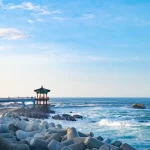
📷 Featured image by Zhuojun Yu on Unsplash.