On this page
- Getting Out of Busan Is Easier Than You Think — But Plan Ahead
- Gyeongju — Korea’s Open-Air Museum
- Tongyeong — The Naples of Korea
- Geoje Island — Beaches, History, and Slow Island Life
- Miryang — Waterfalls, Ice Caves, and the Place Nobody Else Is Going
- Hadong (Jirisan’s Tea Side) — Tea Fields and Ridge Trails
- Day Trip or Overnight? An Honest Answer for Each
- 2026 Budget Reality: What Each Trip Actually Costs
- Frequently Asked Questions
💰 Click here to see Korea Budget Breakdown
💰 Prices updated: 2026-10-01. Budget figures are estimates — always verify before travel.
Exchange Rate: $1 USD = 1,356 KRW
Daily Budget (per person) • Pricing updated as of 2026-10-01
Daily Budget
Shoestring: 60,000 KRW - 95,000 KRW ($44.25 – $70.06)
Mid-range: 130,000 KRW - 250,000 KRW ($95.87 – $184.37)
Comfortable: 350,000 KRW - 550,000 KRW ($258.11 – $405.60)
Accommodation (per night)
Hostel/guesthouse: 25,000 KRW - 65,000 KRW ($18.44 – $47.94)
Mid-range hotel: 90,000 KRW - 165,000 KRW ($66.37 – $121.68)
Food (per meal)
Budget meal (street food): 9,000 KRW ($6.64)
Mid-range meal (restaurant): 22,000 KRW ($16.22)
Upscale meal: 65,000 KRW ($47.94)
Transport
Single subway/bus trip: 1,600 KRW ($1.18)
Climate Card (30-day unlimited): 67,000 KRW ($49.41)
Getting Out of Busan Is Easier Than You Think — But Plan Ahead
Busan in 2026 is genuinely crowded. The opening of three new beachfront hotel towers near Haeundae, combined with a surge in Southeast Asian tourism following the expanded visa-free agreements, means Gwangalli on a summer weekend now feels less like a beach and more like a queue. If you’ve based yourself in Korea’s second city for more than two days, you’ve probably already thought about leaving — at least for a day. The good news is that Busan sits in one of the best geographic positions in Korea for escaping. Within two hours, you can stand inside a 1,300-year-old royal tomb, eat grilled oysters on a pier nobody else seems to know about, or walk through tea terraces that smell like wet earth and spring.
This guide covers five Destinations that are genuinely easy to reach from Busan, with honest transport directions, real 2026 prices, and a straight answer on whether each place is worth an overnight or fine as a day trip.
Transport Cards in 2026
The T-Money card and Cashbee card both work on Busan Metro, city buses, and most intercity buses in the Gyeongsang and Nam-haean coastal regions. In 2026, the new K-Pass — which replaced the old Korea Tour Card — gives registered foreign visitors up to 40% cashback on transit spending over 15 rides in a month. If you’re doing multiple day trips, load the K-Pass onto your phone via the Korea Tourism Organization’s app (updated in early 2026 with English-language support that actually works). You can also use a physical K-Pass card available at Busan Station’s tourist information desk.
What to Bring
- A portable charger — rural areas outside Busan have limited public charging points
- Cash in KRW — some ferry terminals and rural restaurants still don’t accept foreign cards
- Comfortable shoes — every destination here involves more walking than the map suggests
- A light jacket even in summer — coastal areas like Tongyeong have sharp sea breezes
Gyeongju — Korea’s Open-Air Museum
Gyeongju is the obvious answer when someone asks where to go from Busan, and it earns that reputation honestly. This was the capital of the Silla Kingdom for nearly a thousand years, and the city has not tried very hard to modernise — which is exactly the point. The downtown area is built around burial mounds the size of small hills, some of which you can walk through. Inside Tumuli Park, the reconstructed interior of Cheonmachong Tomb is cool and dim, and the golden crown replicas inside are more impressive in person than in any photograph.
Bulguksa Temple, about 16 kilometres southeast of the city, is worth the trip even if you’ve seen temples elsewhere in Korea. The stone staircases — Cheongunggyo and Baegungyo — lead up to the main courtyard in a way that feels genuinely ceremonial. Go early. By 10am, tour groups arrive in volume.
Getting There
KTX from Busan Station to Singyeongju Station takes around 20 minutes. From Singyeongju, bus 700 or 700-1 runs to the city centre and Bulguksa. The full journey, door to door, is about 50–60 minutes. A local bus also runs directly from Busan’s Nopo-dong terminal to Gyeongju intercity bus terminal in around 50 minutes for less than half the KTX price.
What to Focus On
- Tumuli Park — the burial mound complex in the city centre, entry ₩3,000 (~$2.20)
- Bulguksa Temple — allow two hours minimum, entry ₩6,000 (~$4.40)
- Donggung Palace and Wolji Pond — especially beautiful at dusk, entry ₩3,000 (~$2.20)
- Gyeongju National Museum — free entry, houses the original Emille Bell

For food, the Seongdong Market near the bus terminal sells ssambap — rice wrapped in leafy greens with side dishes — at lunch counters where you sit elbow-to-elbow with locals. A full meal costs around ₩8,000–10,000 ($5.90–$7.40).
Tongyeong — The Naples of Korea
Koreans call Tongyeong the Naples of Korea, and while the comparison gets used for every pretty coastal city in Asia, Tongyeong actually earns it. The city is built across a peninsula that juts into the Korea Strait, with a working fishing harbour, colourful hillside neighbourhoods, and islands visible in every direction. The light here in the late afternoon, when the fishing boats start returning, is the kind that makes you stop walking and just look.
The Tongyeong Cable Car runs up Mireuksan Mountain and gives a panoramic view of the city, the sea, and the dotted islands of Hallyeohaesang National Maritime Park. The cable car was renovated in 2025 and now runs eight-person gondolas with glass floors, which either thrills or terrifies, depending on your relationship with heights. The view at the top makes the ₩15,000 ($11.10) round-trip ticket worth it.
Getting There
Express buses run from Busan’s Seobu Intercity Bus Terminal (not Nopo-dong) to Tongyeong Bus Terminal roughly every 40 minutes. Journey time is 1 hour 20 minutes to 1 hour 40 minutes depending on traffic. There is no train option — bus is the only practical route.
What to Eat
Tongyeong is one of the best places in Korea to eat seafood without paying Busan tourist prices. The Jungang Market sells gul (oysters) by the bucket — raw, grilled, or in a spicy guljeon pancake. A plate of grilled oysters at a market stall costs ₩10,000–12,000 ($7.40–$8.90). The city is also known for chungmu gimbap — small, plain rice rolls served with spicy radish kimchi and baby octopus — which you’ll find at small restaurants around the old harbour for around ₩6,000 ($4.40) per portion.
The Undersea Tunnel
Tongyeong also has Korea’s oldest undersea tunnel, built in 1932, which connects the main city to a small island on foot. It’s a five-minute walk through a slightly eerie, low-ceilinged pedestrian tunnel that smells like salt and old concrete. Free to walk through, and most visitors skip it — which is exactly why you should go.
Geoje Island — Beaches, History, and Slow Island Life
Geoje is Korea’s second-largest island, but it doesn’t feel like a tourist destination in the way Jeju does. The island is connected to the mainland by two bridges, so getting here requires no ferry. The Geoje POW Camp, a remnant of the Korean War where North Korean and Chinese prisoners were held in the early 1950s, is one of the most historically significant — and least crowded — war museums in the country. The reconstructed barracks, watchtowers, and outdoor exhibits are genuinely sobering, and the small museum building explains the complex 1952 prisoner revolt clearly in English.
Beyond the history, Geoje has some of the best beaches accessible from Busan. Hakdong Mongdol Beach is covered in smooth black pebbles rather than sand — the sound of waves pulling back across the stones is one of those unexpectedly beautiful things that doesn’t translate to video. Windy Hill (Baramui Eondeok) on the southern tip is a grassy cliff area popular with Korean couples and families, with windmills that have become something of an unofficial symbol of the island.
Getting There
Express buses from Busan Seobu Terminal to Geoje Bus Terminal run frequently and take about one hour. Local buses then connect to the beaches and POW camp, though renting a car or scooter at Geoje Terminal gives you much more freedom — the island is large enough that bus timing can be frustrating.
What to Know
- Geoje POW Camp entry: ₩3,000 ($2.20), open Tuesday–Sunday
- Hakdong Mongdol Beach: free, parking available nearby
- Windy Hill: free, gets very crowded on weekends between May and October
- Geoje’s local speciality is daegutang (spicy cod soup) — look for small restaurants near the old fish market in Geoje-si
Miryang — Waterfalls, Ice Caves, and the Place Nobody Else Is Going
Miryang is the least-visited destination in this guide and probably the most rewarding for travellers who’ve already done the standard Korean sights. It’s a small inland city in South Gyeongsang Province, about 45 minutes from Busan by KTX, and most foreign visitors pass straight through it on the train without getting off. That’s a mistake.
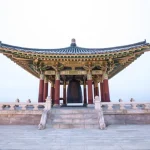
Yeongnamnu Pavilion, sitting on a bluff above the Miryang River, is one of the three great pavilions of Korea’s Joseon period. Unlike the similar structures in tourist-heavy cities, Yeongnamnu feels genuinely untouched. You can sit on the wooden floor of the pavilion, look down at the river, and have the whole place to yourself on a weekday morning. The air in this part of the valley carries the smell of pine and moving water.
The Eoreumgol Ice Valley is a strange geological phenomenon — a narrow valley in the mountains north of the city where cold air seeps from between rocks even in summer, creating patches of ice as late as July. It’s a 20-minute taxi ride from Miryang Station, and the walk into the valley takes about 30 minutes through forest.
Getting There
KTX from Busan Station to Miryang Station runs multiple times per hour and takes 20–25 minutes. This is one of the fastest and cheapest escapes from Busan — KTX fares start around ₩9,000–11,000 ($6.70–$8.10) depending on departure time. From Miryang Station, taxis are cheap and drivers know the main sights.
Food in Miryang
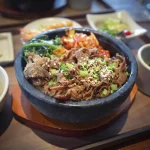
Miryang is famous for eomukguk — fish cake soup — and for dolssambap, rice served with an extensive spread of seasonal vegetable side dishes in stone bowls. There are several family-run restaurants serving this near Yeongnamnu; a full set meal costs ₩12,000–15,000 ($8.90–$11.10). Miryang also has a small but genuine craft makgeolli brewery that does informal walk-in tastings on weekday afternoons.
Hadong (Jirisan’s Tea Side) — Tea Fields and Ridge Trails
Most visitors who go to Jirisan National Park approach from the Gurye or Namwon side in Jeolla Province. Hadong County, which covers Jirisan’s southern slopes in South Gyeongsang, is quieter and has something the other approaches don’t: Korea’s oldest tea-growing region. The Hwagye Valley has been producing green tea since the ninth century, and the terraced fields along the valley road are especially striking in May (new growth, electric green) and October (turning rust and gold).
Ssangyesa Temple, at the mouth of the valley, is one of the most atmospheric temple complexes in Korea — partially because it feels genuinely remote even though the road reaches it. The twin-story stone lanterns at the entrance are National Treasures. Beyond the temple, trails run up into Jirisan proper, and even a two-hour walk up the lower ridge gives you forest silence and mountain views that feel completely separate from the coastal busyness of Busan.
Getting There
This is the most complex of the five destinations. From Busan Seobu Terminal, buses run to Hadong town (about 1 hour 30 minutes). From Hadong, local buses go up into the Hwagye Valley, but service is infrequent — check the timetable before you go, or take a taxi from Hadong for around ₩15,000–20,000 ($11.10–$14.80) one way. Alternatively, renting a car in Busan for this trip gives much more flexibility.
Tea Culture in Hadong
Several small tea farms along the valley road welcome visitors for informal tastings. There’s no booking system — you walk in, take your shoes off, and sit on the floor of a wooden room while someone makes tea. Tastings are typically ₩8,000–12,000 ($5.90–$8.90) per person and include three to four different green tea varieties. This is not a polished tourist experience. It’s closer to being invited into someone’s home.
Day Trip or Overnight? An Honest Answer for Each
Not every destination here needs an overnight stay, but some reward it heavily. Here’s a straightforward breakdown:
- Gyeongju: Day trip is fine and very common. But if you want to visit Bulguksa and Seokguram Grotto early before crowds, and then end the day at Wolji Pond at dusk, an overnight in a traditional hanok guesthouse makes the pacing much better. Several good options run ₩70,000–100,000 ($51.85–$74.07) per room.
- Tongyeong: Easily done as a day trip if you focus on the cable car, harbour, and market. Overnight is worth it if you want to take a ferry out to one of the smaller islands (Somaemuldo Island is stunning) — ferries tend to run on morning schedules.
- Geoje: Day trip is possible but the island is large. If you want beaches and history, arrive early and accept that you’ll be rushing. An overnight lets you see the beaches at sunset and morning, which is when they’re best.
- Miryang: Perfect day trip. Two to three hours covers the main sights comfortably. There’s little reason to overnight unless you’re using it as a base to explore the surrounding mountains.
- Hadong/Jirisan: Overnight strongly recommended. The tea valley and temple are half a day’s content, but the mountain trails deserve a full day, and morning mist in the valley is worth the extra cost of a guesthouse.
2026 Budget Reality: What Each Trip Actually Costs
These figures cover a solo traveller doing a day trip, including transport from central Busan, entry fees, and one sit-down meal. Accommodation costs are added separately for overnight options.
Gyeongju
- Budget: ₩30,000–45,000 ($22.22–$33.33) — intercity bus, packed lunch, walking the free and cheap sights
- Mid-range: ₩60,000–80,000 ($44.44–$59.26) — KTX, all entry fees, sit-down lunch, taxi between sites
- Comfortable: ₩120,000+ ($88.89+) — add a private guide, dinner at a Gyeongju hanu (beef) restaurant
Tongyeong
- Budget: ₩35,000–50,000 ($25.93–$37.04) — bus, market lunch, skip cable car
- Mid-range: ₩70,000–90,000 ($51.85–$66.67) — bus, cable car, seafood restaurant lunch
- Comfortable: ₩130,000+ ($96.30+) — add a sunset ferry around the islands
Geoje
- Budget: ₩30,000–40,000 ($22.22–$29.63) — bus, local buses between sights, convenience store lunch
- Mid-range: ₩65,000–85,000 ($48.15–$62.96) — bus, POW camp, restaurant lunch, taxi between beaches
- Comfortable: ₩130,000+ ($96.30+) — add scooter rental for the day
Miryang
- Budget: ₩25,000–35,000 ($18.52–$25.93) — KTX, walking the pavilion and river area, market lunch
- Mid-range: ₩50,000–70,000 ($37.04–$51.85) — KTX, taxi to ice valley, sit-down meal
- Comfortable: ₩90,000+ ($66.67+) — add makgeolli tasting session
Hadong/Jirisan
- Budget: ₩40,000–55,000 ($29.63–$40.74) — bus, local buses, basic temple visit, packed lunch
- Mid-range: ₩80,000–100,000 ($59.26–$74.07) — bus, taxi in valley, tea tasting, restaurant meal
- Comfortable: ₩150,000+ ($111.11+) — car rental, private tea session, mountain lodge dinner
Frequently Asked Questions
Which day trip from Busan is best for first-time visitors to Korea?
Gyeongju is the strongest choice for first-timers. The historical sites are well-signed in English, the transport links are fast and easy, and the city gives context to Korean history that enriches everything else you’ll see. Even visitors with no interest in ancient history tend to find the burial mound park unexpectedly moving.
Can I do any of these trips without speaking Korean?
Yes, for all five — though some require more preparation than others. Gyeongju and Geoje have solid English signage. Miryang and Hadong require more confidence with taxis and pointing at menus. Download Naver Maps and Papago translation before you leave Busan; both work offline and are significantly more accurate in rural Korea than Google Maps as of 2026.
Is a rental car worth it for these day trips from Busan?
For Geoje and Hadong, yes — the islands and valleys are large enough that public transport limits how much you can see. For Gyeongju, Tongyeong, and Miryang, public transport is perfectly adequate. International driving licenses are accepted in Korea, and major rental companies have English-language booking options in 2026.
What’s the best season to do day trips from Busan?
Spring (late March to May) and autumn (October to early November) are ideal. Gyeongju’s cherry blossoms in early April are spectacular, and Hadong’s tea fields turn vivid green in May. Autumn brings cooler hiking weather for Jirisan and deep colours across the valley landscapes. Summer is manageable but humid, and beach destinations like Geoje get crowded in July and August.
How has K-ETA affected day trips from Busan in 2026?
K-ETA — the Korea Electronic Travel Authorization — was restructured in late 2025. Citizens of most Western countries, Japan, and Southeast Asian nations covered by the expanded 2025 visa-free agreements no longer need K-ETA for stays under 90 days. Once you’re in Korea, domestic travel including all these day trips requires no additional permits or approvals. Check the Korean Immigration Service website for your specific nationality before travel.
Explore more
Planning Your Perfect South Korea Itinerary: Beyond the Big Three
Best Cities to Visit in Korea (That Aren’t Seoul, Busan, or Jeju)
Lesser-Known Korea Destinations: Discovering South Korea’s Hidden Gems