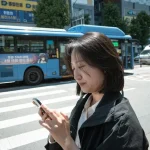
Busan‘s subway system is excellent — until it isn’t. Late nights in Gwangalli, a beach bag full of gear at Songjeong, or a last-minute dash to Gimhae Airport from Haeundae: these are the moments a taxi stops being a luxury and becomes the only sensible option. The problem in 2026 is that many visitors arrive with outdated information — old fare tables, apps that have rebranded or restructured their pricing, and no idea that hailing on the street works completely differently depending on the neighborhood. This guide covers all of it.
How Busan Taxi Fares Actually Work in 2026
Busan taxis use a metered system regulated by Busan Metropolitan City. As of January 2026, the base fare for a standard orange taxi is 4,800 KRW (~$3.55 USD) for the first 1.6 kilometres. After that, the meter clicks up 100 KRW every 132 metres or every 31 seconds when the cab is moving slowly — whichever comes first.
There are two surcharges that catch visitors off guard:
- Night surcharge: A 20% premium applies between midnight and 04:00. The meter simply runs faster during these hours — you won’t see a separate line item, just a higher total.
- Call/app booking fee: When you book through an app rather than hailing, an additional 1,000–2,000 KRW (~$0.75–$1.50) is added at the start of the ride. This is legitimate and standard, not a scam.
Tolls are always added on top. If your route crosses the Gwangan Bridge or uses the Busan-Gimhae Light Rail road tunnel, the toll appears on the meter display and you pay it directly. There is no tipping culture in Korean taxis — rounding up is fine if you want, but drivers neither expect nor hint at it.
Types of Taxis in Busan
Not all taxis in Busan are the same, and the differences matter depending on your situation.
Orange Taxis (일반택시)
These are the standard cabs you’ll see everywhere. They’re plentiful, affordable, and perfectly reliable for most trips. The drivers range from those with decent English to those with none at all. If your destination is loaded into a map app and you can show the screen, you’ll be fine.
Black Taxis (모범택시)
Black taxis are a licensed premium tier. The base fare starts at 7,000 KRW (~$5.20 USD) and the per-kilometre rate is roughly 50% higher than orange taxis. In return, you get a cleaner car, a driver who has passed additional training and background checks, and — often — slightly better English. They’re worth it for airport runs when you have a lot of luggage or an early morning flight and want zero stress.

Jumbo Taxis (대형택시)
These are van-style vehicles that seat up to six passengers. The fare structure is similar to black taxis. They’re most useful for groups of four or more arriving at Busan Station or Gimhae Airport with heavy bags. Book through Kakao T — street-hailing a jumbo is not reliably possible.
The Best Apps for Booking a Taxi in Busan
The app landscape shifted noticeably in 2025–2026. Here’s where things stand now.
Kakao T (카카오T)
Still the dominant platform. In 2025, Kakao T expanded its English-language interface significantly, and by 2026 the app functions cleanly in English from registration through payment. You can save your card details and pay in-app, which eliminates the cash-or-card conversation with the driver entirely. Kakao T also lets you set a destination in Korean characters by searching in English — the translation layer has improved to the point where “Jagalchi Market” or “Haeundae Beach” returns accurate results without manual input of Korean text.
UT (우티)
UT is Uber’s Korean joint venture with SK Telecom. It operates legally in Busan using licensed taxi drivers — not private drivers. The app is fully English-friendly and shows upfront pricing before you confirm, which is genuinely useful if you want to know the cost before committing. UT tends to have slightly less availability than Kakao T in outlying areas like Gijang or Dadaepo Beach, but in central Busan and Haeundae it performs well.
Tada (타다)
Tada re-emerged in 2024 after regulatory changes and now operates in Busan with a small but growing fleet of premium vehicles. Think of it as positioned between orange and black taxi pricing. It’s a reasonable option if UT and Kakao T both show surge pricing simultaneously, which occasionally happens during Busan International Film Festival (BIFF) week in October.
When to Hail vs. When to Book
Street hailing works well in Busan — but not always, and not everywhere.
Hail without hesitation when you’re near Busan Station, Seomyeon, Nampo-dong, or along the main roads in Haeundae during daylight hours. Taxis cycle through these areas constantly, and an orange cab will appear within a minute or two. You’ll hear the low rumble of diesel engines idling at the rank outside Busan Station’s main exit — it’s the most reliable taxi queue in the city.

Book through an app in these situations:
- After midnight anywhere in the city — driver supply drops sharply and app dispatch gets you a cab faster than standing on the curb
- Rainy days, especially July–August typhoon season — every resident in Busan is also trying to get a taxi simultaneously
- BIFF week (mid-October) around the Nampo-dong and Jung-gu screening areas
- Post-match at Sajik Baseball Stadium — hailing after a Lotte Giants night game is close to impossible; book 10 minutes before you leave your seat
- Gimhae Airport departures — taxis at the departure drop-off level are usually in transit, so app booking ensures a car is actually waiting
Busan Taxi Hotspots by Neighborhood
Knowing where to stand matters more than people expect.
- Haeundae: The best rank is at the Haeundae subway station exit 3 side, not the beach road itself. The beach road gets congested in summer and drivers sometimes refuse short hops.
- Gwangalli: Street hailing works on the main boulevard (Gwanganhaebyeon-ro) but competition is stiff on weekend evenings. Walk one block inland to Minnak-ro for faster pickups.
- Gamcheon Culture Village: There is no reliable taxi rank at the village itself. Use Kakao T to book before you start walking down — signal is good at the top of the hill.
- Jagalchi/Nampo-dong: Cabs are everywhere during market hours. Avoid the narrow side streets; flag one on Nampo-daero or near the Lotte Department Store.
- Centum City / Shinsegae: The COEX-style taxi bay outside Shinsegae Centum City’s main entrance handles volume well. At night, Centum City subway station exit 12 is the fallback.
What to Know Before You Get In
A few practical things that save awkward moments.
Payment: All Busan taxis accept T-Money cards, credit cards, and cash. The small card reader is mounted near the driver’s headrest — you’ll tap your card there at the end of the ride, and the satisfying beep confirms the payment. International Visa and Mastercard work without issue. Some older orange taxis still have card readers that require a chip-and-PIN rather than tap — carry a backup method.
Language: Most drivers have minimal English. The most reliable approach is to show your destination on Naver Map or Google Maps (Google Maps is now accurate in Busan after the 2024 data update). If you’re booking via Kakao T or UT, the destination is transmitted directly to the driver’s device — no verbal communication needed.

Receipts: Ask for a receipt (영수증 — yeongsoo-jeung) if you need one for expenses. Every taxi meter prints one. If you leave something in the cab, the receipt has the driver’s licence number, taxi company, and trip time — essential for the Busan City Taxi Lost Property line (051-120).
Safety: Busan taxis are overwhelmingly safe. All licensed taxis have the driver’s photo and ID posted on the dashboard. Ride-sharing in the Uber sense (unregistered private vehicles) remains illegal in Korea, so any car dispatched through the apps listed above is a licensed vehicle.
2026 Budget Reality: Common Busan Routes
These are real-world estimates based on current metered fares, excluding night surcharge and tolls unless noted.
- Haeundae Beach → Gwangalli Beach: 6,000–8,000 KRW (~$4.45–$5.95) | 15–20 min in normal traffic
- Busan Station → Seomyeon: 5,500–7,000 KRW (~$4.10–$5.20) | 10–15 min
- Nampo-dong → Gamcheon Culture Village: 5,000–6,500 KRW (~$3.70–$4.80) | 10–12 min
- Haeundae → Gimhae Airport (orange taxi, including tunnel toll ~2,400 KRW): 28,000–35,000 KRW (~$20.75–$25.95) | 35–50 min depending on traffic
- Haeundae → Gimhae Airport (black taxi): 42,000–50,000 KRW (~$31.10–$37.05)
- Seomyeon → Sajik Baseball Stadium: 4,500–5,500 KRW (~$3.35–$4.10) | 8–10 min
Budget travellers sticking to subway-accessible areas will rarely need a taxi fare above 10,000 KRW (~$7.40). Mid-range travellers doing beach-to-dinner circuits in the evening should budget 8,000–15,000 KRW (~$5.95–$11.10) per taxi segment. If you’re staying in Haeundae and doing a comfortable amount of taxi-hopping to avoid bus schedules, 40,000–60,000 KRW (~$29.65–$44.45) per day for taxis is a realistic comfortable-tier estimate.
Frequently Asked Questions
Can I pay for Busan taxis with a foreign credit card?
Yes. International Visa, Mastercard, and most major credit cards work in Busan taxis. The card reader is near the driver’s headrest — tap or insert at the end of the ride. Older cabs occasionally have unreliable readers, so carrying 10,000–15,000 KRW in cash as backup is sensible, especially for late-night rides.
Is Kakao T safe to use as a tourist in 2026?
Completely safe and now one of the easiest options for non-Korean speakers. The 2025–2026 English-language update means you can register, enter a destination, and pay entirely in English. All drivers dispatched are licensed by the city. Your ride history and driver details are logged in the app, adding a clear accountability layer.
How do I get a taxi from Gimhae Airport to central Busan?
Exit through the arrivals gate and follow signs to the taxi rank on the ground floor outside. Orange taxis queue here and are metered — no negotiation needed. For Haeundae, expect 28,000–35,000 KRW including the tunnel toll. Alternatively, the Busan-Gimhae Light Rail connects to Sasang and Daejeo subway stations for a much cheaper option if you have manageable luggage.

What happens if I leave something in a Busan taxi?
Call Busan City’s integrated lost property line at 051-120. You’ll need the taxi’s licence plate number or the driver ID from the receipt, plus the approximate trip time. Items are typically held at the taxi company’s depot. If you booked through Kakao T or UT, you can retrieve the driver’s details directly from your ride history in the app.
Are there times when taxis in Busan are nearly impossible to find?
Yes — three situations reliably cause shortages: heavy rain during summer monsoon season (late June through August), immediately after large events at Sajik Stadium or BIFF screenings in October, and between 02:00 and 04:00 on Friday and Saturday nights near Seomyeon and Haeundae. Book via app 10–15 minutes early in these windows rather than trying to hail from the curb.
Explore more
The Ultimate Guide to Busan Nightlife: Bars, Clubs & More
Your First-Timer’s Ultimate Guide to Busan: Essential Tips for a Smooth Trip
Busan Street Food Extravaganza: Your Guide to Must-Try Market Eats