On this page
- Why Suwon Hits Different from Seoul’s Satellite Cities
- Hwaseong Fortress — Walking the Full Circuit
- Haenggung Palace and the King’s Summer Court
- Inside Suwon’s Food Scene — Where Galbi Actually Comes From
- Tongnyong Street and the Old Town Grid Below the Walls
- Suwon Ipark Museum and the City’s Contemporary Side
- Day Trip or Overnight? Honest Advice for 2026
- Getting to Suwon and Getting Around Once You’re There
- 2026 Budget Reality — What It Actually Costs
- Frequently Asked Questions
💰 Click here to see Korea Budget Breakdown
💰 Prices updated: 2026-10-01. Budget figures are estimates — always verify before travel.
Exchange Rate: $1 USD = 1,356 KRW
Daily Budget (per person) • Pricing updated as of 2026-10-01
Daily Budget
Shoestring: 60,000 KRW - 95,000 KRW ($44.25 – $70.06)
Mid-range: 130,000 KRW - 250,000 KRW ($95.87 – $184.37)
Comfortable: 350,000 KRW - 550,000 KRW ($258.11 – $405.60)
Accommodation (per night)
Hostel/guesthouse: 25,000 KRW - 65,000 KRW ($18.44 – $47.94)
Mid-range hotel: 90,000 KRW - 165,000 KRW ($66.37 – $121.68)
Food (per meal)
Budget meal (street food): 9,000 KRW ($6.64)
Mid-range meal (restaurant): 22,000 KRW ($16.22)
Upscale meal: 65,000 KRW ($47.94)
Transport
Single subway/bus trip: 1,600 KRW ($1.18)
Climate Card (30-day unlimited): 67,000 KRW ($49.41)
Most travelers treat Suwon as a checkbox — hop off the subway, walk the fortress walls, eat galbi, catch the train back to Seoul before dark. That approach works fine, but it misses most of what makes the city interesting. In 2026, Suwon has quietly sharpened its tourism infrastructure: the Hwaseong circular tram was upgraded, several new resto-bars opened inside the old town grid, and the city’s digital guide app finally works in English without major translation errors. If you’ve only given Suwon three hours before, it deserves a second look on its own terms.
Why Suwon Hits Different from Seoul’s Satellite Cities
Gyeonggi Province is ringed with cities that grew fast and feel like it — apartment blocks, wide roads, chain restaurants, and very little reason to linger. Suwon is different because it has a core. The UNESCO-listed Hwaseong Fortress gives the city an actual center of gravity, physically and culturally, and the neighborhoods inside and around the fortress walls have an identity that most satellite cities never develop.
Suwon is also a working city, not a preserved relic. About 1.2 million people live here. The streets smell like sesame oil and exhaust in equal measure. Old women sell perilla leaves from plastic tubs near the south gate while office workers cut through the same alley to reach the bus stop. That coexistence — lived-in history without the museum-rope feeling — is what separates Suwon from, say, a day trip to a folk village where everything is staged for cameras.
It also has genuine culinary heritage. Suwon galbi (beef short ribs) is not a regional marketing claim. There’s a documented reason this cut and this preparation style became associated specifically with this city, and you can taste the difference if you eat at the right places. More on that below.
Hwaseong Fortress — Walking the Full Circuit
The fortress was built between 1794 and 1796 under King Jeongjo of the Joseon dynasty. The engineering is impressive on paper — 5.7 kilometres of walls incorporating command posts, watchtowers, floodgates, and concealed cannon platforms — but it’s more impressive when you’re actually on it, especially the upper northern section where the walls climb a steep ridge and you can see the entire city spread below.
The full circuit takes two to three hours at a comfortable pace. Most visitors do only the eastern or western stretch and miss the northern ridge section, which is the best part. Start at Paldalmun (the south gate) and walk counterclockwise — that means climbing toward Bukchang Poru in the first hour and saving the flat riverside sections for when your legs are tired.
Wear shoes you can actually walk in. The stone surfaces are uneven and some of the stairway sections are steep enough that sandals become a problem. In summer (June–August), start before 9 a.m. or go after 4 p.m. — the walls offer almost no shade on the ridgeline and Suwon hits 33–36°C regularly in July and August.
Admission to the fortress walls is 1,000 KRW (~$0.75 USD) for adults — one of the most underpriced UNESCO heritage experiences anywhere. The walls are open daily from 9 a.m. to 6 p.m. in winter and until 9 p.m. in summer. Night visits during the summer light-up events are genuinely atmospheric: the floodlit stone glows amber against the dark hills, and the city noise fades enough that you can hear your own footsteps on the ancient granite.
Haenggung Palace and the King’s Summer Court
Most visitors walk right past the entrance to Hwaseong Haenggung, the detached palace that King Jeongjo built as a temporary royal residence within the fortress. That’s a mistake. The palace complex is substantial — 576 rooms at its Joseon-era peak — and it tells a more personal story than the fortress walls do.
Jeongjo built Haenggung partly to be near his father’s tomb at nearby Yungneung, and partly as a statement about his vision for governance and culture. Walking through the main audience hall (Bongsudang) and the quieter inner quarters gives you a sense of scale that the walls, for all their engineering drama, don’t convey.
The palace hosts regular performance events — court music, archery demonstrations, and the famous mock royal procession that runs on weekends. The 2026 schedule runs the main procession on Saturday and Sunday at 2 p.m. from April through October. Arrive 20 minutes early because the narrow entrance corridor fills up fast. The performers wear historically accurate court dress and the procession moves through the main palace gate with drums and banners — it’s the kind of thing that looks excessive in photos and feels completely natural when you’re standing in the stone courtyard watching it happen.
Admission is 1,500 KRW (~$1.10 USD) separately from the fortress walls. The combined ticket (1,500 KRW + 1,000 KRW) still represents remarkable value.
Inside Suwon’s Food Scene — Where Galbi Actually Comes From
Suwon galbi has been around long enough to have a real origin story. The cut is a long-sliced beef short rib — longer and thicker than you’ll find in Seoul’s standard galbi restaurants — and the marinade tends toward a cleaner, less sweet soy-garlic base compared to the sugary versions that became common in Seoul chains. The style became associated with Suwon in the mid-20th century when butchers near the Yeongdong Market developed their own cutting technique that exposed more surface area for marinade absorption and faster grilling.
The main concentration of galbi restaurants is along Yeongdong Galbi Alley, a cluster of restaurants near the Yeongdong Traditional Market, about 1.5 kilometres east of Hwaseong Fortress. This isn’t a tourist trap. The restaurants here are busy with local families on weekends, and the prices reflect competition rather than tourism markup. Expect to pay 18,000–28,000 KRW (~$13–$21 USD) per portion of galbi. Popular spots include Suwon Wanggalbi and Yeongdong Galbi — both have been operating for decades and both fill up by 7 p.m. on weekends.
Beyond galbi, Suwon’s food scene in 2026 has expanded. The stretch of restaurants and cafés along Haenggung-ro (the street leading to the palace) now includes several Korean-fusion spots that opened in 2024–2025 targeting the younger crowd that comes for the fortress. Paltal Market near Paldalmun is the best spot for quick, cheap eating: sundubu jjigae (soft tofu stew) for 7,000 KRW (~$5.20 USD), hotteok (sweet filled pancakes) for 1,500 KRW (~$1.10 USD) from the street vendors, and mandu (dumplings) freshly steamed and sold by the bag.
For coffee, the independent café density inside the old town grid is higher than most people expect. Café Gongbang near the Hwaseong Museum and several unnamed basement cafés along the alleyways north of Haenggung have the quiet-and-cheap combination that’s increasingly hard to find in Seoul.
Tongnyong Street and the Old Town Grid Below the Walls
The neighborhood that fills the space inside the fortress walls — roughly the area between Paldalmun in the south and the palace in the center — is called the old town informally, though locals just call it by neighborhood names. Haenggung-dong and Sinpung-dong together form a low-rise grid of narrow streets that has resisted the high-rise redevelopment that swallowed most of Gyeonggi Province’s urban cores.
Walking these streets — specifically the area around Tongnyong Street — feels like a different city from the Suwon station commercial district a kilometre to the east. The architecture here is a genuine mix: old hanok-influenced shopfronts with narrow wooden eaves sitting next to 1970s brick buildings that now house indie bookshops, pottery studios, and small galleries. It doesn’t feel curated or gentrified in the heavy-handed way Insadong in Seoul does. It just feels like a neighborhood that didn’t get demolished.
The Suwon Hwaseong Museum sits at the northeastern edge of this zone and is worth an hour of your time even if you’re not deeply interested in Korean history. The scale models of the fortress as it looked in 1796 — and as it looked after severe damage during the Korean War, before restoration — give context to what you’ve been walking on. Admission is 2,000 KRW (~$1.50 USD).
In the evenings, the alleyways around Tongnyong Street come alive in a low-key way — not the neon-and-noise of Hongdae, but small pojangmacha (tent bars) and grilled skewer stalls where locals who live in the neighborhood stop for a beer after work. If you stay overnight, this is the part of Suwon worth experiencing after 8 p.m.
Suwon Ipark Museum and the City’s Contemporary Side
A city of 1.2 million people has a contemporary cultural life that extends well past fortress walls, and Suwon’s is centered partly at the Suwon Ipark Museum of Art in the southwestern part of the city near Gwon Seon-gu. The museum focuses on Korean contemporary and modern art, with rotating exhibitions that have consistently included work by internationally recognized Korean artists alongside emerging local talent.
This isn’t a detour into generic museum territory. The building itself — a low concrete structure set into a landscaped park — is well-designed in a way that makes the walk from the car park to the entrance feel intentional. The permanent collection includes works from the 1960s through the present, and the 2026 programming has included several exhibitions focused on the relationship between urbanization and traditional landscape in Korean art, which resonates differently when you’ve spent the morning on 200-year-old fortress walls.
Admission is 4,000–7,000 KRW (~$3–$5.20 USD) depending on the current exhibition. It’s a 20-minute bus ride from the fortress area. Not everyone will want to add this to a day trip, but if you’re staying overnight or you have a strong interest in contemporary Korean art, it’s worth the detour.
Suwon is also home to Samsung’s global headquarters campus in Yeongtong-gu, which gives the city a tech-industry energy in its eastern districts that produces good coffee shops, international restaurants, and a cosmopolitan feel that surprised me the first time I stumbled into that part of the city looking for lunch.
Day Trip or Overnight? Honest Advice for 2026
Suwon is 30–45 minutes from Seoul by subway (Line 1 or the Bundang Line), which makes it one of the most accessible day trips from the capital. For most first-time visitors, a day trip is the right call. You can walk the fortress, visit the palace, eat galbi in Yeongdong Alley, and explore the old town grid in a single well-paced day.
That said, overnight is worth considering if:
- You want to do the fortress walls at night during the summer illumination period (July–September)
- You want to experience the weekend royal procession at Haenggung and also have time for the fortress walk
- You’re using Suwon as a base to visit nearby Yungneung and Geolleung Royal Tombs (a UNESCO site 10 kilometres away) or the Korean Folk Village in Giheung
- You want to experience the old town neighborhood at night without rushing back to Seoul
Accommodation is straightforward. Several business hotels cluster near Suwon Station (roughly 80,000–120,000 KRW / ~$59–$89 USD per night for a clean, functional room). A handful of guesthouses operate closer to the fortress area — Hwaseong Guesthouse and a few others can be found through standard booking platforms. Staying inside or adjacent to the fortress zone means you can walk to the palace in 15 minutes and access the evening atmosphere of the old town without coordinating transport.
Getting to Suwon and Getting Around Once You’re There
From Seoul, the fastest option is the Bundang Line (Sinbundang Line) from Gangnam-gu Office station, which reaches Suwon in about 35 minutes. Seoul Subway Line 1 from Seoul Station or City Hall is slightly slower (45–55 minutes) but has more frequent service throughout the day. Both lines terminate at Suwon Station. As of 2026, the GTX-A line (which opened its southern extension in late 2025) stops at Suwon GTX Station — this cuts travel time from central Seoul to under 25 minutes for passengers originating near Suseo or Dongtan.
From Busan, KTX high-speed trains reach Suwon in about two hours. Direct KTX service to Suwon Station runs several times daily.
Once you’re in Suwon, the fortress area is walkable from the station — it’s about 1.5 kilometres from Suwon Station to Paldalmun (the south gate), which takes 20 minutes on foot or 10 minutes by local bus (routes 11, 13, 36, or 66 stop near the gate). The city’s bus system is well-mapped on Naver Maps and KakaoMap in 2026. Taxis are plentiful and cheap — a cross-city ride rarely exceeds 8,000–12,000 KRW (~$6–$9 USD).
T-Money and Cashbee cards work on all local buses and at the Suwon Station subway gates. Rental bikes (the orange Kakao T Bike dock-less system) are available throughout the city and work well for getting between the fortress, the art museum, and the station.
2026 Budget Reality — What It Actually Costs
Suwon is noticeably cheaper than Seoul for food and accommodation, which makes it an appealing overnight option for budget-conscious travelers.
Entrance Fees
- Hwaseong Fortress walls: 1,000 KRW (~$0.75 USD)
- Hwaseong Haenggung Palace: 1,500 KRW (~$1.10 USD)
- Hwaseong Museum: 2,000 KRW (~$1.50 USD)
- Suwon Ipark Museum of Art: 4,000–7,000 KRW (~$3–$5.20 USD)
Food
- Budget: Paltal Market street food (hotteok, mandu, kimbap) — 1,500–5,000 KRW (~$1.10–$3.70 USD) per item
- Mid-range: Sit-down meals at local restaurants (sundubu jjigae, bibimbap, doenjang jjigae) — 8,000–14,000 KRW (~$5.90–$10.40 USD)
- Comfortable: Suwon galbi in Yeongdong Alley — 18,000–35,000 KRW (~$13–$26 USD) per person including banchan and rice
Accommodation (per night)
- Budget: Guesthouses near the fortress — 35,000–55,000 KRW (~$26–$41 USD)
- Mid-range: Business hotels near Suwon Station — 80,000–120,000 KRW (~$59–$89 USD)
- Comfortable: Upper-tier business hotels (Novotel Ambassador Suwon or similar) — 150,000–220,000 KRW (~$111–$163 USD)
Transport
- Subway from Seoul (Line 1 or Bundang Line): 1,850–2,150 KRW (~$1.40–$1.60 USD) one way
- GTX-A from central Seoul: approximately 3,500–4,500 KRW (~$2.60–$3.30 USD) one way in 2026
- Local bus within Suwon: 1,400 KRW (~$1.05 USD) per ride with T-Money
A realistic day-trip budget covering entrance fees, a sit-down galbi lunch, street food snacks, and transport from Seoul runs to about 50,000–65,000 KRW (~$37–$48 USD) per person. An overnight adds accommodation and dinner but keeps daily costs moderate by Seoul standards.
Frequently Asked Questions
How long does it take to walk the full Hwaseong Fortress circuit?
The full 5.7-kilometre circuit takes two to three hours at a relaxed pace. Budget closer to three hours if you stop at watchtowers, read the information panels, or take breaks. The northern ridgeline section is the most physically demanding. Wear comfortable closed-toe shoes and bring water, especially in summer when temperatures regularly exceed 33°C.
Is Suwon worth visiting as a day trip from Seoul in 2026?
Yes, for most first-time visitors. The fortress, palace, old town, and a galbi lunch fit comfortably in a full day. The GTX-A line’s 2025 southern extension now cuts Seoul-to-Suwon travel time to under 25 minutes from select central Seoul stations, making it more accessible than ever for a half-day or full-day visit.
Where is the best place to eat Suwon galbi?
Yeongdong Galbi Alley near Yeongdong Traditional Market is the most authentic concentration of Suwon-style galbi restaurants. Suwon Wanggalbi and Yeongdong Galbi are the most established spots. Arrive before 7 p.m. on weekends to avoid long waits. Expect to pay 18,000–28,000 KRW (~$13–$21 USD) per portion.
Do I need a K-ETA to visit South Korea in 2026?
K-ETA requirements changed again in 2025–2026. As of mid-2026, citizens of most Western countries (including the US, UK, Australia, Canada, and EU member states) remain exempt from K-ETA under the extended waiver program. However, requirements shift periodically — confirm your specific nationality’s status on the Korean Immigration Service website before travel.
What is the best season to visit Suwon?
Spring (late March to May) and autumn (September to November) are the most comfortable for walking the fortress walls. Summer works if you go early in the morning or evening — the summer night illumination of the fortress is genuinely worth experiencing. Winter is cold (down to -10°C) but the walls are uncrowded and the stone takes on a different quality in frost and low light.
Explore more
Suwon Hwaseong Fortress: A Complete Guide to Walking Korean History
Day Trip to Suwon from Seoul: Is Korea’s UNESCO Fortress Worth It?
Suwon Travel Guide: Exploring Hwaseong Fortress & Beyond
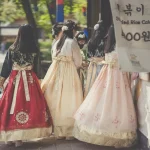
📷 Featured image by Mathew Schwartz on Unsplash.