On this page
- What Kind of Place Is Sokcho?
- Seoraksan National Park: The Real Reason Most People Come
- Sokcho’s Coastline: Beaches, Breakwaters, and the Harbor Scene
- What to Eat in Sokcho — and Where Exactly
- Day Trip or Overnight? Making the Right Call
- Getting to Sokcho from Seoul and Busan in 2026
- Getting Around Sokcho Once You’re There
- 2026 Budget Reality: What Sokcho Actually Costs
- Best Time to Visit Sokcho
- Practical Tips Before You Go
- Frequently Asked Questions
💰 Click here to see Korea Budget Breakdown
💰 Prices updated: 2026-10-01. Budget figures are estimates — always verify before travel.
Exchange Rate: $1 USD = 1,356 KRW
Daily Budget (per person) • Pricing updated as of 2026-10-01
Daily Budget
Shoestring: 60,000 KRW - 95,000 KRW ($44.25 – $70.06)
Mid-range: 130,000 KRW - 250,000 KRW ($95.87 – $184.37)
Comfortable: 350,000 KRW - 550,000 KRW ($258.11 – $405.60)
Accommodation (per night)
Hostel/guesthouse: 25,000 KRW - 65,000 KRW ($18.44 – $47.94)
Mid-range hotel: 90,000 KRW - 165,000 KRW ($66.37 – $121.68)
Food (per meal)
Budget meal (street food): 9,000 KRW ($6.64)
Mid-range meal (restaurant): 22,000 KRW ($16.22)
Upscale meal: 65,000 KRW ($47.94)
Transport
Single subway/bus trip: 1,600 KRW ($1.18)
Climate Card (30-day unlimited): 67,000 KRW ($49.41)
What Kind of Place Is Sokcho?
Sokcho sits at an awkward spot on most Korean itineraries — too far from Seoul for a casual afternoon, not quite famous enough to justify a dedicated trip in the minds of first-time visitors. That reputation is wrong. In 2026, Sokcho remains one of the most genuinely satisfying Destinations in the country, precisely because it does two things at once that almost nowhere else in Korea manages: it puts a serious granite mountain range right behind a working fishing harbor. You can eat raw squid for breakfast with your feet near the water and be on a trail threading through ancient pines before noon.
The city itself has a population of around 80,000 and feels compact without feeling small. There are no major department stores, no K-pop themed cafés trying too hard. What there is: a salt-tinged coastal wind that hits you when you step off the bus, a harbor lined with vessels that actually fish rather than just pose for photos, and a mountain on the horizon so dramatic that it looks slightly unreal on clear autumn mornings. Sokcho is the kind of place Koreans themselves visit when they want to feel like they’ve left the country without leaving the country.
Seoraksan National Park: The Real Reason Most People Come
Seoraksan is not just a backdrop — it is the anchor of any visit to this region. The national park covers 398 square kilometres and is classified as a UNESCO Biosphere Reserve. The main entrance at Sogongwon (Inner Seorak) is about 12 kilometres from downtown Sokcho, and this is where most visitors start. The entry fee in 2026 is 5,000 KRW (~$3.70) per adult.
Trails range from genuinely easy to properly demanding. The walk to Biryong Falls (about 1.6 km one way) suits anyone with functional knees and takes roughly 40 minutes at a relaxed pace. The granite boulders alongside the stream are worn smooth and orange-tinted, and the sound of the water builds gradually as you get closer — it announces itself long before you see it. For experienced hikers, the ridge route to Daecheongbong Peak (1,708 metres) is a full-day commitment requiring an early start and a park permit booked in advance through the Korea National Park Service website.
The cable car to Gwongeumseong Fortress is a practical middle ground. The ride takes about 5 minutes and deposits you near 10th-century fortress ruins with views that justify every won of the 16,000 KRW (~$11.85) round-trip fare. Lines form quickly in autumn — arriving before 8:30am is the difference between a 15-minute wait and a 90-minute one.
Seasonal Highlights at Seoraksan
- Late September to late October: Peak autumn foliage. The reds and oranges reach the lower trails around the second week of October most years. This is peak crowd season.
- May to June: Azaleas bloom on the upper ridges. Trails are quieter than autumn and temperatures are ideal for long hikes.
- January to February: Snow-dusted granite peaks with very thin crowds. Some upper trails close due to ice, but the lower valley walks remain open and are strikingly beautiful.
- July to August: Hot, humid, and crowded near the base. Worth skipping if you have flexibility.
Sokcho’s Coastline: Beaches, Breakwaters, and the Harbor Scene
Most people treat Sokcho’s coast as a brief detour between mountain hikes. That’s a mistake. The coastal strip has its own character and deserves a dedicated half-day.
Sokcho Beach itself is a 2-kilometre stretch of grey-white sand that faces the East Sea. Unlike the heavily developed beaches further south at Gangneung, this one still has a slightly raw, utilitarian edge. The water is cold even in summer — typically 20–22°C in August — and the waves have enough energy to make swimming bracing rather than relaxing. In the early morning, the beach is almost entirely locals: older men walking in pairs, a few joggers, a handful of people sitting on rocks watching the horizon. The light at that hour, with Seoraksan’s peaks just visible inland and the East Sea glittering ahead, is the kind of thing that stays with you.
Abai Village is a five-minute ferry crossing from the main harbor — the ferry costs 500 KRW (~$0.37) and runs on a rope-pull system. The village was settled by North Korean refugees after the Korean War and still carries that history in its architecture and food culture. The alleyways are narrow and slightly faded, dotted with small restaurants that have been serving the same dishes for decades. Walking through it feels nothing like the rest of Sokcho, and the short lagoon crossing alone is worth doing for the perspective it gives you of the harbor from the water.
The Cheongcho Lake area connects the beach to the harbor and is a pleasant 45-minute walk along a flat path. The lake is brackish, tidal, and framed by small hills on one side and the town on the other. In autumn, the reeds along its banks turn gold and the whole scene looks like a painting that someone left half-finished.
What to Eat in Sokcho — and Where Exactly
Sokcho’s food identity is built on the sea, with one very specific local tradition layered on top of it.
Ojingeo (squid) is everywhere, but this is the right place to eat it. The squid caught in the East Sea near Sokcho has a sweetness that dried or frozen squid doesn’t replicate. At the Jungang Market (중앙시장), vendors on the main food alley sell fresh whole squid for around 5,000–8,000 KRW (~$3.70–5.90) depending on size. You eat it at a plastic table with a cold can of beer or barley tea. That’s the whole experience, and it’s excellent.
Abai Sundae is the dish that defines the village. This is a larger, denser version of the blood sausage (sundae) found elsewhere in Korea, stuffed with glutinous rice, pork, and various fillings, steamed and served with a fermented shrimp dipping sauce. The most established spot is Abai Village Sundae Street (아바이마을 순대골목), where several family-run restaurants cluster together. Expect to pay 10,000–13,000 KRW (~$7.40–9.60) for a full portion with sides.
Dakgangjeong (sweet fried chicken) is a Sokcho specialty that surprises most visitors. The local version is crispier and more intensely glazed than Seoul-style. The original vendors are in Jungang Market — the stall with the longest queue around lunchtime is almost certainly the right one. A box runs about 8,000–12,000 KRW (~$5.90–8.90).
For fresh seafood in a sit-down format, the restaurants along Sokcho Harbor (속초항 앞) serve raw fish platters (hoe) starting at around 30,000 KRW (~$22.20) for one person. Arrive between 11am and 1pm when the morning’s catch is still at its peak.
Day Trip or Overnight? Making the Right Call
This question comes up constantly, and the honest answer depends entirely on what you want from the trip.
A day trip from Seoul is technically possible. The express bus takes about 2.5 hours each way in 2026. If you leave Seoul by 7am, you have roughly six usable hours before you need to start thinking about the return journey. That’s enough time for a hike to Biryong Falls, a walk through Abai Village, and a meal at the market. You will not feel cheated.
But an overnight stay changes the trip fundamentally. Seoraksan at dawn — when the mist sits in the valley between the granite peaks and the trail is empty except for a few serious hikers — is one of those experiences that a rushed day trip simply cannot deliver. The harbor at sunset, the beach at first light, the option to linger over dinner in the village rather than watching the clock: these things require time. If you can spare two nights, the second day could include a different trail, a visit to the quieter Outer Seorak (Osaek or Hangyeryeong area), or simply a morning of doing very little near the water.
The sweet spot for most visitors is one night, two full days. Arrive on the afternoon bus, spend the evening at the harbor and market. Full day two for Seoraksan. Morning of day three for the coast before the return journey.
Getting to Sokcho from Seoul and Busan in 2026
There is no direct train to Sokcho. The city is not on any KTX or ITX line, and that situation has not changed in 2026. The GTX-A line, which extended service in phases through 2024 and 2025, serves the Seoul metropolitan area but does not reach Sokcho — it improves journey times to Suseo and Dongtan, not the east coast. Anyone who tells you the train situation in Sokcho has improved recently is confusing it with Gangneung.
From Seoul: The fastest and most practical route is the express bus from Seoul Express Bus Terminal (고속터미널, served by GTX-A at Yangjae or direct subway access on Line 3/7/9). Buses to Sokcho depart frequently throughout the day and the journey takes approximately 2 hours 30 minutes to 2 hours 50 minutes depending on traffic. The fare is around 16,400–18,200 KRW (~$12.15–13.50) one way. Book through Kobus (kobus.co.kr) or at the terminal — advance booking is strongly recommended for Friday evening and weekend buses, especially in October.
An alternative is the KTX to Gangneung (about 2 hours from Seoul), followed by an intercity bus to Sokcho (approximately 1 hour 20 minutes). This works well if you are combining Sokcho with a Gangneung visit but adds time and a transfer for a Sokcho-only trip.
From Busan: There is no direct express bus. The practical route is KTX to Gangneung (about 3 hours 30 minutes) and then the intercity bus to Sokcho. Total journey time is around 5 hours minimum. Alternatively, some travellers fly from Gimhae Airport to Yangyang Airport (10 minutes south of Sokcho), with flight times under an hour. Check Air Seoul and Jin Air schedules — route availability has fluctuated and is worth confirming before planning around it.
Getting Around Sokcho Once You’re There
Sokcho’s layout is more spread out than it looks on a map. The bus terminal, the beach, Abai Village, Jungang Market, and the Seoraksan entrance are all in different directions from a central point, so having a transport plan matters.
Local buses are cheap and run frequently on the main routes. Bus 7 connects the intercity bus terminal to the Seoraksan Sogongwon entrance and is the most useful route for most visitors. The fare is 1,400 KRW (~$1.04) with a T-Money card. Naver Maps remains more accurate than Google Maps for real-time bus arrival times in Sokcho, though Google’s Korean transit data improved significantly in 2025.
Taxis are widely available and not expensive by international standards. The base fare starts at 4,800 KRW (~$3.55). From the bus terminal to Seoraksan should run about 9,000–12,000 KRW (~$6.70–8.90) depending on traffic.
Rental bicycles work well for the flat coastal areas — the route from the beach along Cheongcho Lake to the harbor is ideal for cycling. Several shops near Sokcho Beach rent bikes for around 5,000–8,000 KRW (~$3.70–5.90) per hour.
The Abai Village ferry is a 500 KRW rope-pull crossing that runs during daylight hours. It’s the most unusual transportation moment in Sokcho and adds nothing to your journey time while adding considerably to your memories.
2026 Budget Reality: What Sokcho Actually Costs
Sokcho is notably more affordable than Seoul or Busan for accommodation, and food costs are kept reasonable by the strong market culture. Here’s what a realistic daily budget looks like:
Accommodation (per night)
- Budget: Guesthouses and motels near the bus terminal or beach — 35,000–55,000 KRW (~$25.90–40.70)
- Mid-range: Clean business hotels or guesthouses with private bathrooms near Sokcho Beach — 70,000–110,000 KRW (~$51.85–81.50)
- Comfortable: Newer boutique hotels or resort-style properties with mountain or sea views — 130,000–200,000+ KRW (~$96.30–148.15+)
Food (per day)
- Budget: Market meals, street food, convenience store supplements — 15,000–25,000 KRW (~$11.10–18.50)
- Mid-range: Sit-down meals including one seafood dinner — 35,000–55,000 KRW (~$25.90–40.70)
- Comfortable: Full seafood platter dinner plus market snacks and café stops — 65,000–90,000 KRW (~$48.15–66.65)
Activities
- Seoraksan entrance fee: 5,000 KRW (~$3.70)
- Cable car (round trip): 16,000 KRW (~$11.85)
- Abai Village ferry (each way): 500 KRW (~$0.37)
- Sokcho Beach: free
A realistic two-day, one-night trip for a solo traveller on a mid-range budget — including transport from Seoul, accommodation, food, and entry fees — comes to approximately 180,000–250,000 KRW (~$133–185).
Best Time to Visit Sokcho
October is the peak month for a reason. Seoraksan’s autumn foliage is among the earliest in South Korea due to the mountain’s elevation, typically peaking between the first and third week of October. The air is sharp and dry, visibility is excellent, and the harbor seafood is at its seasonal best. The trade-off is that accommodation books out weeks in advance and weekend trail crowding can be significant.
May and early June offer a strong alternative. Temperatures are comfortable for hiking (typically 15–22°C), the coastal wind is pleasant rather than biting, and the azalea blooms on Seoraksan’s upper ridges are genuinely spectacular. Crowds are a fraction of October levels.
Winter (December–February) suits a very specific kind of traveller. The snow-covered granite of Seoraksan is visually extraordinary, the dried squid hanging in the cold air at the market has an almost ceremonial quality, and you will essentially have the beach to yourself. Accommodation prices drop sharply. Upper trails may close due to ice.
Summer (July–August) is the least recommended time unless you specifically want beach swimming. The heat is humid, accommodation prices spike for domestic holiday season, and Seoraksan’s lower trails become uncomfortably crowded. The squid fishing season is actually at its height in late summer and early autumn — so if seafood is your primary reason for visiting, late August through September captures both the peak catch and slightly cooler weather.
Practical Tips Before You Go
K-ETA: As of 2026, most visa-waiver nationality travellers still require a K-ETA for entry to South Korea. Check the official K-ETA website (k-eta.go.kr) before your trip — fees and processing requirements have been updated since 2024, and the application typically takes 72 hours to process. Some nationalities gained expanded visa-free access under agreements finalised in 2025, so confirm your specific status rather than relying on pre-2025 information.
Naver Maps vs Google Maps: Google Maps improved its Korean transit data significantly in 2025, and it now handles Seoul transit well. For Sokcho specifically, however, Naver Maps (available in English) gives more accurate local bus timings and is better at locating smaller restaurants and market stalls. Download both and use Naver for on-the-ground navigation.
Mobile data: Pocket Wi-Fi rental or a Korean SIM card remains essential for navigating independently. Both are available at Incheon Airport arrivals. Major Korean carriers now offer eSIM options that can be activated before departure — useful for immediate connectivity when you land.
What to pack: Layering is important regardless of season. Even in summer, the mountain trails and coastal wind can be significantly cooler than the base temperature. Proper hiking shoes are worth bringing for any trail above the valley floor at Seoraksan — trail conditions can be rocky and wet even in dry weather. A reusable bag for market shopping will be appreciated by the vendors who no longer provide single-use plastic bags under expanded regulations that came into full effect in 2025.
Cash vs card: Most Sokcho restaurants and accommodation accept cards, but the market stalls and the Abai Village ferry are cash only. Having 20,000–30,000 KRW (~$14.80–22.20) in small notes on hand avoids any friction.
Frequently Asked Questions
Is Sokcho worth visiting as a day trip from Seoul?
Yes, a day trip is feasible and worthwhile if your time is genuinely limited. The express bus takes about 2.5 hours from Seoul, giving you roughly six usable hours. You can cover Biryong Falls at Seoraksan, Abai Village, and a market meal in that window. That said, an overnight stay unlocks a significantly richer experience, particularly the mountain at dawn.
Is there a train to Sokcho?
No, and that hasn’t changed in 2026. Sokcho has no KTX or regular rail service. The standard route is the express bus from Seoul’s Express Bus Terminal, which takes about 2.5–2.75 hours. An alternative is KTX to Gangneung followed by an intercity bus, though this is slower for a Sokcho-only trip and makes more sense if you’re combining destinations.
What is the best time of year to visit Sokcho?
October is the most popular month, when Seoraksan’s autumn foliage peaks and the air is ideal for hiking. May and early June are an excellent quieter alternative with comfortable temperatures and azalea blooms on the upper ridges. Winter offers dramatically beautiful snow scenery with minimal crowds. Summer is the least recommended due to heat and humidity.
What is Sokcho famous for eating?
Sokcho is known for three things: fresh East Sea squid (ojingeo), Abai sundae — a large, dense blood sausage originating with North Korean refugees — and a locally distinctive sweet fried chicken called dakgangjeong. Jungang Market and Abai Village are the best places to eat all three. Fresh seafood platters are also exceptional, served at restaurants along Sokcho Harbor.
How far is Sokcho from Seoraksan National Park?
The main Seoraksan entrance at Sogongwon is approximately 12 kilometres from downtown Sokcho. Local bus 7 connects the intercity bus terminal to the park entrance directly and takes about 25–30 minutes. The fare is 1,400 KRW (~$1.04) with a T-Money card. Taxis cover the same journey in about 15 minutes for roughly 10,000–12,000 KRW (~$7.40–8.90).
Explore more
Hiking Seoraksan & Exploring Sokcho: Your Essential East Coast Adventure
Sokcho Travel Guide: Gateway to Seoraksan National Park & East Coast Bliss
Jeonju Beyond Bibimbap: Exploring Traditional Arts & Crafts in Korea
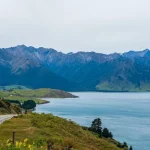
📷 Featured image by Kotagauni Srinivas on Unsplash.