On this page
- Why Seogwipo Keeps Getting Overlooked (And Why That’s Changing in 2026)
- The Character of Seogwipo — What Kind of Place Is This, Really?
- Natural Wonders You Can Actually Reach Without a Car
- Culture and History Hidden in Plain Sight
- Where to Eat in Seogwipo
- 2026 Budget Reality for Seogwipo
- Getting to Seogwipo and Moving Around Once You Are There
- Frequently Asked Questions
Why Seogwipo Keeps Getting Overlooked (And Why That’s Changing in 2026)
Most first-time visitors to Jeju Island spend the bulk of their time in Jeju City, tick off Hallasan, and consider the job done. Seogwipo, the city anchoring the island’s southern coast, gets a half-day at best — a quick stop at a waterfall before the bus heads back north. That pattern is finally shifting in 2026. With Jeju City’s tourist corridors growing noticeably crowded and accommodation prices there rising sharply after the post-pandemic travel surge, more travellers are basing themselves in Seogwipo instead and discovering that the south has the better end of the deal: cleaner air, dramatic coastal cliffs, a slower pace, and some of the island’s most compelling cultural stops squeezed into walkable distance.
The Character of Seogwipo — What Kind of Place Is This, Really?
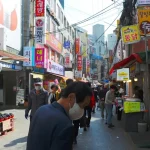
Seogwipo is not a party city. It is not trying to be Hongdae-by-the-sea. The downtown area around Seogwipo Maeil Olle Market and the harbour is compact and unhurried — locals eating black pork in open-air grills, elderly women hauling baskets from the market, tour buses moving through without stopping long enough to matter. The city has a genuine sense of permanence that Jeju City sometimes lacks.
The coastline here is rougher and more dramatic than the north. Volcanic rock platforms drop straight into the ocean. On windy days you can hear the waves smashing into the cliffs from a block inland. The light in the afternoon turns the tangerine orchards along the hillsides a deep amber, and the smell — equal parts salt water and citrus — is immediately distinct. This is the Jeju that photographers and slow travellers keep coming back for.
Seogwipo suits travellers who want to walk a lot, eat well without a reservation, and not feel like they are competing for every scenic viewpoint. Families do well here. Solo walkers do exceptionally well. Large groups looking for nightlife will be bored by 10pm.
Natural Wonders You Can Actually Reach Without a Car
Seogwipo has three waterfalls within easy reach of the city centre, and the variation between them is worth understanding before you plan your day.
Cheonjiyeon Waterfall
Cheonjiyeon is the most visited and the most developed. A short trail through subtropical forest leads you to a 22-metre drop into a deep green pool. The path is wheelchair-accessible for most of its length and well-lit for early evening visits. It costs 2,000 KRW (about $1.50 USD) to enter. The surrounding forest is genuinely beautiful — tree ferns and rock formations that feel out of place this far north in East Asia.

Jeongbang Waterfall
Jeongbang is the one that deserves more attention. It falls directly into the sea — one of only a handful of ocean-facing waterfalls in Asia — and the viewing platform puts you close enough to feel the spray. Entry is 2,000 KRW. Go early morning when the light hits the water face-on and before the tour groups arrive.
Olle Trail Sections 6 and 7
Jeju Olle Trail routes 6 and 7 both pass through or near Seogwipo and offer the best coastal walking on the island. Route 7 specifically runs along the southern cliff edge past Sojeongbang Waterfall and through traditional villages that see a fraction of the tourist traffic of the main waterfall sites. The trail is well-marked with orange and blue ribbons. Expect four to five hours for a full section. Bring water — vending machines are sparse on the coastal stretches.
Culture and History Hidden in Plain Sight
Seogwipo has a cultural layer that most visitors drive straight past. Three stops that genuinely reward time spent:
Lee Jung-seop Street and Museum
Lee Jung-seop was one of Korea’s most important modern painters, and he lived briefly in Seogwipo during the Korean War, producing some of his most recognisable work in a tiny one-room house that still stands. The street named after him winds through a quiet hillside neighbourhood with murals and small galleries. The museum itself (entry 1,500 KRW / around $1.10 USD) holds originals and documents his tragic life story without over-dramatising it. Even if you have no particular interest in Korean art history, the neighbourhood around the museum is one of the most pleasant walking areas in the city.
Haenyeo Culture at Seogwipo Haenyeo Museum
The haenyeo — Jeju’s female free-divers — are recognised by UNESCO and are one of the island’s defining cultural traditions. The museum near Haegeumgang presents their history, tools, and working methods clearly and without turning the subject into a tourist spectacle. Short documentary films run throughout the day. If you want to see haenyeo working in person, the rocky shores near Beophwan-dong in the early morning hours are your best option — they are not performing for visitors, they are working, so observe quietly from a distance.

Seogwipo Maeil Olle Market
This daily market (open every day, peak hours 9am–1pm) is a genuine local market, not a curated food hall. Vendors sell raw seafood, freshly squeezed hallabong (Jeju mandarin) juice, dried goods, and street snacks. The energy here — the sharp smell of fresh fish on ice, the sound of vendors calling prices, ajummas negotiating over vegetables — gives you a more honest read of daily Seogwipo life than any tourist attraction will.
Where to Eat in Seogwipo
The local food identity in Seogwipo leans heavily on three things: black pork, abalone, and citrus. You will find all three without trying hard.
For black pork (heuk dwaeji), the streets near Maeil Olle Market have a cluster of grills that have operated for decades. No English menus at most of them — point at the pork belly or shoulder cuts displayed at the front. A full meal for two with sides and a bottle of soju runs around 40,000–50,000 KRW ($30–37 USD).
Jeonbok juk (abalone porridge) is a Seogwipo breakfast staple. Several small restaurants near the harbour serve it from 7am. A bowl costs 15,000–18,000 KRW ($11–13 USD) and is properly filling — creamy, briny, and deeply savoury in a way that is hard to describe without eating it.
For something lighter, the hallabong citrus — Jeju’s signature tangerine variety — appears in everything from soft-serve ice cream to cold-pressed juice to jam sold in small jars at the market. Fresh hallabong from a roadside stand in February and March, when they are in season, costs around 3,000–5,000 KRW for a bag ($2.20–3.70 USD).
2026 Budget Reality for Seogwipo
Seogwipo runs cheaper than Jeju City across almost every category, which makes it a practical base even for travellers on a tighter plan.
- Budget accommodation (guesthouses, smaller motels near the market): 35,000–55,000 KRW per night ($26–41 USD)
- Mid-range accommodation (clean hotels with ocean or tangerine orchard views): 90,000–150,000 KRW per night ($67–111 USD)
- Comfortable / boutique stays (design guesthouses, resort-adjacent hotels on the eastern coast): 180,000–280,000 KRW per night ($133–207 USD)
- Street food / market meal: 5,000–10,000 KRW ($3.70–7.40 USD)
- Sit-down lunch: 10,000–18,000 KRW ($7.40–13.30 USD)
- Full dinner with drinks: 30,000–60,000 KRW per person ($22–44 USD)
- Waterfall entry fees: 2,000 KRW each ($1.50 USD)
- Intercity bus from Jeju City: 2,800–3,500 KRW ($2.10–2.60 USD)
A realistic daily budget for a mid-range solo traveller — accommodation, three meals, two or three attraction entries, and local transport — sits at around 120,000–170,000 KRW ($89–126 USD) per day without a rental car. Add roughly 60,000–80,000 KRW ($44–59 USD) per day for a small rental car, which is the most practical option for exploring beyond the city core.

Getting to Seogwipo and Moving Around Once You Are There
Jeju Island has no GTX or high-speed rail. Getting around is a bus-or-rent-a-car decision, and the honest answer is that a rental car makes the south coast dramatically more accessible.
From Jeju International Airport
Express Bus 600 runs directly from Jeju Airport to Seogwipo Intercity Bus Terminal in around 50–55 minutes, with departures roughly every 20–30 minutes from early morning. Cost is around 3,500 KRW ($2.60 USD). Tap with your T-Money card at the bus door — the satisfying beep of the card reader and the cool rush of air conditioning as you step on makes this one of the more pleasant bus routes on the island. In 2026, the route now also stops at the new eastern terminal near Jungmun Resort, which saves an extra transfer for travellers staying in that area.
Getting Around Seogwipo Itself
The city centre — waterfalls, market, Lee Jung-seop Street, harbour — is walkable in comfortable shoes. For Olle Trail access, outlying beaches, or the Haenyeo Museum, local buses cover most routes but run infrequently (sometimes once an hour). Kakao Taxi works reliably in Seogwipo; short hops within the city run 4,000–7,000 KRW ($3–5 USD).
Rental Car Considerations
Rental cars are available at Jeju Airport and at a few agencies near Seogwipo city centre. In 2026, electric vehicle rentals have expanded significantly on Jeju — charging infrastructure along the southern coast is now reliable enough for a full day of coastal driving on a single charge. Book in advance during peak season (July–August and the cherry blossom window in late March). International driving licences are accepted for most nationalities; check that your licence is certified with an apostille if you are from a country that requires it for Korean rentals.
Frequently Asked Questions
How many days do I need in Seogwipo?
Two full days covers the main natural sites, a market visit, and a cultural stop comfortably. Three days lets you walk an Olle Trail section without rushing the rest of your itinerary. If you plan to use Seogwipo as a base for exploring the wider southern coast including Jungmun and the eastern cape, add another day.
Is Seogwipo worth visiting even if I have already been to Jeju City?

Yes — the two cities feel genuinely different. Seogwipo is quieter, greener, and more dramatically situated on the coast. Most travellers who split their Jeju trip between north and south consistently say the south was the stronger half, particularly for anyone who values walking and scenery over urban activity.
Do I need a rental car to enjoy Seogwipo?
Not strictly for the city centre, which is walkable. But a car opens up the broader southern coastline, the hidden coves, and the quieter Olle Trail access points that buses simply do not reach frequently enough to be practical. If your budget allows it, even one rental day makes a significant difference to what you can see.
What is the best time of year to visit Seogwipo?
Spring (late March to early May) is consistently the most rewarding — mild temperatures, cherry and canola blossoms along the Olle routes, and manageable crowds. Autumn (October to November) is the second-best window with clear skies and tangerine harvest season in full swing. Summer brings heat, humidity, and the busiest crowds. Winter is quiet and can be cold and rainy, though serious Olle Trail walkers often prefer it for the solitude.
Has anything changed in Seogwipo in 2026 that visitors should know about?
The Jeju Olle Trail app received a significant English-language update in 2026 with offline functionality. Jeju’s entry requirements also shifted slightly — visitors from several countries no longer need K-ETA under updated visa exemption rules introduced in late 2025, so check the current status for your passport before planning. EV charging infrastructure across the southern coast is now robust enough for full-day electric car rentals without range anxiety.
Explore more
Jeju Seafood Feast: Top Spots for Fresh Catches
Where to Stay in Jeju City: Top Neighborhoods for Every Traveler’s Style
How to Plan the Perfect One-Day Trip to Jeju Island
📷 Featured image by JinHui CHEN on Unsplash.