On this page
- What June Actually Feels Like in South Korea
- What to Wear and Pack for June Heat and Humidity
- The Best Places to Be in June (Heat-Smart Destination Choices)
- Outdoor Activities That Still Work in June
- How to Stay Cool: Practical Survival Strategies
- 2026 Budget Reality for a June Trip
- Frequently Asked Questions
What June Actually Feels Like in South Korea
June in South Korea sits in an awkward middle zone that catches a lot of first-time visitors off guard. The month starts mild — temperatures in Seoul hover around 20–22°C in early June — but by the final week, the heat climbs toward 28–32°C and the humidity starts to feel like a second layer of clothing you cannot take off. The rainy season, known locally as jangma, typically begins in late June in most of the country and runs into July. In 2026, if you are planning a trip for mid-to-late June, expect the first rain bands to push in from the south.
What makes June humidity different from a hot day back home is the density of it. Standing at a street food stall in Myeongdong in late June, the steam rising from the tteokbokki pot merges almost seamlessly with the heavy outdoor air. The subway stations offer sharp relief — that blast of cold, conditioned air as the doors open is one of the most welcome sensory experiences in Korean city life. Understanding this rhythm of hot-and-humid outside versus aggressively air-conditioned inside is the key to enjoying June in Korea rather than enduring it.
What to Wear and Pack for June Heat and Humidity
Packing wrong for Korea in June means you will be shopping for replacements within 48 hours — which is not the worst outcome given how good Korean streetwear is, but it is not ideal for your budget. The core principle is moisture-wicking over cotton. Cotton absorbs sweat and stays wet against your skin. Lightweight linen or technical fabrics move with the humidity instead of fighting it.
- Tops: Loose, light-coloured, breathable fabrics. Koreans favour light long sleeves in June — not because of modesty, but because they block UV and actually feel cooler than a bare arm in direct sun.
- Bottoms: Linen trousers or technical shorts. Avoid heavy denim — it holds heat and takes forever to dry if caught in a rain shower.
- Footwear: Bring sandals but also a pair of closed shoes you do not mind getting wet. Late-June downpours are sudden and heavy.
- Rain gear: A compact umbrella is more practical than a full rain jacket for city use. A lightweight packable jacket handles the rare cooler evening.
- Sun protection: Korean pharmacies and convenience stores stock excellent SPF products cheaply, but sunglasses are oddly less common. Bring your own.
One thing that surprises many visitors: indoor spaces — including temples, museums, palaces, and department stores — are often cold enough to need a light layer. Pack a compact cardigan or a thin long-sleeve top you can stuff into a day bag.
The Best Places to Be in June (Heat-Smart Destination Choices)
Not every part of Korea suffers equally in June heat. Where you go matters as much as when you go.
Gangwon Province and the East Coast
The mountains and east coast of Gangwon Province sit a few degrees cooler than Seoul for most of June. Towns like Sokcho are excellent in early-to-mid June before the peak summer crowd arrives. The sea breeze along the coast provides genuine relief, and the beaches are uncrowded compared to July and August.
Jeju Island — Go Early, Not Late
Jeju is stunning but it is the first part of Korea to feel the jangma rains, often in mid-June rather than late June. Early June (first two weeks) offers warm, manageable weather and far smaller crowds than the summer peak. If you plan to hike Hallasan, early June mornings are some of the best conditions of the year — cool at altitude, clear visibility.
Seoul’s Han River Parks
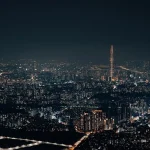
In the city itself, the Han River parks are underrated in June. Riverside breezes knock two or three degrees off the ambient temperature, and locals gather here in the evenings for this exact reason. Yeouido and Ttukseom parks both have rental bike paths, convenience store food stalls, and long grass areas. Evenings along the Han in early June, with the city skyline reflecting in the water and the temperature finally dropping, are genuinely one of Seoul’s great free experiences.
Andong and the Inland South — Approach with Caution
Inland cities in the south — Daegu, Andong, parts of North Gyeongsang Province — tend to trap heat. They are worth visiting, but plan major outdoor sightseeing before 10:00 AM and after 5:00 PM in June. The heritage village at Hahoe near Andong is worth the effort, but the exposed site has almost no shade at midday.
Outdoor Activities That Still Work in June
June is not a write-off for outdoor activity. It just requires timing.
Hiking
Korea’s trail culture does not stop for summer, and June mornings at elevation are genuinely pleasant. Bukhansan in northern Seoul, Seoraksan in Gangwon, and Hallasan on Jeju are all workable if you start at or before sunrise. By 9:00 AM on a late-June day, lower trails become uncomfortable quickly. The forests provide canopy shade, but exposed ridge sections can be brutal in afternoon heat.
Temple Stays
Many of Korea’s Buddhist temples offer overnight temple stay programmes. These are worth considering in June specifically because temple grounds are almost always built on forested hillsides — naturally cooler, shaded, with the sound of water in nearby streams. The 4:00 AM wake-up for morning meditation feels less punishing when you realise the temperature at that hour is around 18–20°C.
Cycling
Korea’s long-distance cycling routes (the four-rivers network is the best-known) are doable in early June. Late June cycling requires an early start and realistic daily distance planning. The Ara Waterway near Incheon and the Han River routes in Seoul are flat, shaded in stretches, and very well-serviced with rest stops.
How to Stay Cool: Practical Survival Strategies
Korea is actually well-set-up for heat management, partly because Koreans have been dealing with it for centuries and partly because the country’s infrastructure is dense enough that you are rarely far from relief.
- Use the subway as a cooling break: Seoul, Busan, Daegu, and Daejeon all have extensive metro systems. Even a short unnecessary ride in air conditioning resets your body temperature.
- Convenience stores are free air conditioning: No one minds you lingering. Grab an iced coffee or a cold barley tea (boricha) and take your time.
- Jjimjilbang (Korean bathhouse): These 24-hour facilities are genuinely good heat strategy. A cool-water bath, followed by a rest in the cooled common area, costs around 10,000–15,000 KRW (~$7.40–$11.10) and you can stay for hours.
- Eat what locals eat for cooling: Naengmyeon (cold buckwheat noodles) and kongguksu (cold soy milk noodle soup) are peak-June foods for good reason. Ice shavings dessert, bingsu, is everywhere from June onwards.
- Avoid direct sun from 12:00–4:00 PM: Use this window for indoor attractions — museums, galleries, palaces with interior buildings, shopping areas.
2026 Budget Reality for a June Trip
June sits in a sweet spot — past the spring cherry blossom premium, but not yet in the peak summer surge of July–August. Prices in 2026 reflect this.
Accommodation
- Budget: Guesthouses and hostels in Seoul run 25,000–45,000 KRW per night (~$18.50–$33.30)
- Mid-range: Business hotels and mid-tier serviced apartments sit around 90,000–160,000 KRW per night (~$66.70–$118.50)
- Comfortable: Four-star hotels in central Seoul (Myeongdong, Gangnam, Hongdae areas) are typically 180,000–300,000 KRW per night (~$133–$222)
Food
- Budget: Convenience store meal + drink: 6,000–9,000 KRW (~$4.40–$6.70). Street food lunch: 5,000–10,000 KRW (~$3.70–$7.40)
- Mid-range: Sit-down Korean restaurant meal: 12,000–22,000 KRW (~$8.90–$16.30)
- Comfortable: Modern Korean or international restaurant dinner: 35,000–80,000 KRW per person (~$25.90–$59.30)
Transport
- Seoul metro single fare: 1,400–1,650 KRW (~$1.04–$1.22) depending on distance, using a T-Money card
- Intercity KTX train (Seoul to Busan, example): 50,000–60,000 KRW (~$37–$44.40) standard class
- Airport limousine bus: around 10,000–18,000 KRW (~$7.40–$13.30) depending on destination zone
Overall, a comfortable independent trip in June 2026 — accommodation, food, transport, and entrance fees — sits around 120,000–200,000 KRW per day (~$88.90–$148.10) for a solo traveller in Seoul. Jeju and coastal areas add accommodation cost but reduce daily transport spend.
Frequently Asked Questions
Is June a good time to visit South Korea?
Early-to-mid June is genuinely one of Korea’s better travel windows — past cherry blossom crowds, not yet in peak summer heat, and with good availability on accommodation. Late June brings the start of the rainy season, which is manageable but requires flexibility. Overall, June rewards travellers who plan their outdoor time around morning and evening hours.
How hot does South Korea get in June?
Seoul typically ranges from 20°C to 30°C in June, with the higher temperatures and heavier humidity arriving in the final week. Southern cities and Jeju Island tend to be slightly warmer and more humid throughout the month. Coastal and mountain areas in Gangwon Province are noticeably cooler, especially at elevation.
When does the rainy season start in South Korea?
The jangma rainy season usually arrives in southern Korea and Jeju around mid-to-late June, then moves northward, reaching Seoul around late June or early July. Rain does not fall all day continuously — heavy downpours are common, but they often clear within hours. A compact umbrella handles most situations better than a full rain jacket.
What should I avoid doing in Korea in June?
Avoid planning full-day exposed outdoor activities in late June without an early start. Avoid heavy cotton clothing. Coastal and island destinations that are manageable in June become significantly more crowded and expensive from July — so book June accommodation in beach areas well in advance if that is your plan, as Koreans also travel domestically during this period.
Do I need to book Korean attractions in advance for June?
For most major attractions — palaces, museums, temples — walk-in entry remains standard in June without significant queuing. However, popular day trips (Nami Island, certain Jeju activities, specific temple stay programmes) can fill on weekends. Booking those two to three weeks ahead is sensible. June weekdays at most attractions are noticeably quieter than weekends.
Explore more
Cool Down in South Korea: Essential Summer Foods to Try in June 2026
Celebrating Buddha’s Birthday in South Korea: Your May 2026 Guide
South Korea’s Green Tea Culture: A Refreshing Spring Experience for April 2026 Travelers